
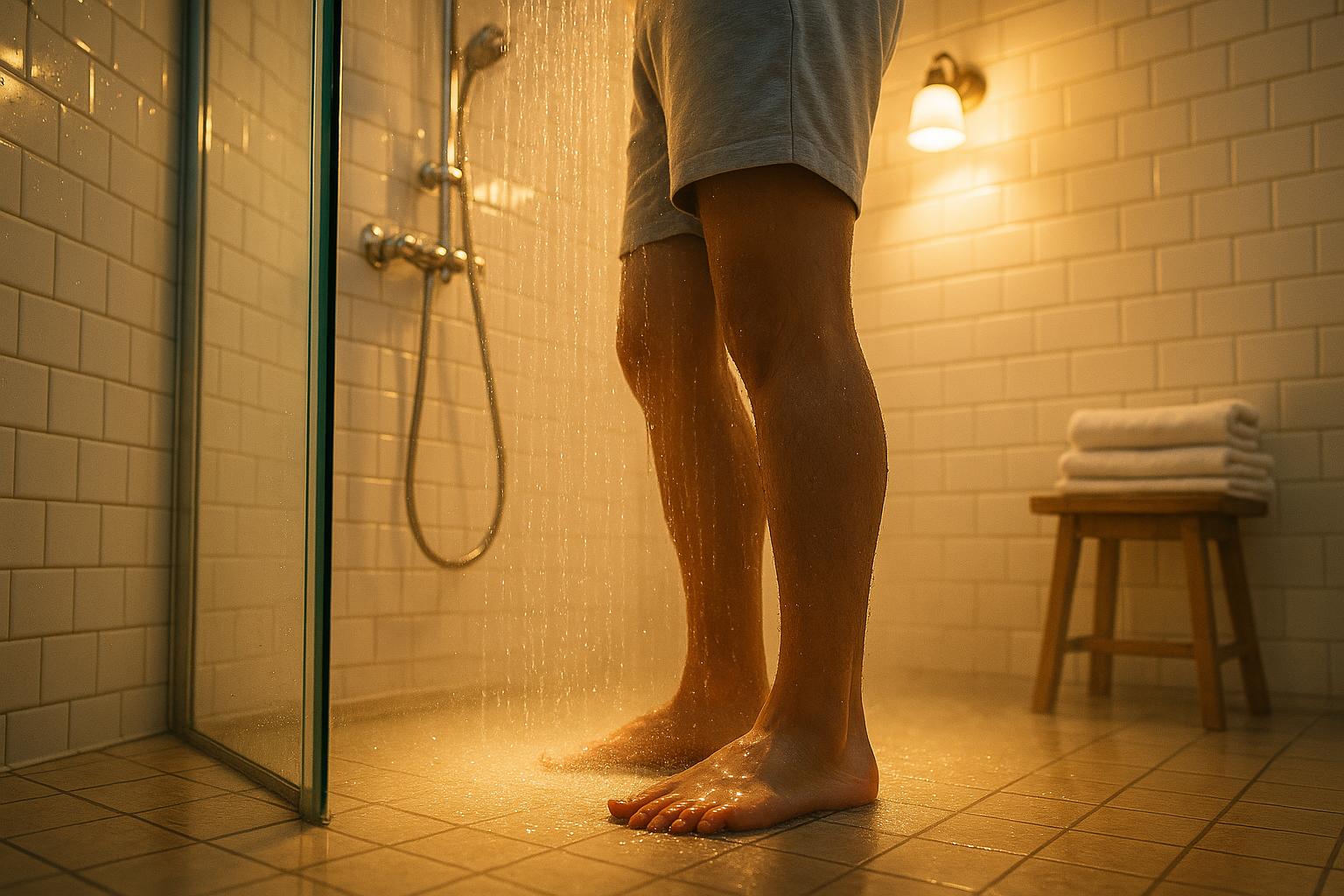
On TikTok, an everyday gesture has transformed into a well-being ritual: taking a shower in the dark, without light, without music, just the sound of the water. This minimalist routine, renamed “dark shower”, promises to calm the mind, reduce nervous over-stimulation and help you sleep better, all without any accessories or apps. For many young adults exhausted by screens, neon lights and notifications, the idea is terribly tempting.
In the videos that follow one another on the platform, we see users close the bathroom door, turn off all the lights, sometimes even put their phone down out of reach, before letting themselves be enveloped by darkness. They talk about a real reset of the brain after the day, a moment when everything slows down. But what’s so special about it, and what do the testimonials and sleep specialists really say?
Shower in the dark: how TikTok brought this ritual up to date
The principle of the is almost childish: you turn on the water, you turn off everything else. No light, no music, no podcast in the background, only the heat on the skin and the regular sound of the jet. This practice is clearly a reaction to an overstimulated daily life, between bright open spaces, noisy transport and evenings spent in front of several screens at the same time. On TikTok, thousands of users describe this interlude in the shadows as a mental cocoon where we can finally escape the ambient hubbub.
Among the fans of showering in the dark, the American Kae Elliott told the media that these showers without light help her to relax, to calm her mind and even to better manage her chronic migraines, the lack of visual stimulation allowing her to. Another user, who works in a very bright and noisy dental office, explains that this ritual acts as a decompression chamber after saturated days: without light, she has the impression of finding a calm space where she can finally release the pressure.
What benefits does showering in the dark promise for your mind and sleep?
For many followers, it serves as an emotional switch: we symbolically leave the “survival” mode of the day to switch to a gentler state, conducive to rest. Cutting off visual stimuli reduces the amount of information the brain has to process continuously. And there, everything changes a little: we feel the temperature of the water more, breathing becomes calmer, thoughts become less intrusive. This sensory refocusing limited to touch and sound is often described as a moment when we can finally “mentally unplug” before going to bed.
On the specialist side, research is still limited on this very specific practice, but certain elements are already well known. Popsugar reports that sleep specialist Carleara Weiss points out that dim light or darkness can promote the production of melatonin, the hormone associated with falling asleep. Simply put, a less stimulating environment right before bed helps the body understand that it’s time to slow down. In this context, showering in the dark acts as a sensory signal: everything calms down, breathing slows down and, quite logically, the mind follows this more peaceful movement.
How to test showering in the dark at home safely
There is no official protocol for , but TikTok videos and user feedback outline general principles that are easy to adapt. Most reserve it for the evening, at the end of the day, to make a mini-ritual before bed. The idea is to prepare your bathroom in advance, then turn off the light once everything is ready, so you don’t find yourself looking for your towel or shower gel in the complete darkness. If total darkness makes you uncomfortable, a simple night light or candle placed safely can be enough to create a soft twilight.
To limit the risk of falls, it is better to install a non-slip mat in the shower, clear the bathroom floor and keep everything you need (gel, shampoo, towel) within reach. You can start with just a few minutes, time to see how the body reacts to this new sensory experience, then extend a little if you feel good. Some prefer to call this moment their “evening lock” and, immediately afterwards, avoid turning the lights back on or picking up their phone, so as not to disrupt the relaxing effect obtained in the darkness. And if the practice is not suitable, simply dim light remains an equally interesting option for preparing the brain for rest.
