
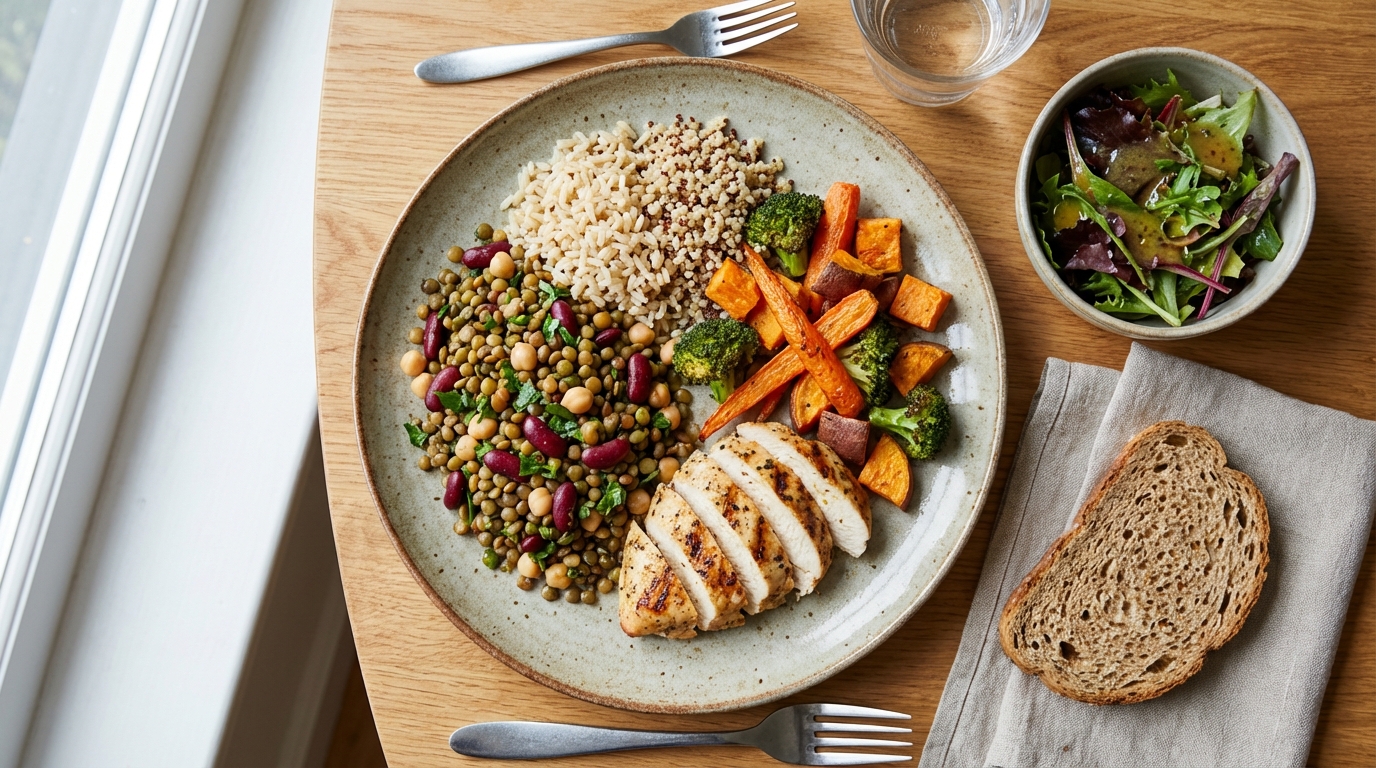
Between social networks that glorify XXL plates of meat and nutritional injunctions, it becomes difficult to know how to eat for your intestinal health.
A British survey showed that many were unaware that the daily target is around 30g of fiber, and that most only consume around fifteen grams.
Why we lack so much fiber every day
In the UK, 96% of adults do not get 30g of fiber per day. Faced with calls for dietary change, sociologist Richard Twine analyzed in a National Geographic article.
When we eliminate plants, the intestine loses the bacteria capable of digesting dietary fiber. , explains Emily Prpa.
Fiber: a largely underestimated health shield
For Emily Prpa, . A large 2023 review found that high fiber intake reduced overall cancer risk by 22% and mortality by 17%.
Fiber also nourishes the intestinal microbiota, improves transit, helps lower LDL cholesterol and stabilize blood sugar levels. , declares Emily Prpa.
The simple meat-legume swap to increase your fiber intake
A Finnish study followed 51 men for six weeks: their red and processed meat was limited to 200g per week, with the rest replaced by legumes such as peas and beans. They lost almost 1 kg and their LDL cholesterol dropped, while their plate provided more fiber: meat provides 0 g, compared to around 5 g per 100 g of cooked lentils and 7 to 8 g per 100 g of chickpeas.
In everyday life, this swap remains simple: spaghetti bolognese half meat half lentils, chili with more red beans, mixed salad with chickpeas rather than diced ham. It is still better to increase fiber gradually and hydrate well to limit bloating and discomfort.
How much fiber per day should you aim for?
Authorities recommend around 30 g of fiber per day for adults.
Why replace part of the meat with legumes?
Animal products provide no fiber, while legumes are rich in it.
How to avoid bloating by eating more fiber?
Increasing fiber very gradually, chewing well and drinking enough often limits bloating.
