
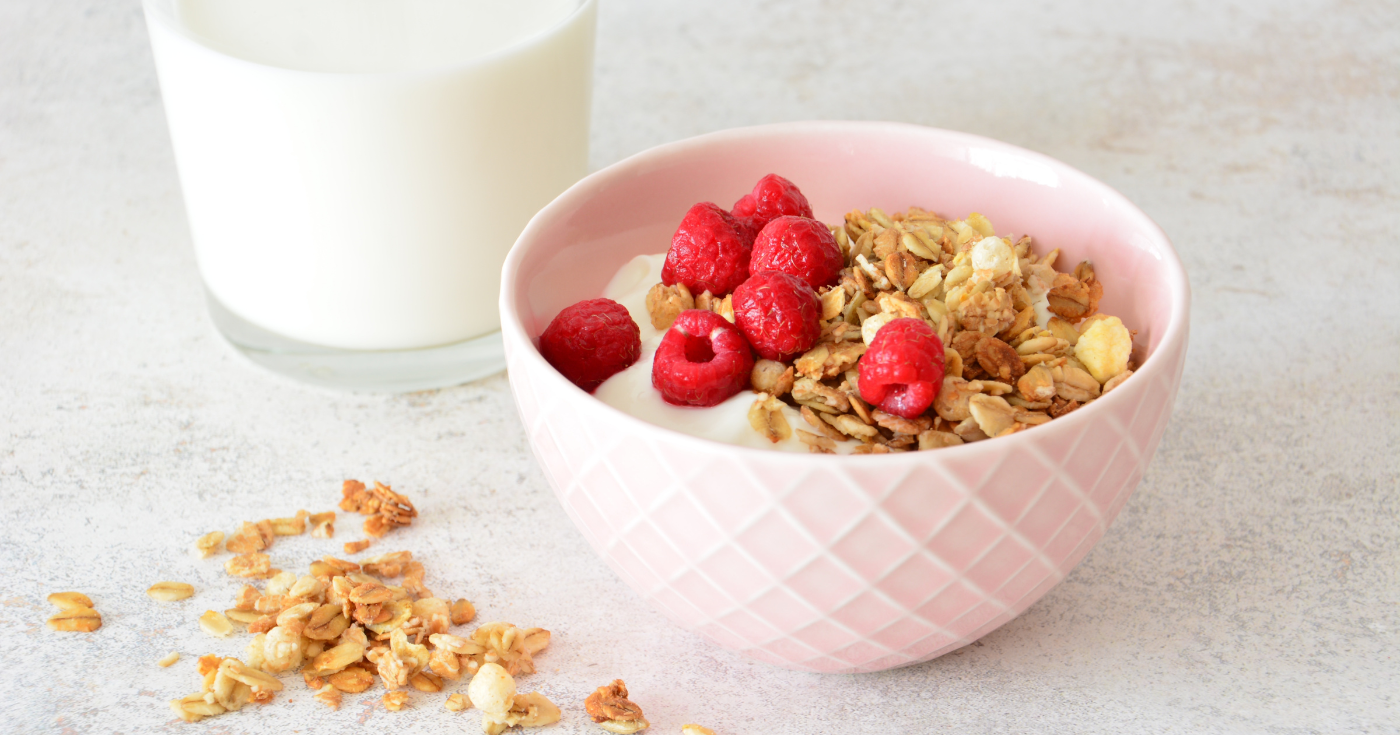
You might think your breakfast is already ready. A coffee, a piece of toast, sometimes a quick bowl swallowed standing up. It’s reassuring, it lasts a few hours… or not.
What if the real difference was not in the quantity, but in the composition? What you eat when you wake up could influence more than just your appetite.
Skyr and oats, the Danish study that changes the game for breakfast
When it comes to breakfast, the Nordic countries like effective simplicity. No question here of hygge or lifestyle trends. What interests researchers at the Danish University of Aarhus is a very widespread association in Denmark: skyr and oatmeal.
In 2024, a study of 30 women aged 18 to 30 compared two types of breakfast common in Denmark.
On the one hand, a high-protein, low-fat option made with skyr and oatmeal.
On the other, a low-protein, high-carbohydrate option, made with wholemeal bread, raspberry jam and apple juice.
The results are clear. The protein-rich breakfast increases participants’ satiety. Women who consumed skyr and oats had better cognitive functions and higher concentration levels than those who did not eat breakfast or who ate wholemeal bread.
In other words, what you put in your bowl in the morning influences not only your hunger, but also your ability to stay focused.
And this is just the beginning.
Weight control, cholesterol, microbiota: what science really says
If you’re hoping that a bowl of skyr and oats will magically disappear a few pounds, researchers remain cautious. The study specifies that this breakfast alone does not allow you to lose weight. It all depends on the total daily calorie intake.
On the other hand, its richness in proteins promotes satiety. And this satiety plays a role in weight management, provided you follow a balanced diet.
Nutritionist Laura Parada is categorical:
“It’s a great combination of foods. It promotes cardiovascular, metabolic, gastrointestinal and bone health. It also contributes to satiety and weight control. Oats provide beta-glucans, a type of soluble fiber known to reduce LDL cholesterol, improve blood sugar control and promote satiety. It also contains antioxidants and anti-inflammatory compounds that contribute to the prevention of cardiovascular and metabolic diseases. Finally, its regular consumption modulates the intestinal microbiota, stimulates the production of short-chain fatty acids and improves digestive function and immunity.
Concretely, the beta-glucans contained in oats act on several fronts: LDL cholesterol, blood sugar, digestion. Their effect on satiety partly explains why you feel less need to snack mid-morning.
This is not a marketing promise. It is a documented physiological mechanism.
Muscle mass, proteins and skyr: why it is strategic after 35 years
Muscle mass is not just a matter for athletes. It represents a reserve of energy. And from the age of 35, muscle loss becomes a progressive reality.
This is where skyr takes on its full meaning.
Laura Parada specifies:
“Skyr is a fermented dairy product, rich in proteins of high biological value, low in fat, source of calcium and probiotics. Its consumption contributes to the preservation of muscle mass, satiety and bone health. In addition, the probiotics contained in skyr can modulate the intestinal microbiota”.
Complete proteins, low fat content, calcium intake: skyr concentrates key elements in a dense texture which slows digestion and prolongs the feeling of fullness.
As for the quantities? The expert recalls:
“clinical studies used 250 grams of skyr yogurt and 40 to 100 grams of oats per day to observe benefits on metabolism and microbiota.”
These are not approximate figures. These are the doses used in clinical protocols.
Skyr, kefir, natural yogurt: the real difference
After the kefir boom and the return to popularity of full-fat natural yogurt, it becomes useful to understand what really sets these products apart.
Laura Parada explains it clearly:
“The main difference is the type of fermentation used, the microorganisms involved, the texture and the nutritional profile. Skyr is a fermented dairy product of Icelandic origin, technically a fresh cheese, but consumed like yogurt. It is made from skim milk and lactic cultures. It does not contain yeast and its fermentation is exclusively lactic, like that of yogurt, but with a higher concentration of solids and proteins.”
She continues about kefir:
“In contrast, kefir contains a complex mixture of lactic acid bacteria, yeast and sometimes acetic acid bacteria; it is distinguished by a more diverse microbiota than that of yogurt or skyr, which gives it additional probiotic properties and a distinctive sensory profile.”
Finally, regarding natural yogurt:
“Finally, plain yogurt is produced by lactic fermentation of milk. It has a less dense texture than skyr and does not contain yeast. Its fat and protein content can vary depending on the type of milk used and the filtering process. Ultimately, what sets skyr apart is its high protein concentration and thicker texture.”
The difference is therefore due to fermentation, micro-organisms and especially the protein concentration.
Why this breakfast can change your energy in the morning
If you’re looking for a filling breakfast that’s high in protein and low in fat, the combination of skyr and oats ticks several boxes.
It acts on satiety, supports muscle mass, participates in the regulation of blood sugar and influences the intestinal microbiota. It is based on data from a 2024 study and on recommendations from clinical studies.
This is not a passing fad. It is a simple combination, used for a long time in the Nordic countries, and now analyzed by research.
It’s no longer just a question of what you eat in the morning. But what this choice changes in your day.
FAQ: Skyr and oatmeal breakfast
Does skyr and oatmeal breakfast really help control weight?
Yes, it promotes satiety, which can support weight management.
According to the study carried out in 2024 by the University of Aarhus, a breakfast rich in protein such as skyr combined with oatmeal increases the feeling of satiety. Nutritionist Laura Parada specifies that this combination contributes to weight control in a context of controlled total calorie intake. The beta-glucans in oats also help regulate blood sugar and LDL cholesterol.
Why is skyr richer in protein than natural yogurt?
Skyr contains a higher concentration of dairy solids and protein.
According to Laura Parada, skyr is a fermented dairy product of Icelandic origin, technically a fresh cheese eaten like yogurt. It is made from skimmed milk and lactic cultures, without yeast, with exclusively lactic fermentation. Its thicker texture and high protein content distinguish it from classic plain yogurt.
How much skyr and oats to consume in the morning for metabolic benefits?
Clinical studies used 250g of skyr and 40-100g of oats per day.
According to Laura Parada, some studies have observed benefits on metabolism and the microbiota with:
- 250 grams of skyr yogurt
- 40 to 100 grams of oatmeal
These quantities have been studied in clinical protocols targeting metabolic and intestinal health.
Is skyr better than kefir for gut health?
Kefir has a more diverse microbiota, but skyr remains rich in probiotics.
Laura Parada explains that kefir contains a complex mix of lactic acid bacteria, yeast and sometimes acetic acid bacteria, giving it a more diverse microbiota. Skyr, for its part, is fermented exclusively by lactic cultures. Both products support the intestinal microbiota, but their microbial profile differs.
Does a protein-rich breakfast improve concentration?
Yes, the 2024 Danish study shows improvement in cognitive functions.
The study conducted by Aarhus University on 30 women aged 18 to 30 indicates that a high-protein breakfast, consisting of skyr and oats, increased concentration and cognitive functions compared to a high-carbohydrate breakfast or no breakfast.
Yes, it promotes satiety, which can support weight management.
According to the study carried out in 2024 by the University of Aarhus, a breakfast rich in protein such as skyr combined with oatmeal increases the feeling of satiety. Nutritionist Laura Parada specifies that this combination contributes to weight control in a context of controlled total calorie intake. The beta-glucans in oats also help regulate blood sugar and LDL cholesterol.
” } }, { “@type”: “Question”, “name”: “Why is skyr richer in protein than plain yogurt?”, “acceptedAnswer”: { “@type”: “Answer”, “text”: “
Skyr contains a higher concentration of dairy solids and protein.
According to Laura Parada, skyr is a fermented dairy product of Icelandic origin, technically a fresh cheese eaten like yogurt. It is made from skimmed milk and lactic cultures, without yeast, with exclusively lactic fermentation. Its thicker texture and high protein content distinguish it from classic plain yogurt.
” } }, { “@type”: “Question”, “name”: “How much skyr and oats to consume in the morning for metabolic benefits?”, “acceptedAnswer”: { “@type”: “Answer”, “text”: “
Clinical studies used 250g of skyr and 40-100g of oats per day.
According to Laura Parada, some studies have observed benefits on metabolism and the microbiota with:
- 250 grams of skyr yogurt
- 40 to 100 grams of oatmeal
These quantities have been studied in clinical protocols targeting metabolic and intestinal health.
” } }, { “@type”: “Question”, “name”: “Is skyr better than kefir for gut health?”, “acceptedAnswer”: { “@type”: “Answer”, “text”: “
Kefir has a more diverse microbiota, but skyr remains rich in probiotics.
Laura Parada explains that kefir contains a complex mix of lactic acid bacteria, yeast and sometimes acetic acid bacteria, giving it a more diverse microbiota. Skyr, for its part, is fermented exclusively by lactic cultures. Both products support the intestinal microbiota, but their microbial profile differs.
” } }, { “@type”: “Question”, “name”: “Does a high-protein breakfast improve concentration?”, “acceptedAnswer”: { “@type”: “Answer”, “text”: “
Yes, the 2024 Danish study shows improvement in cognitive functions.
The study conducted by Aarhus University on 30 women aged 18 to 30 indicates that a high-protein breakfast, consisting of skyr and oats, increased concentration and cognitive functions compared to a high-carbohydrate breakfast or no breakfast.
” } } ) }
