
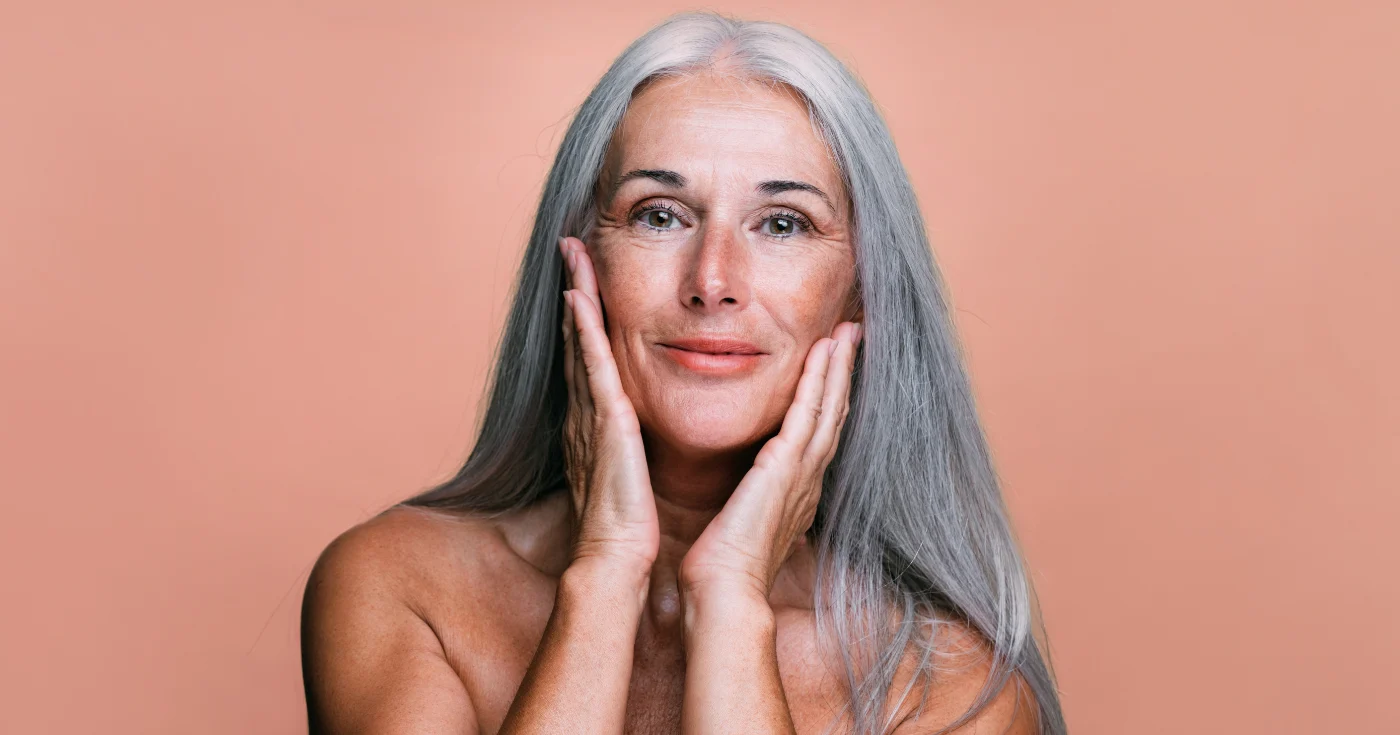
Between hot flashes and broken nights, many women discover that another sign of menopause is hidden… in their hairbrush. The part widens, the lengths appear finer, the ponytail loses volume. This hair transformation is sometimes scarier than wrinkles.
From the age of 45–55, the drop in estrogen changes the skin, which loses its lipids and becomes drier, but also the scalp. Hair follicles react to this hormonal upheaval, which can trigger lasting hair loss. It remains to be understood what exactly is at stake.
Menopause and hair loss: when hormones disrupt the scalp
For Dr Dima Haidar, dermatologist, several factors intertwine. She recalls in Femme Actuelle: . Hormonal drop, iron deficiency, androgenetic alopecia or significant stress are not treated in the same way.
Dr Manav Bawa summarizes, in The Independent: . When these hormones decrease, androgens take over at the hair follicle, which becomes miniaturized: hair grows back finer, shorter, and falls out more easily.
Hair loss in menopause: how to make the correct diagnosis
“Physiological” loss is around 50 to 60 hairs per day. If the density decreases, the part widens for several weeks in a row or you find your hair everywhere, Dr. Haidar recommends not waiting to consult, especially during perimenopause.
This vigilance is also psychological. Scalp specialist Kelly Morrell recalls in The Independent: . To avoid doubt, Dr. Haidar advises: rather than following treatments at random.
What to do against hormonal hair loss: treatments and useful actions
In terms of treatments, certain medications act directly on the follicle. Minoxidil, prescribed on the scalp, remains the reference for female androgenetic alopecia. In selected cases, hormonal treatment for menopause or iron, vitamin D or zinc supplements can correct a deficiency, after medical assessment.
At the same time, local techniques exist. Dr Haidar cites mesotherapy for example: . She also reminds: and that, for advanced falls.
Why does menopause cause hair loss?
The decrease in estrogen and progesterone shortens hair growth and reinforces the effect of androgens.
When to consult for hair loss during menopause?
If the loss lasts several weeks, the density decreases or the scalp becomes very visible.
What treatments for hormonal hair loss?
Topical Minoxidil, mesotherapy, certain supplements and sometimes transplantation can improve a hormonal drop.
