
You know that “snow” that falls from your roots as soon as you run your hand through your hair, even after changing your anti-dandruff shampoo three times. Itchy scalp, oily roots, dull lengths: the combination can quickly become hellish. What if the key was hidden in an active ingredient often relegated to the essential oils aisle, but increasingly present in our shower gels and shampoos.
Tea tree shampoo for dandruff is gradually establishing itself as a credible natural alternative to classic formulas. A clinical study using a shampoo containing 5% tea tree essential oil showed a reduction of approximately 41% in the severity of dandruff compared to a neutral shampoo. Enough to arouse curiosity when looking for a truly soothed scalp.
Why Tea Tree shampoo works on dandruff
Tea tree essential oil (Melaleuca alternifolia) concentrates between 30 and 50% terpinen-4-ol and approximately 3% α-terpineol, molecules known for their antifungal, antiseptic and anti-inflammatory properties. , explains trichologist Sara Hallajian in Elle. This targeted effect is of particular interest to dandruff linked to the proliferation of the fungus Malassezia globosa.
On an oily, irritated or scaly scalp, the purifying action of tea tree helps to remove oily dandruff and regulate excess sebum, while limiting inflammation. The manuca rosalina tea tree shampoo combines tea tree essential oil, moisturizing manuca oil and soothing rosalina extract to “purify the scalp” and “reduce dandruff” while hydrating the hair. A positioning which targets both dry dandruff and thicker, sticky patches.
For whom is Tea Tree shampoo the right scalp ally?
According to colorist Peralta, these formulas are ideal for . Hairstylist David Lopez particularly recommends them for “thicker, rough and curly” hair that accumulates more products on the scalp and sees flakes appear.
To choose the right anti-dandruff tea tree shampoo, Sara Hallajian advises avoiding formulas where tea tree is the very first ingredient, considered too aggressive, and looking for moisturizing agents: , she adds. The right reflexes when buying remain simple:
- prefer formulas without strong sulfates or silicones, better tolerated by sensitive scalps;
- check the presence of soothing active ingredients (aloe vera, glycerin, bisabolol, lavender, magnolia);
- turn to organic or certified shampoos when you want to limit harsh surfactants.
How to Use Tea Tree Shampoo to Maintain a Healthy Scalp
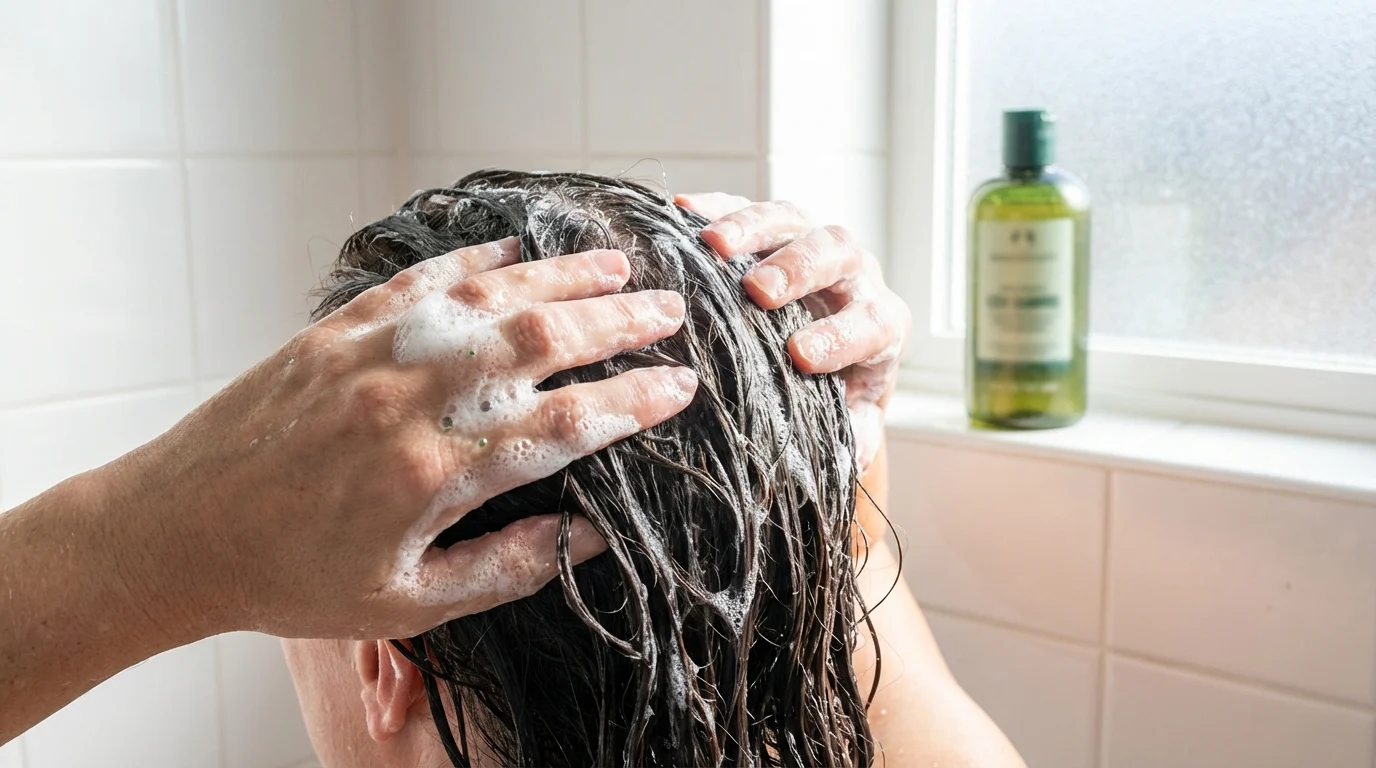
Use must remain measured. , explains David Lopez, before specifying: . The recommendations are similar to those of natural brands: apply to wet hair, gently massage the scalp, leave for two to three minutes to allow the active ingredients to act then rinse thoroughly.
Like any product containing essential oils, a shampoo with tea tree essential oil requires some precautions. Experts advise against its use in children under 6 years old and in pregnant or breastfeeding women without medical advice. Adding several drops of pure essential oil to your usual shampoo increases the risk of irritation: a prior skin test is recommended. And if, despite everything, the itching gets worse and thick patches, crusts or hair loss appear, it is preferable to consult a dermatologist and medicated shampoos.
Does tea tree shampoo really get rid of dandruff?
A study with 5% tea tree showed approximately 41% reduction in dandruff severity compared to a neutral shampoo, making it an attractive option for mild to moderate dandruff.
Can you use tea tree shampoo on curly or thick hair?
Experts point out that all hair types can benefit, with particular interest in thick, coarse or curly hair prone to product buildup on the scalp.
Can you use a tea tree shampoo every time you wash?
Specialists recommend using it every other wash or every few shampoos, to avoid drying out the scalp and preserve the lengths.
