
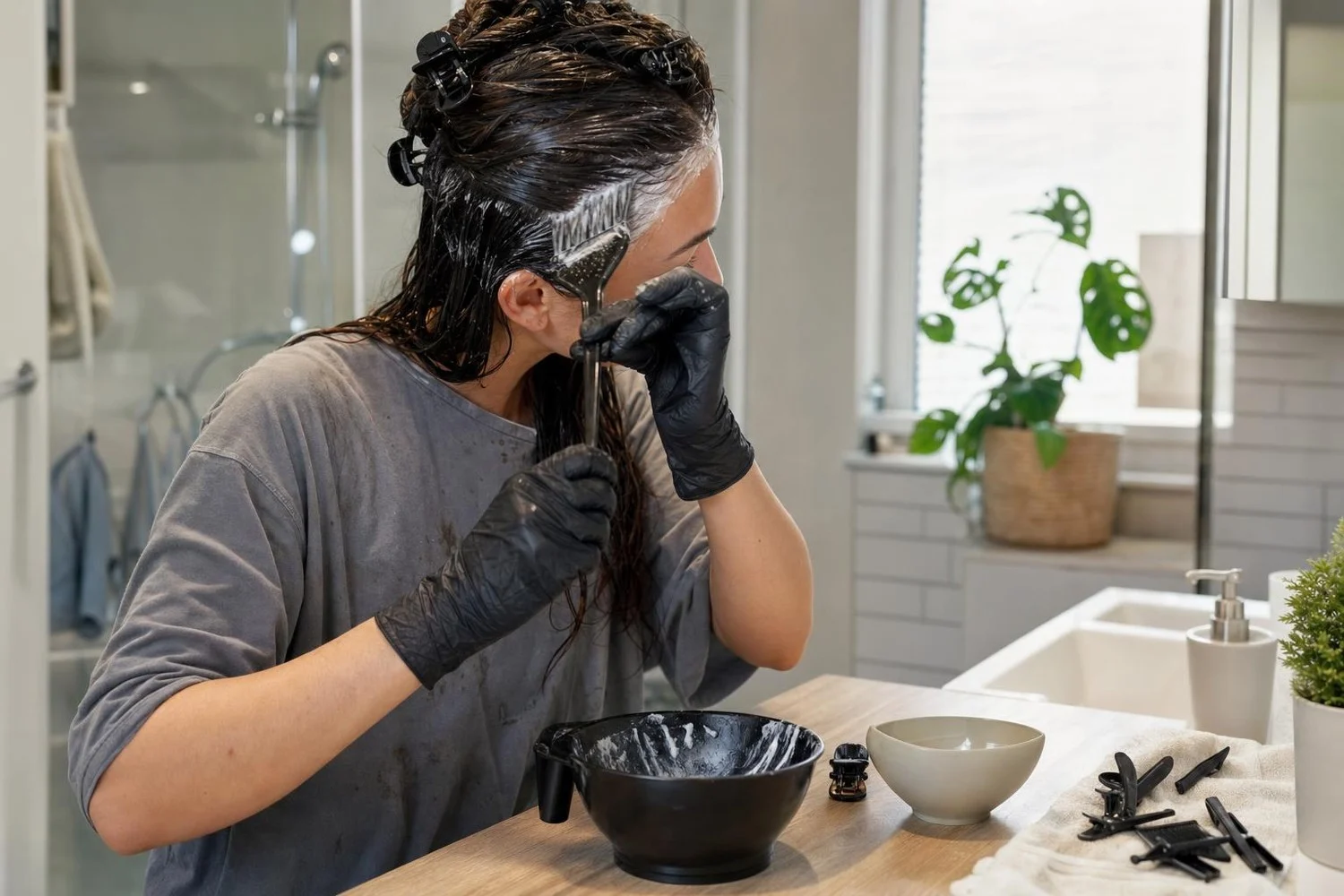
Between salon deadlines and budget, many end up trying home coloring. Sometimes everything goes well. Sometimes the bathroom becomes covered in stains and the color turns dramatic. What exactly does following the actions of a pro change?
A colorist used to make-ups summarizes the rule: at home, we remain reasonable and we follow a precise method. Here is his protocol for successful home coloring without disaster, from diagnosis to rinsing, without forgetting the emergency plan in case of failure.
Home coloring: the diagnosis before taking out the box
Before even choosing the shade, look at your hair like a pro: natural or already colored, bleached, straightened, very curly, dry, brittle, irritated scalp. The more weakened the fiber, the more likely the home coloring will break the hair or set unevenly.
Certain situations should be entrusted to the salon: transition from black to very light blonde, lightening of more than two tones, hair already bleached several times. Before any application, do a 48-hour allergy test behind the ear and, ideally, a color test on a small strand.
Choosing the right home coloring and preparing the ground
Choose the formula according to the objective. Permanent coloring lasts and covers white hair, but creates more sensitization. The tone on tone brings shine and reflections, fading in a few weeks. Pigment treatments and vegetable coloring revive the existing color, with a softer and progressive effect.
Adapt the oxidant: 10 volumes to darken or sensitized hair, 20 volumes to cover whites and lighten by one tone, 30 volumes to gain two to three tones maximum. Respect the ratio 1 to 1.5, work on dry hair that has not been washed for 24 to 48 hours, protect the facial contour and wear gloves.
Application, rinsing and maintenance: achieve your home coloring without stress
Divide the hair into four sections, then into thin sections of approximately one centimeter. Apply the freshly prepared mixture first to the roots, warmer, then to the lengths if necessary. Saturate each strand well. Set a timer around 35 minutes and stick to this time.
Rinse by adding a little lukewarm water, massage, then continue until the water runs clear. Then make a shampoo for colored hair. If the color comes out too dark, use more gentle shampoos; If the scalp burns or itches, rinse immediately and consult. To remove stains from skin, rub with a little fresh hair color before final rinsing, then cleanse.
How to choose the right type of home coloring?
Look at the condition of your hair and your goal: permanent to cover the white spots, tone-on-tone or vegetal to gently revive it.
How many tones can you change with home coloring?
At home, it is best not to try to lighten more than two tones compared to your natural color.
What should I do if my home coloring fails?
If the shade is too dark or uneven, rinse well, use several gentle shampoos, then quickly consult a hair colorist.
