
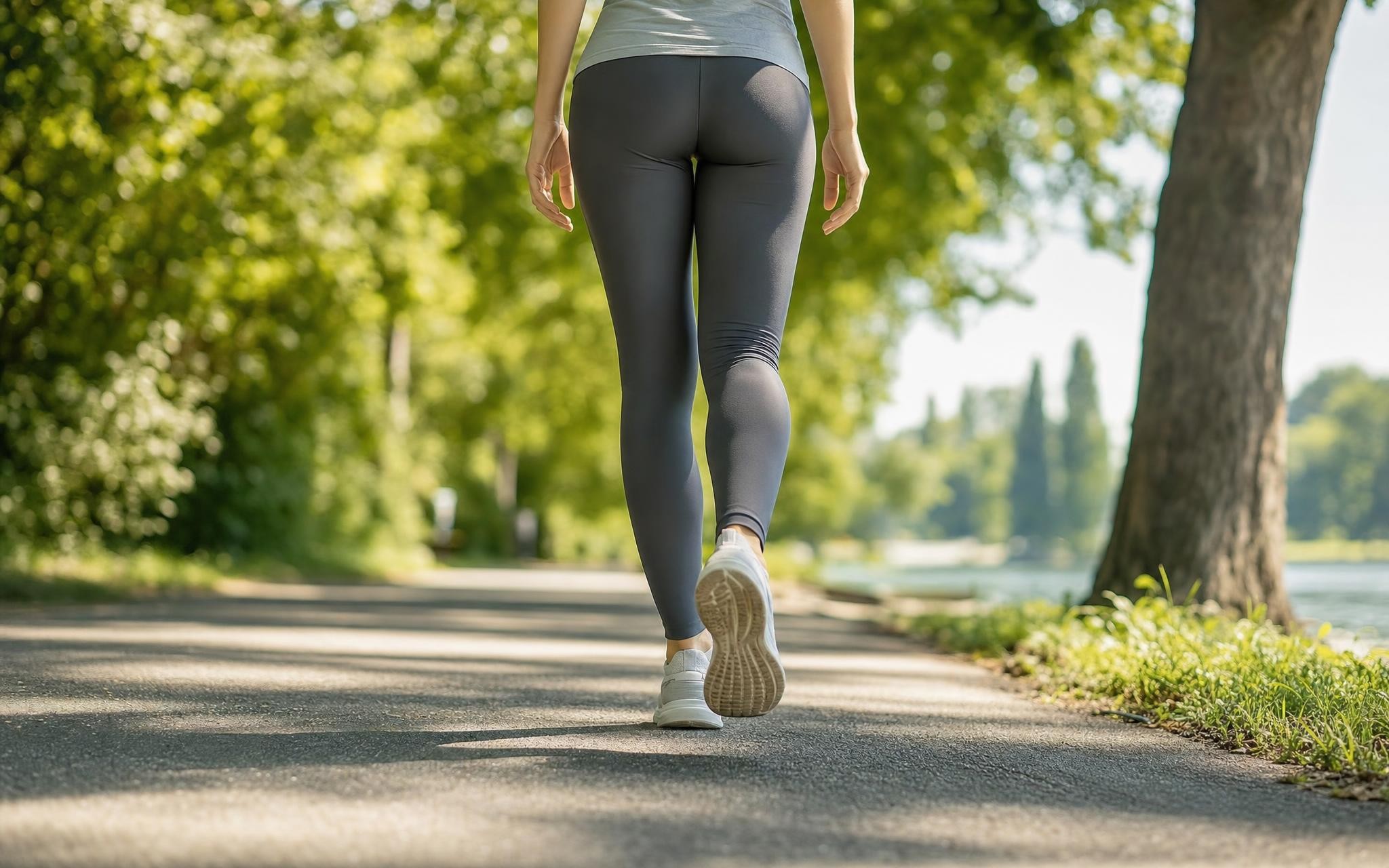
Heavy legs at the end of the day, swollen ankles, suddenly tight jeans: for many women, water retention is part of everyday life. This phenomenon concerns between 30 to 50% of the French population. And it also weighs on morale.
Faced with these legs that swell as soon as the heat rises or we sit for a long time, a method attracts the attention of wellness experts: lymphatic walking. A way to transform a simple walk into a drainage gesture.
Lymphatic walking: how it affects water retention
The lymphatic system, a network of vessels and nodes, transports fluids and waste to the body’s filtering centers. When it functions less well, water stagnates in the tissues of the legs: they become heavy, swollen, sometimes painful for nearly 70% of women.
Classic walking already helps this system: when the heel lands and then the sole of the foot unfolds, the muscular pump of the foot and calf pushes the lymph upwards. Arm swinging and deeper breathing complete this work.
Lymphatic walking: the right posture for thinner legs
To go further, some practitioners talk about lymphatic walking. “”, explains Petra Gospic, massage therapist specializing in lymphatic drainage and founder of Body Lab, in .
During a walk, Petra Gospic recommends simply “” She also reminds that, “”, which makes each step more effective in draining the legs.
Lymphatic drainage: complementary actions for lighter legs
To further strengthen lymphatic drainage, self-massage can complement walking. Specialist on the subject, Fleur Boschel shares a routine targeted on the thighs and calves. She recommends first activating the lymph nodes in the groin and behind the knee, then working on the skin.
For example, she describes tonic pinching: “”, explains Fleur Boschel in a tutorial relayed by . She then adds: “”
Does lymphatic walking help you lose weight?
It mainly drains water, not fat.
Who can practice lymphatic walking?
Most adults without pathology can adopt it.
When to consult before changing your approach?
In case of pain, persistent edema or diagnosed lipedema.
Sources
- The Digitals
“Hypershell: three new exoskeletons to give your legs a motor”
