
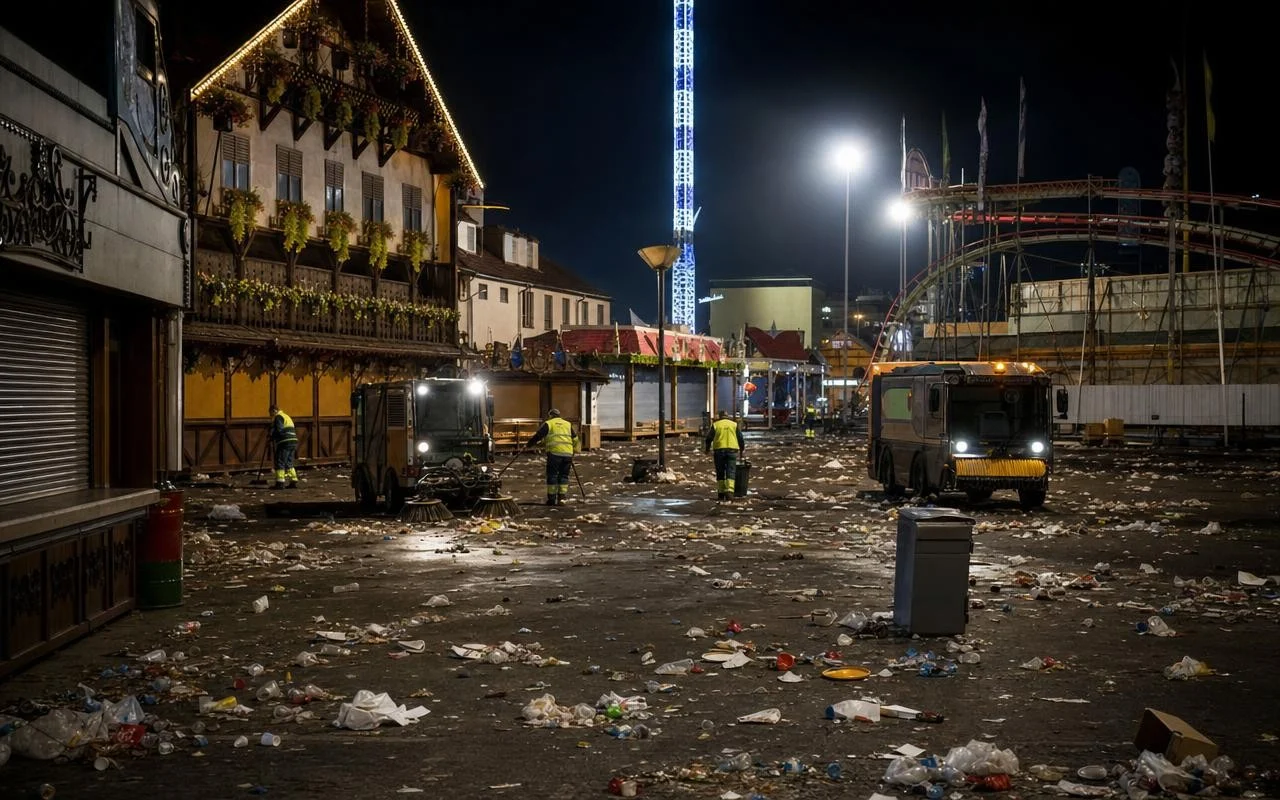
When the music stops at the Colmar Wine Fair, the exhibition center looks like the day after an XXL party. Glasses forgotten on the tables, sticky floors, toilets strained, stands still lit even though visitors have already gone to sleep. Behind this image of a popular meeting which attracts nearly 300,000 people in ten days, another team is discreetly taking over. And this is where the real nighttime cleaning of the Colmar Wine Fair begins.
Every night, according to France Télévisions, 26 people work for seven hours to restore the Colmar Wine Fair, from cleaning the toilets to collecting waste in the halls. A meticulous, repetitive job, which must be finished before the arrival of the first exhibitors and visitors the next morning, without anyone really seeing those who carry it out.
A giant event that requires careful cleaning
Organized at the Colmar Exhibition Centre, the Alsace Wine Fair is one of the three largest trade fairs in France. For ten days, concerts, tastings and professional meetings take place in the halls and outdoors. Each evening leaves behind tons of waste, but also hundreds of meters of floors and toilets to be refurbished before the next opening.
To cope, Colmar Expo relies on the company Derichebourg Facility, responsible for cleaning and waste management on site. The 26 agents mobilized each night intervene in zones: toilets, exhibition halls, catering areas, exterior aisles. Their mission remains simple on paper but dense on the ground: everything must appear as good as new in the early morning.
What a cleaning night at the Wine Fair looks like
When the last visitors leave the park, around twenty Derichebourg employees take over around 3 a.m. In the aisles, bottles, cups, boxes and confetti are still accumulating. The agents collect, sweep, load the bags into carts, while others take care of the bars and catering areas. The smell of cold food mixes with cleaning products, and silence gradually replaces the sound system.
Part of the team focuses on sanitation: emptying trash cans, restocking consumables, complete disinfection of cabins and sinks. Other agents wipe down the tables, put away the chairs, empty and replace the sorting containers. Once the waste is grouped, it is sent to the technical areas where the second stage of work begins: sorting and recovery.
Sorted waste, recycled oils and 100% recovery objective
The Wine Fair displays a clear ambition with Colmar Expo, ISO 20121 certified since January 2026: to recycle 100 percent of the waste produced at the event. In 2024, 95.49 percent of waste has already been recovered, including 50 tons of glass, 8 tons of cardboard, 6 tons of wood and 1,200 liters of cooking oil transformed into biofuel by the company Quatra.
To achieve this, three mobile recycling centers, supplemented by a permanent recycling center on the park, receive the sorted flows throughout the day and until late at night. Exhibitors must separate household waste, glass, cardboard, bio-waste, oils and wood. For the public, new three-way “glass/packaging/other waste” bins have been deployed and paper flyers have almost disappeared. Each bag that the night teams place in the bins then corresponds to a dedicated sector, up to the reuse of pallets by Esat Les Tournesols de Colmar or the collection of glass and bio-waste by the city and the agglomeration.
How many people are responsible for nightly cleaning of the Colmar Wine Fair?
Every night, 26 agents work for around seven hours to clean the toilets, halls, catering areas and paths of the exhibition center.
What happens to the waste collected during the Alsace Wine Fair?
In 2024, 95.49 percent of waste was recovered, including 50 tons of glass, 8 tons of cardboard, 6 tons of wood and 1,200 liters of oils.
How can visitors help the Wine Fair cleaning teams?
By using tri-flow bins correctly, returning their glasses and limiting waste left on the ground in the aisles and stands.
