
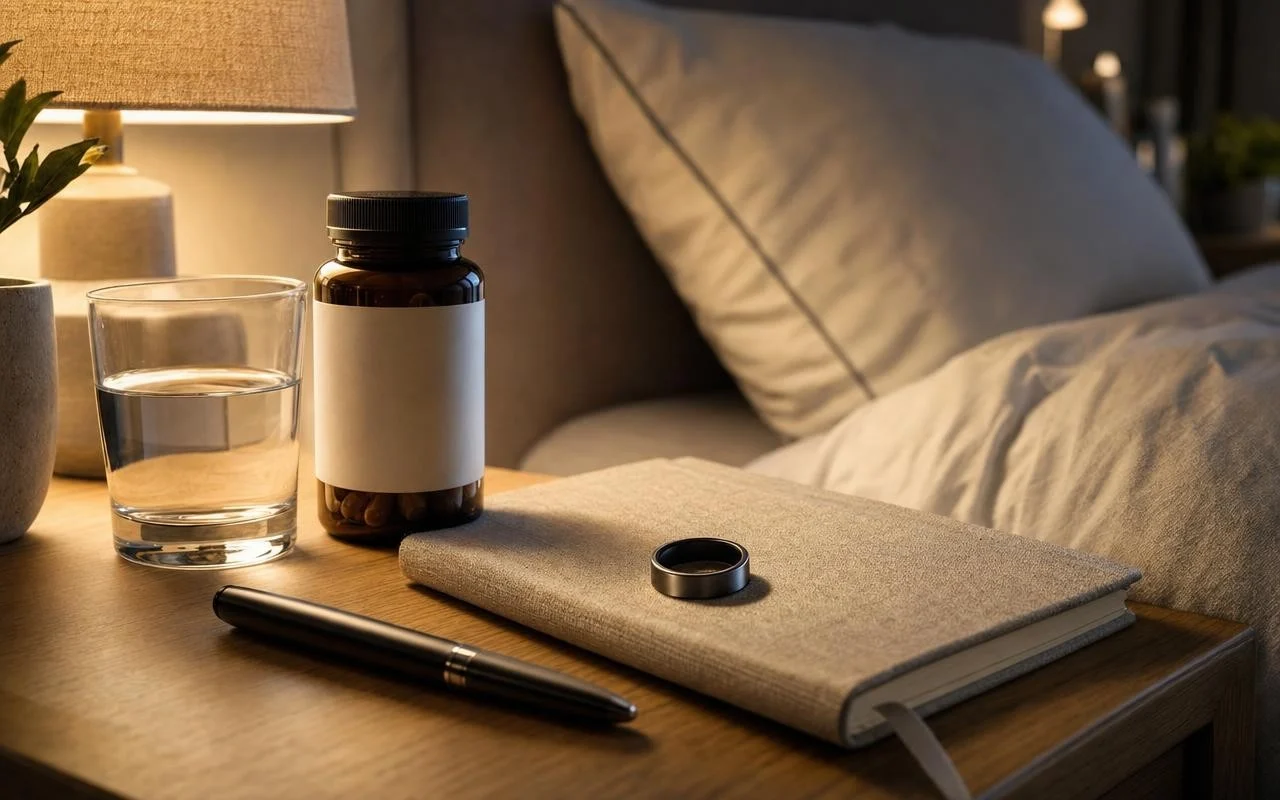
Tracking your sleep to the nearest decimal place with a connected ring is as fascinating as it is intriguing. When nights seem “okay”, seeing an Oura Ring sleep score stuck at “good” makes you want to find the missing little adjustment; for a Vogue journalist, this adjustment was simply a change in the type of magnesium.
His experience highlights a question many are asking: Can a certain magnesium for sleep really boost a sleep score, and not just improve how you feel when you wake up? Between Oura data, spray for the soles of the feet and specialist advice, the elements are starting to come together.
Magnesium and Oura Ring Sleep Score: What’s Changed
Before this test, the journalist already described rather exemplary sleep hygiene: cool room, anti-blue light filter on the phone, decompression ritual with her partner. She often took a magnesium glycinate capsule in the evening, believing it was supporting her nervous system, but found that missing a dose didn’t make much of a difference to her night or her Oura Ring score.
The breakthrough came with a magnesium spray applied directly to the soles of the feet, just after moisturizing, then left to air dry before slipping under the duvet. For six weeks, she repeated this ritual without changing the rest of her routine: her Oura sleep score, which summarizes duration, quality, paradoxical phases, heart rate variability and body temperature, then went from “good” to “excellent”.
How magnesium affects sleep and stress
To decode this change, functional medicine practitioner Lelani Loubser, based at The HVN in London, recalls the benefit of magnesium applied locally: confirms Lelani Loubser, interviewed by Vogue. She also specifies:
The specialist adds further: , she continues. Doctissimo, for its part, points out that magnesium participates in more than 300 biological reactions and that nearly 70% of adults are below the recommended intake, located between 300 and 400 mg per day, resulting in persistent fatigue, irritability, cramps, sleep disorders and even palpitations.
What type of magnesium to choose to sleep better
When food is not enough, Doctissimo recommends well assimilated forms such as magnesium citrate or bisglycinate, better tolerated than the oxide often used in entry-level supplements. EDP Nutrition emphasizes that the choice of a sleeping magnesium is based above all on the actual bioavailability of the form, digestive tolerance, a consistent daily dosage and the quality of the source, whether it is marine magnesium or not.
The transdermal spray bypasses the digestive tract, an advantage highlighted by Jules Miller, founder of The Nue Co, since certain nutrients are poorly absorbed there. Before supplementing, doctors emphasize the benefit of first strengthening intake via foods rich in magnesium (pumpkin seeds, almonds, spinach, quinoa, avocado, dried fruits, dark chocolate, magnesium mineral water) and limiting alcohol, coffee, ultra-processed foods or excess calcium, which slow down its effectiveness, while seeking medical advice in the event of a chronic illness or treatment.
What is the best magnesium for sleep?
The sources cited highlight organic forms that are well assimilated such as citrate or bisglycinate, better tolerated than oxide, with a choice ideally adjusted by a health professional.
When to take magnesium to sleep better?
According to EDP Nutrition, taking it is generally recommended in the evening or during a meal, which promotes both relaxation and good digestive tolerance.
How long does it take to feel the effect of magnesium on sleep?
In the example told by Vogue, the Oura Ring sleep score went from “good” to “excellent” after six weeks of spray ritual, but the duration varies depending on the level of deficiency.
Does marine magnesium help with stress and sleep disorders?
EDP Nutrition states that marine magnesium is widely used to reduce fatigue, support the nervous system and improve recovery, with sufficient intake associated with better sleep quality.
Sources
- Doctissimo
“Fatigue, stress, sleep problems? What if it was a magnesium deficiency… Here are the signs not to be neglected”
