
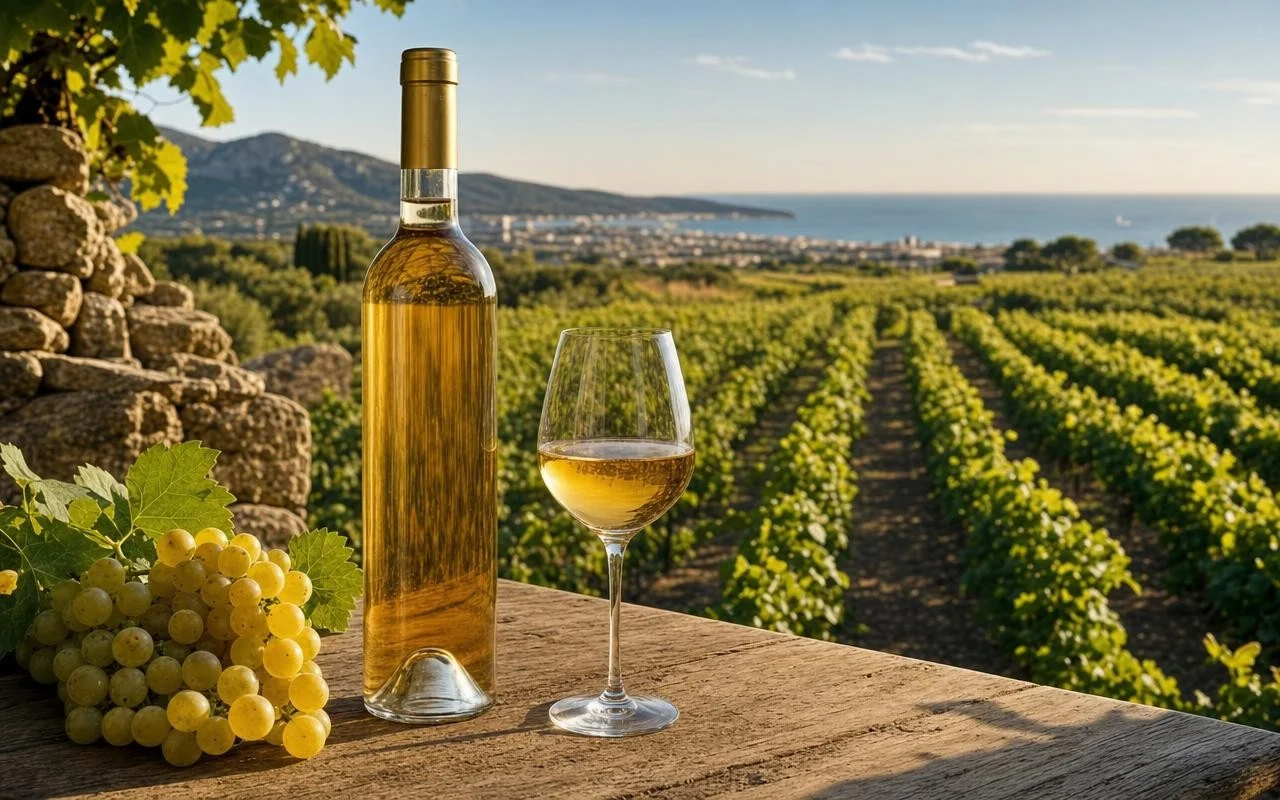
A rare Muscat, announced as a great vintage, which arrives just as the appellation is preparing to celebrate its 90th anniversary: in Frontignan, the next bottling is already arousing curiosity. The harvest was completed in exceptional heat and two weeks early, without sacrificing the quality of the grapes.
The producers speak of a juice of unusual purity, carried by an average alcohol level of 16.3°, ideal for a Muscat de Frontignan. And yet, behind this promise of a great year, a figure makes us think: the harvest fell by 17%, making the future Muscat linked to the 90 years of the appellation rarer than expected.
A Muscat de Frontignan announced as a great vintage
In Frontignan, a small wine-growing town in Hérault about twenty kilometers from Montpellier, the pruning shears are put away but the enthusiasm does not subside. Christophe Sala, winemaker at Domaine de la Plaine, sums up the producers’ state of mind: , he confides to France 3 Occitanie.
At the Frontignan cooperative, the vats confirm these impressions. The analyzes display these famous 16.3° on average, a sought-after balance for a natural sweet wine. Oenologist Margaux Danjou describes notes, a dense aromatic profile which suggests luminous vintages, particularly awaited for the celebrations to come.
Production down 17%: a rarer muscat
Behind the quality, the volumes are worrying. Production fell from 15,000 hectoliters to 12,500, a drop of 17%. For Muscat de Frontignan, which generates on average 2 million bottles on 550 hectares, this contraction changes the equation, especially as a symbolic anniversary approaches.
The president of the cooperative cellar, William Juan, describes a phenomenon observed since the spring: The winegrowers having not identified a single cause, this underload raises questions, while nourishing the idea of more concentrated and more precious wines for this vintage.
1936–2026: 90 years of a pioneering AOC and the year of natural sweet wines
Created in 1936, the Muscat de Frontignan appellation is one of the very first French AOCs. This pioneer status brings it closer to other great natural sweet wines, such as Rivesaltes, whose AOC also dates from August 1936. In 2026, the INAO has chosen to highlight the 90 years of these first appellations and launch a “year of natural sweet wines”, with Rivesaltes in the showcase.
For Frontignan, this dynamic comes at the right time. Between the announced quality of the vintage, its rarity linked to the 17% drop and the symbolic 90-year calendar, the vintages which will arrive on the tables in the coming years are already part of a broader story, where wine heritage and the pleasure of glass intersect at each tasting.
What will be the style of Muscat de Frontignan linked to the 90 years of the appellation?
Professionals describe very clear juices, with an average degree of 16.3° and aromas of apricot, yellow and white fruits, but also white flowers, promising intense and elegant wines.
Why has the production of Muscat de Frontignan fallen by 17%?
Winemakers observed fewer clusters per vine, going from around 15–20 to only 8–10. This phenomenon appeared as soon as bud burst, without a clearly identified explanation at this stage.
What place does Muscat de Frontignan occupy among French natural sweet wines?
Born in 1936, the AOC Muscat de Frontignan is one of the first appellations of natural sweet wines, alongside Rivesaltes. In 2026, it is part of the year of natural sweet wines brought to the national level.
