
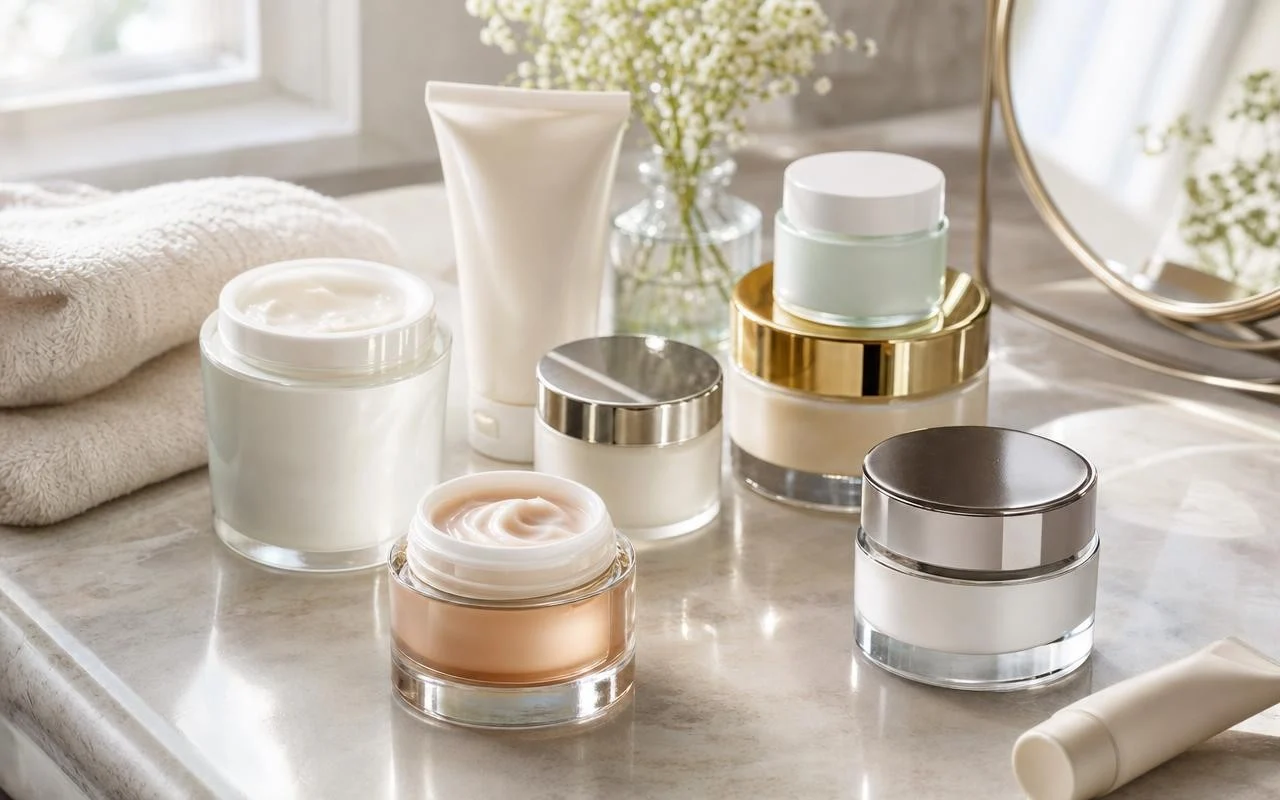
We line up the treatment bottles, we test the new thing of the moment, we hope for the perfect glow. As Mona Chollet writes, our time adores “miraculous ointments”. However, despite all these attempts, the skin sometimes remains dull, marked and uncomfortable. The promise of the anti-aging cream then seems disappointing.
Our selection of 18 anti-aging creams focuses on something other than the race for ever more active ingredients: formulas that truly respect the skin barrier, plump up the features and awaken radiance, while integrating into a simple routine, supported by a few good “inside & out” reflexes.
Anti-aging cream and skin barrier for luminous skin
Dermatologists interviewed by Allure describe patients whose skin is exhausted by repeated tests. The accumulation of active treatments and the constant change of routine end up triggering redness, tightness, small bumps, flaking or itching, typical signs of a weakened barrier. Laurel Naversen Geraghty therefore recommends introducing only one new product at a time and avoiding testing several in the same week.
Corey Hartman reminds us that a well-tolerated treatment deserves around three months of regular use before being judged, even more for retinoids. And then the skin does not only nourish itself with cosmetics: a varied diet rich in vitamin C, vitamin E and good fatty acids, sufficient hydration, regular sleep and reasonable stress management also contribute to luminous and comfortable skin. When the skin feels tight despite drinking water, it is often the barrier that does not retain moisture, hence the importance of a suitable cream.
The active ingredients in anti-aging creams that plump and illuminate
The dermatologist cited by Elle recalls that the role of these treatments is to “prevent and therefore delay the effects of aging on the skin”, but also that an anti-aging cream “aims to correct, to a lesser extent, certain signs of aging already established such as sagging skin or fine lines”. She specifies that “retinol and vitamin C are the pillars of an anti-aging routine”. Retinol stimulates collagen, accelerates skin renewal, improves firmness, radiance and spots, also useful on acne-prone skin.
Vitamin C stands out for “its undeniable antioxidant action which has a strong preventive effect on free radicals” and for its role in the formation of collagen. Hyaluronic acid is described as “an excellent moisturizer”, ideal for plump skin. Vitamin B3 or niacinamide, “If alone, it does not have specific virtues, mixed with other active ingredients, it can accentuate the benefits”. “Coupled with retinol, it increases the tolerance of the treatment thanks to its soothing properties.” AHAs are more suitable for oily and dull skin. For sensitive skin, the dermatologist recommends collagen, niacinamide, resveratrol, hyaluronic acid and vitamin C, avoiding concentrated retinol and strong acids.
18 anti-aging creams: use them correctly for plump skin
Among targeted treatments, Clinique’s Smart Clinical Repair Collagen + PDRN Cream is a good example of this new generation of creams. According to the brand, it “improves the texture of the skin and strengthens its radiance”, then after four weeks, “the skin appears plumper, firmer and more elastic”, explains the brand, cited by Grazia. On the Clinique website, users confirm: , , .
To get the most out of these 18 creams, dermatologists recommend a short routine: gentle cleanser, possible serum, anti-aging cream then sun protection in the morning. The cream “suitable for our skin type and its main problem” remains the best choice, insists the dermatologist cited by Elle. Apply it to cleansed skin, using gentle movements from the inside out, without forgetting the neck and décolleté. We introduce one new treatment at a time, we avoid multiplying serums and powerful acids, and we give the product these famous three months to gradually transform skin texture, radiance and plumpness.
At what age should you start using an anti-aging cream for luminous skin?
Vitamin C can be included in the routine from the age of 25 for an especially preventive action, while retinol is best integrated around the age of 35 in the absence of acne, when the first wrinkles set in.
How long should you keep an anti-aging cream before judging the results?
Dermatologists advise using a cream for around three months, if it is well tolerated, before deciding whether to keep it or not, with retinoids sometimes requiring even more patience.
What should I do if my anti-aging cream causes redness and tightness?
These signs suggest a weakened skin barrier: it is better to stop the irritating product, return to a minimalist and comforting routine, then reintroduce the powerful active ingredients very gradually.
