
At a glance
-
Area with mobile skin: it is the fold, not the blade, that causes the cut.
-
Mowing before shaving reduces the risk more than any other action.
-
In the shower, with hot water, with shaving preparation.
-
In the direction of the hair, without pressure, blade rinsed every one or two passes.
-
A sensitive skin comb avoids any direct contact between the blade and the skin.
-
Visibility matters as much as the tool: lighting changes the result.
Why do we cut ourselves at this precise location?
Because the skin there is mobile and appears in folds, and a fold enters the cutting area. The skin in the intimate area is thinner, more supple and contains more nerve endings than the rest of the body. She doesn’t stay tense on her own. As soon as a fold forms under the cutting head, the blade no longer encounters a flat surface but a relief: this is where the notch occurs. Added to this is a hair that is generally thick, curly and grown in several directions, in an area that is difficult to see.
What is the action that avoids the most cuts?
Tighten the skin with your free hand, constantly, and move in the direction of the hair. It is the only gesture that acts directly on the cause. We tighten, we advance slowly a few centimeters, we release, we tighten elsewhere. Never a large continuous passage. And above all, no pressure: if the tool no longer advances, it is because it is dirty or dull, not that you need to apply pressure.
Should you mow before shaving?
Yes, and this is the step most often forgotten. The body is shaved less often than the face, so the hair is longer when shaving. A long hair clogs the blade, which leads to pressing and therefore cutting yourself. A pre-trimming eliminates the problem and gives a cleaner shave in one pass. If you just want to trim without shaving clean, mowing alone is enough.
Trimmer or razor on this area?
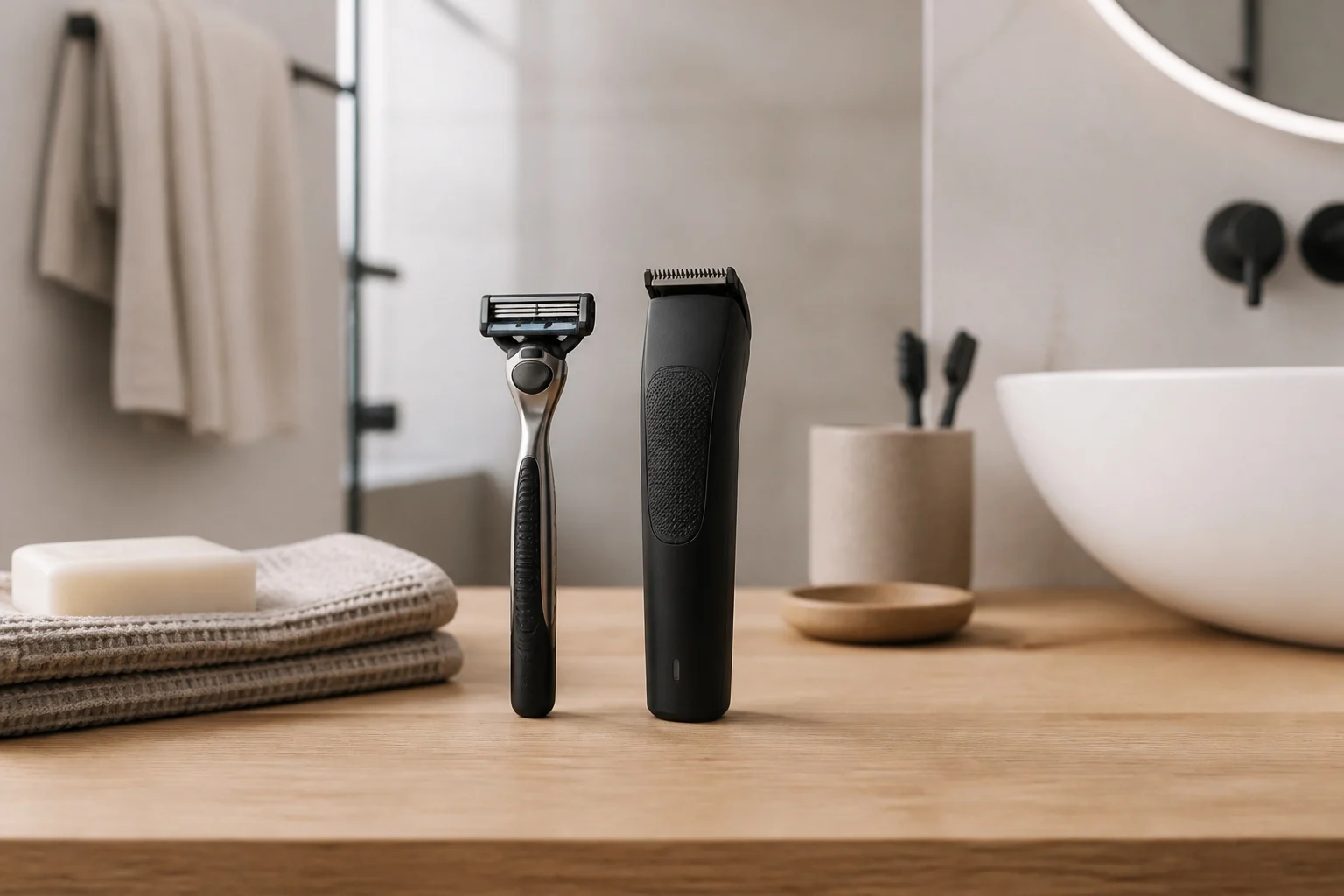
The clipper with a sensitive skin comb is the safest option; the razor gives the sharpest result. A sensitive skin comb functions like a cage: it protects the skin while guiding the hair towards the cutting system. The blade therefore never touches the skin directly. If you are aiming for clear skin, a razor designed for the body and intimate area remains the right tool, with shaving preparation.
|
Your need |
Tool |
For what |
|
Zero risk of cuts |
Trimmer + sensitive skin comb |
No direct blade-skin contact |
|
Clear skin |
Body and intimate area razor |
Cut at skin level, with protection system |
|
Shorten without shaving clean |
Clipper, 3 mm comb |
Homogeneous height, quick movement |
|
Frequent ingrown hairs |
Mower |
Hair grows back freely |
|
Poorly visible area |
Mower with integrated lighting |
Visibility is a cutting factor in its own right |
What tools are designed for this?
Tools dedicated to the body, because the skin and hair are different from the face. The GilletteLabs BODY + INTIMATE range, launched in March 2026, was designed for this use. The brand presents it as its safest body and intimate area shave, and as the first body and intimate shaving regimen approved by the Skin Health Alliance.
On the mowing side, the i5 and i7 clippers are based on the SkinFirst cutting system: closely spaced teeth, wide tips and low opening angles, a geometry which limits the bulging of the skin in the cutting area, for an advertised performance of up to 0% nicks and cuts. They come with a sensitive skin clog designed for the groin, as well as 3 mm and 5 mm clogs, are waterproof and wireless, and offer up to 100 minutes of battery life. The i7 adds an LED spotlight to illuminate hard-to-see areas.
On the shaving side, the BODY + INTIMATE razor combines a Triple Defense System – anti-irritation bar, anti-ingrown hair bar, long-lasting lubricating strip – with two widely spaced blades that capture long hairs and rinse easily. The 2D FlexDisc follows the contours of the body and the handle has been designed to maintain control in the shower, including areas you cannot see.
FAQs
In which direction should you shave? In the direction of the hair, especially if your skin is sensitive: this limits irritation, razor burn and the risk of ingrown hairs. A second pass against the grain is possible for a cleaner finish, but only gently and after reapplying cream.
Do you need shaving cream? For a wet shave with a blade, yes: the glide protects the skin and reduces friction. For clipping, no – the skin and hair must on the contrary be dry for optimal results.
How long to wait between shaves? On sensitive areas, a period of 48 to 72 hours between two clean shaves is generally recommended. It gives the skin time to recover from the friction of the blade.
Does the hair grow back thicker? No. An unshaven hair becomes thinner towards its tip, a cut hair has a clear end: the regrowth appears thicker, but neither the thickness nor the density changes. No removal method modifies the structure of the hair.
What to do if you cut yourself anyway? Rinse with clean water, dab without rubbing, and leave the area alone while it heals. You do not shave again on damaged skin. If the cut bleeds for a long time or if redness persists, medical advice is indicated.
Can you lend your partner your lawn mower? No. Each person has their own microbiota, and superficial rinsing does not remove all microorganisms. Sharing exposes you to cross-contamination and increases the risk of infection.
