
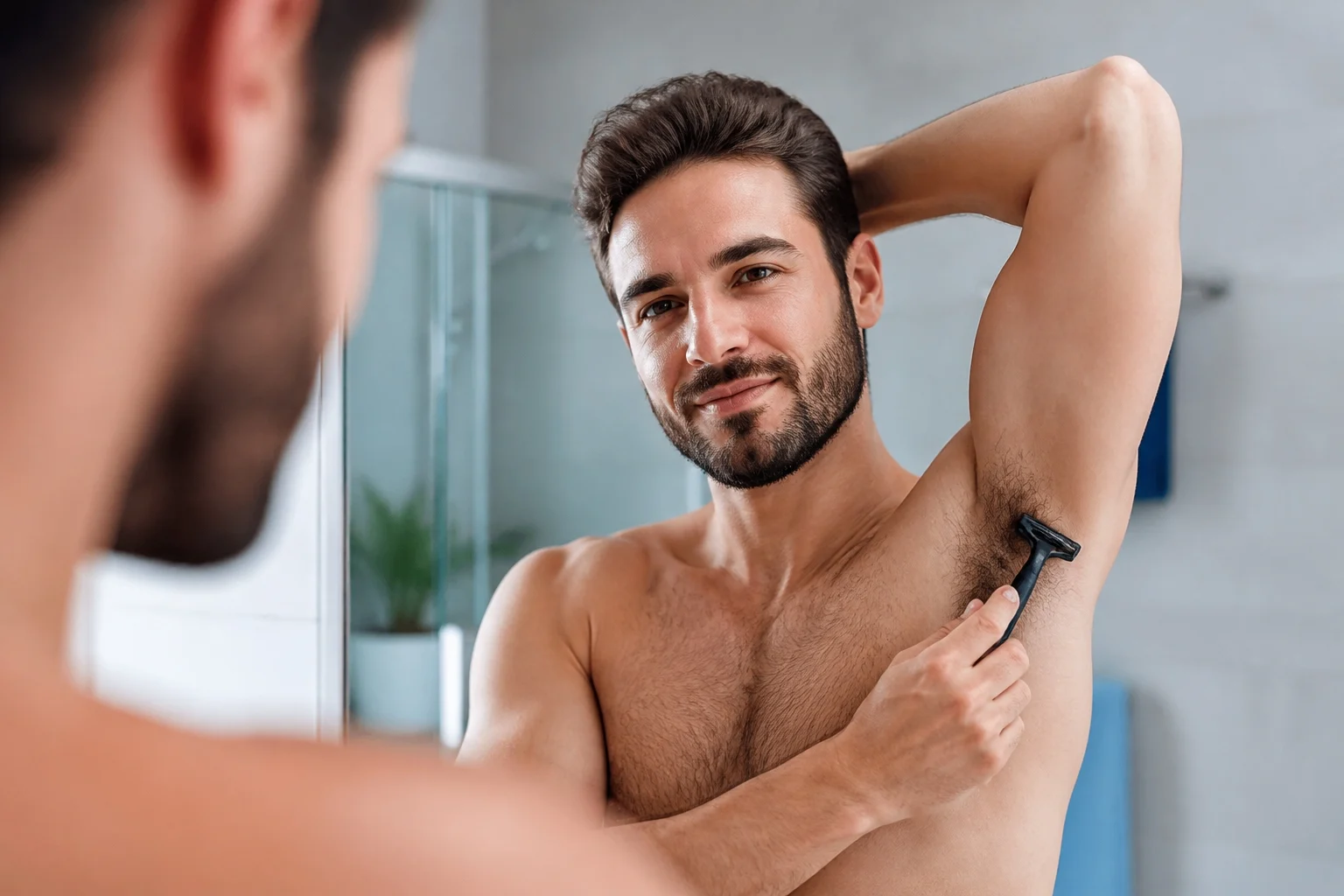
At a glance
-
Shaving does not reduce the volume of sweat, but it limits the bacterial proliferation responsible for odors.
-
Research shows that blade removal of underarm hair significantly improves the effectiveness of washing with soap on odors, compared to soap alone.
-
This odor reduction can last up to 24 hours after washing, and at least 48 hours with a razor.
-
The armpit is a sensitive area: thinner skin, hair grown in several directions, limited visibility.
-
Trimmer or razor: both work, the choice depends on the desired result and your skin sensitivity.
-
Deodorant remains essential: shaving complements it, it does not replace it.
Does shaving your armpits reduce sweating?
No, shaving does not change the amount of sweat produced. Sweating is a heat regulation mechanism provided by the sweat glands, located under the skin. Removing the hair does not affect these glands. If you sweat a lot, you will continue to sweat just as much after shaving. What changes is the way this sweat behaves on the surface of the skin: without hair to hold it, it evaporates and dries more quickly, and the garment often stays dry longer.
So why do so many men shave their armpits?
Because the real benefit is on odor, not sweat volume. The hair traps sweat and creates a warm, humid environment conducive to bacteria that produce bad odors. By removing the hair, we remove this reservoir. Research has shown that blade removal of underarm hair significantly improves the effectiveness of washing with standard soap in reducing odors, compared to washing with soap alone. It’s a difference in everyday comfort, particularly after sports.
How long does this benefit last?
Up to 24 hours after washing, and at least 48 hours after the hair has been removed with a razor. These durations are those observed in the work carried out on the subject, always in comparison with washing with soap without removing the hair. They assume normal hygiene: shaving improves the effectiveness of washing, it does not replace it. And it does not replace deodorant or antiperspirant either, which act on different mechanisms.
Why the armpit requires more precautions than the leg or torso
Because three constraints combine in this area. The skin is thinner and folds, which makes it more reactive to the friction of a blade. The hair grows in several directions, which increases the number of passes necessary if the tool is not suitable. Finally, visibility is poor and the arm must remain raised, which makes the gesture less precise. These three factors explain the irritation, redness and ingrown hairs often observed after shaving with a tool designed for the face.
Underarm trimmer or shaver?
Both are suitable: the trimmer to maintain length, the razor for clear skin. The choice is made based on the desired result and the sensitivity of your skin. If you are prone to ingrown hairs, the advantage of trimmers is that they cut the hair just above the skin, or at hoof length, which lets the hair grow back freely and reduces the risk. The table below summarizes the choice according to need.
|
Your need |
Recommended tool |
For what |
|
Perfectly clear skin under the arm |
Manual shaver designed for the body |
Cut at skin level, soft and clean finish |
|
Keep the length short and even |
Trimmer with comb |
Adjusted height, no clean shaving, faster action |
|
Very sensitive skin or first time |
Trimmer with sensitive skin comb |
The comb prevents direct contact of the blade with the skin |
|
History of ingrown hairs |
Trimmer, or razor with anti-ingrown hair bar |
The hair is not cut below the surface of the skin |
|
Shaving in the shower |
Waterproof, cordless tool |
Safety of use in wet conditions, easy cleaning |
|
Minimize irritation |
Body razor + shaving cream |
Lubrication reduces blade-skin friction |
The 5 steps to shaving your armpits without irritation
-
Mow before shaving. If the hair is long, clip it first. This prevents the razor from clogging and gives a cleaner shave in one stroke.
-
Shave in the shower with hot water. Humidity and heat soften the hair, which then cuts with less resistance and less pulling.
-
Apply a shaving cream or gel. The glide protects the skin and reduces friction. This is the gesture that makes the most difference on a sensitive area.
-
Shave with the direction of the hair. Stretch the skin slightly by raising your arm, and let the tool work without pressing. A second pass against the grain is possible, but only after reapplying cream.
-
Rinse, pat dry, moisturize. We dab, we don’t rub. Moisturizing after shaving limits redness and itchy regrowth.
What tools are designed for this area?
Tools dedicated to the body exist precisely because the skin and hair are different from the face. The facial hair is short, straight and of constant thickness; that of the body is longer, more curly and more variable. This explains the clogging of a facial razor on the armpit, and the risk of ingrown hairs.
The GilletteLabs BODY + INTIMATE range, launched in March 2026, was designed for this use. It is, according to the brand, its safest body and intimate area shave, and the first body and intimate shaving regimen approved by the Skin Health Alliance.
-
The GilletteLabs BODY + INTIMATE razor is equipped with a Triple Defense System: an anti-irritation bar, an anti-ingrown hair bar and a long-lasting lubricating strip. Its two widely spaced blades capture long body hairs and rinse easily, and the FlexDisc 2D conforms to the contours of the body. The handle is designed to be held in the shower, in wet conditions.
-
The GilletteLabs BODY i5 and i7 trimmers use the SkinFirst cutting system, claimed to have up to 0% nicks and cuts, with a sensitive skin comb designed for the underarms, groin and chest. They are waterproof, wireless, and offer up to 100 minutes of battery life. AutoSense technology adapts power to hair density.
-
GilletteLabs BODY 2-in-1 Shaving Cream serves as both a cleanser and a shaving prep, for gliding.
FAQs
Does shaving armpits make hair grow back thicker? No. This is a very widespread myth. An unshaven hair naturally thins towards its tip, while a freshly cut hair has a clear end: the regrowth therefore appears coarser, but the thickness and density of the hair do not change.
How often should you shave your armpits? It’s up to you. Body hair grows at around 200 to 400 micrometers per day, a rate close to that of the face: regrowth becomes visible in a few days. Some people shave every week, others more or less often, and all these habits are normal.
Should you shave before or after sports? Afterwards, and preferably in the shower. The skin is then clean and the hair softened. Shaving right before a session exposes freshly shaved skin to sweat and friction from clothing, which increases the risk of irritation.
Does shaving replace deodorant? No. Shaving improves the effectiveness of washing on odors, but it does not affect sweat production or protection during the day. Deodorant or antiperspirant are still necessary.
Can you use the same trimmer for body and hair? This is not recommended, for two reasons. Hygiene first: each area of the body has its own microbiota, and cross-contamination increases the risk of infection or skin problem. Next, functionality: the blades and sabots are designed for specific use.
