
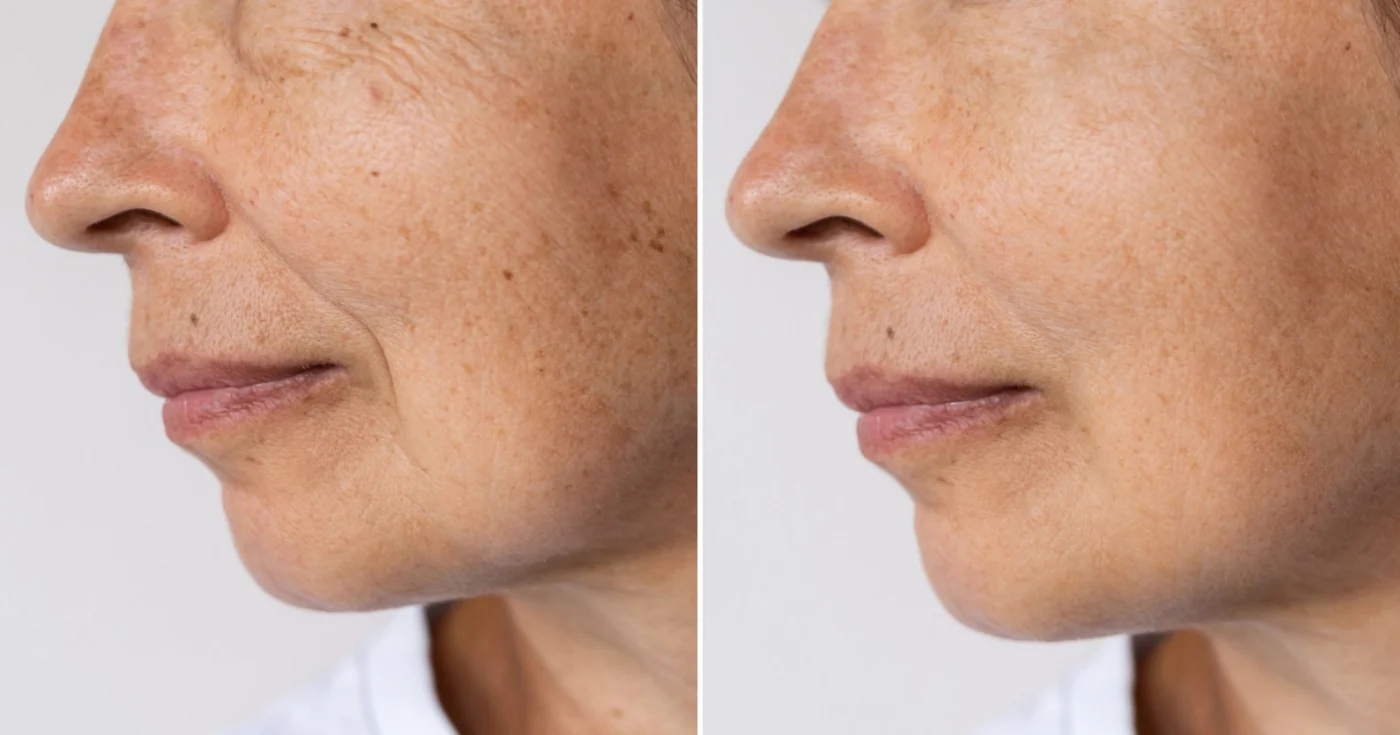
From sports bottles to cream jars, electrolytes can be found everywhere. In recent months, gels, serums and masks that promise to “recharge” the skin with minerals have been invading the shelves, like a skincare version of the famous isotonic drinks. The promises are tempting: prolonged hydration, plump skin, instant comfort after a long day. There remains one question that agitates gyms as much as bathrooms: what do they really do on the skin?
Because behind this very technical word there are in reality well-known minerals, already present in our body and in our epidermis. Long confined to drinks for marathon runners, they are now arriving in electrolyte facial treatments with the promise of pushing hydration further than a simple classic hyaluronic acid gel, while sometimes blurring the line between fashion effect and real skin boost.
Electrolytes in skin care: definition and arrival in our routines
Naturally present in the body, these ionized minerals such as sodium, potassium, magnesium or calcium regulate the water balance of our cells. By moving inside and outside these, these electrically charged ions take the water with them and participate in the proper distribution of fluids, while contributing to a healthy skin environment capable of better defending itself against external aggressions.
When they are integrated into a cream, serum or mask, the electrolytes come directly into contact with the epidermis. They are described as a thousand times smaller than hyaluronic acid, which would allow water to circulate better between several layers of skin, for more diffuse hydration and a feeling of lasting comfort, with the result being more supple skin, smoothed dehydration lines and a plumped effect aimed at by ranges like Aquasource+ Electrolyte from Biotherm or certain rehydrating creams with electrolytes from Paula’s Choice.
How electrolytes act on hydration and the skin barrier
On a sensory level, these formulas often give the impression of a “shot” of water thanks to gel or water-gel textures which also rely on glycerin and hydrating sugars. But behind the scenes, electrolytes above all support the circulation of water in the epidermis, limit the insensible loss of water and support the skin barrier by promoting the proper functioning of protective lipids and a stable pH, which can result in less tightness and skin that shows less fatigue.
The fact remains that drinking or applying electrolytes does not play at the same level at all. , explains Gabrielle Misset, scientific communications manager at Biotherm, quoted by Femme Actuelle. Dermatologists, for their part, point out that although the role of these minerals in the skin is well documented, there are still few studies directly comparing an electrolyte cream and a classic moisturizer on healthy skin.
Who should use electrolyte facial treatments and how to choose them?
All skin types can benefit from electrolyte facial treatments, with increased interest for dehydrated, dry or weakened skin. They are also used as a “shot” after a plane flight, an intense sports session or a sauna, when the skin needs to be rehydrated quickly.
To choose, you find sodium, potassium or magnesium salts associated with humectants in the INCI list, then you adapt the texture to your skin type. Some will prefer a light gel under the usual cream, others a one-off mask full of electrolytes after a period of stress, cold or heat, without necessarily disrupting their entire routine.
What is an electrolyte facial treatment?
It is a moisturizing product (cream, gel, serum, mask) that contains ionized minerals such as sodium, potassium, magnesium or calcium. They help water circulate better in the epidermis and support the skin’s natural hydration.
Are electrolytes more effective than hyaluronic acid?
They do not act in the same way: hyaluronic acid behaves like a water sponge, while electrolytes promote water distribution and skin balance. The available data does not yet allow us to confirm that an electrolyte cream systematically outperforms a traditional moisturizer on healthy skin.
For which skin types are electrolyte treatments best suited?
They are particularly suitable for dehydrated, dry or weakened skin, prone to tightness and fine lines from dehydration. They can also be useful occasionally after a plane flight, an intense sports session or exposure to the sauna.
Can we combine electrolyte drinks and electrolyte facial treatments?
Experts explain that good internal hydration and cosmetics can be combined with electrolytes because they work at different levels. Beverages benefit vital organs first, while topical treatments directly target the skin.
How to recognize a real electrolyte treatment in the INCI list?
We can identify the presence of sodium, potassium, magnesium or calcium salts, often associated with moisturizing molecules such as PCA or other humectants. The whole formula counts: the presence of electrolytes does not exempt you from checking the texture, other active ingredients and tolerance on your own skin.
