
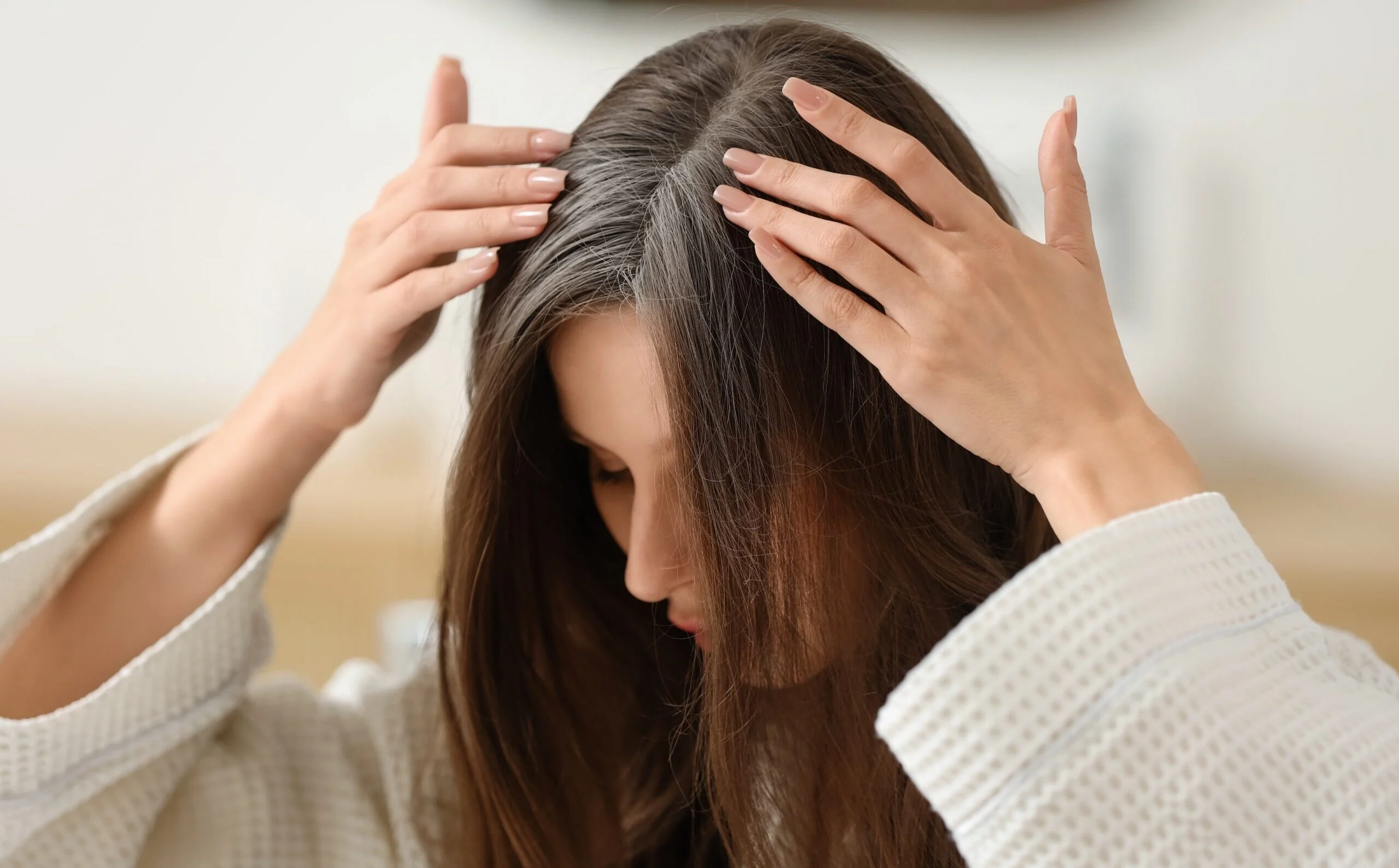
Long hidden as soon as they appear, gray hair is now more assumed. However, their arrival remains a stage that is sometimes difficult to accept. And for good reason: often associated with aging, the first white hairs can be surprising, especially when they appear earlier than expected.
But can we really know at what age we will have gray hair? Several factors come into play. Stress, certain nutritional deficiencies, age or even genetics can influence their appearance. Among them, heredity would play a particularly important role. However, specialists advise observing certain clues which could direct us to the age at which their growth begins.
Why do gray hair appear?
Gray hair appears following a biological process: canities. It results in the cessation of the production of melanin, the coloring pigment which colors the hair, by its cells called melanocytes. With age, these cells age, become depleted and eventually disappear, causing the hair to grow completely white.
As for the gray color, it is actually an optical illusion. It results from a mixture of these new white hairs and hair that is still pigmented. Several factors can accelerate this phenomenon. Certain nutritional deficiencies, notably in vitamin B12, thyroid disorders or metabolic imbalances may in particular be involved in the early appearance of white hair. “It is not necessary to carry out a battery of analyzes for the first gray hairs, but it may be reasonable to carry out a blood test and evaluate some basic parameters if gray hairs appear during childhood or adolescence, with rapid progression,” explains Dr. Santiago Casquero, in “Hola”. However, in the majority of cases, genetics remains a determining factor. “If your parents went gray early, the chances of following the same path are high, but this is not a mathematical rule,” specifies the specialist.
At what age will gray hair appear? The clue to look for in your parents
Although we know that genetics plays an important role in the appearance of white hair, it remains difficult to precisely predict their arrival. However, Dr Santiago Casquero provides some indications: “people who have a lot of white hair will have them early”. Conversely, reaching 40 with only a few silver strands would be a good sign. The hair should then not necessarily turn completely gray in a short time. While it is therefore impossible to determine a precise age, observing when your parents started to have white hair could give you a first clue about your own hair development.
Can we prevent the growth of gray hair?
Unfortunately, Dr. Santiago Casquero assures that there is currently no medical or cosmetic treatment capable of reversing the appearance of gray hair or preventing its arrival. Although certain causes, such as nutritional deficiencies or certain diseases, can be treated, regaining its natural color remains unpredictable.
The specialist advises consulting a trichologist doctor in certain cases: “if gray hair appears during childhood or adolescence, if the process is exceptionally rapid, if they appear in localized strands like patches of color loss or accompanied by excessive hair loss.”
At what age do the first white hairs usually appear?
The first gray hairs generally appear between the ages of 30 and 40 in people of European origin. However, their onset may be earlier or later depending on genetic predispositions and ethnic origins.
Can stress cause white hair to appear?
Yes, stress could play a role in the premature appearance of gray hair. Research has notably shown that intense stress can affect the cells responsible for hair pigmentation. However, it is not the only cause of canities.
Does pulling out a white hair cause more white hair to grow?
No, pulling out a white hair does not cause more white hairs to appear. Each hair follicle has its own pigmentation cycle. On the other hand, regularly pulling out your hair can weaken the follicle and promote less dense regrowth.
Does white hair grow faster than pigmented hair?
No, white hair does not necessarily grow faster than pigmented hair. However, their texture may seem different: they are sometimes thicker, drier or rougher. These changes are notably linked to the evolution of the hair follicle with age.
Why are white hairs sometimes thicker than others?
White hair may appear thicker, rougher, or more difficult to manage than pigmented hair. This change in texture is notably linked to the evolution of the hair follicle and the reduction in melanin production. They may also become drier and less flexible over time.
