
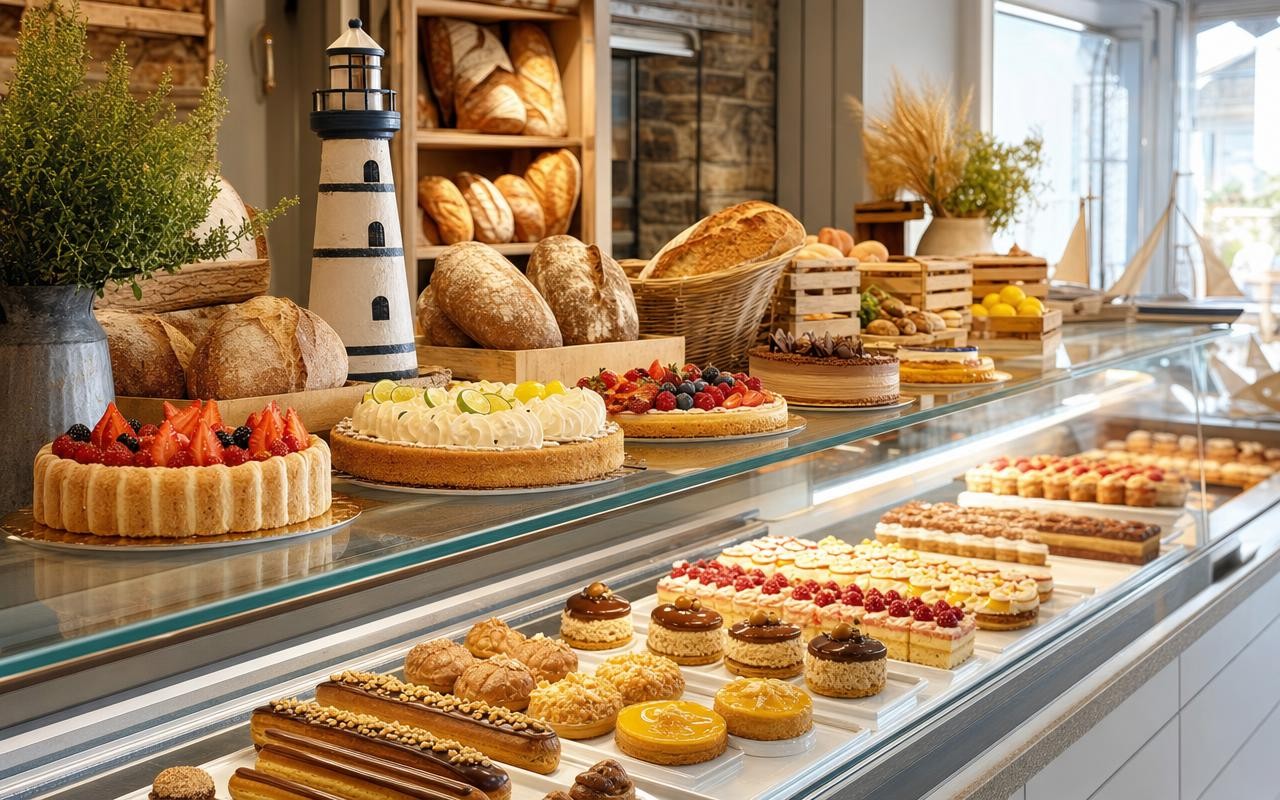
In the glass bakery on rue de Ménilmontant, in Paris, flour still flies when you say his name. A few weeks after being crowned by the International Union of Bakers and Pastry Chefs, Benoît Castel has already returned to his “artisan-merchant” actions behind his bins of dough and his plates of cookies. On his cakes sits a world distinction, but he especially looks at the neighborhood line that forms in front of the door.
On July 14, 2026, in Singapore, the original Breton received the title of World Confectioner of the Year, equivalent to Benoît Castel, best pastry chef in the world. In the process, he summarizes his line of conduct in a sentence that has become manifest: he explains to France 3 Régions. A formula which refers as much to his childhood in Brittany as to his very concrete way of making pastry in Paris.
Benoît Castel, from the Breton farm to the world title
Born in Saint-Just, near Redon, in Ille-et-Vilaine, he grew up on his grandparents’ farm, surrounded by raw milk, home-churned butter and jams. he assures. From the age of 7, he already saw himself as a cook, before the definitive click one Sunday, in Brittany, when he saw a pastry chef making a Chambord castle out of sugar and said to himself:
His first experience took place with a chocolatier-confectioner, then he joined the La Duchesse Anne patisserie, in Rennes, for his apprenticeship. In the 1990s, he left for Paris, passing through Hélène Darroze’s first restaurant, the Hôtel Costes then the Grande Épicerie, where he began to replace synthetic dyes with natural dyes, faithful to this sensitivity to the product inherited from the family farm.
A simple, Breton and committed pastry in the heart of Paris
At the head of three establishments and a grocery store in eastern Paris, he boasts “simple and generous” pastries. In the window, a star chocolate choux of the neighborhood – he quips – but also seasonal tarts, each topped with a little jagged shortbread, a clear nod to his Brittany. His leitmotif remains unchanged: he repeats.
For him, responsibility is daily: underlines the Breton. He cultivates his own vegetable gardens and orchards in Ille-et-Vilaine, whose fruits and vegetables arrive every week in Paris. In the store, he installs a mill to grind flour, works with organic flours, a homemade sourdough and imagines a “local bread”, then the “bread of yesterday and tomorrow”, made from unsold items from the day before in an anti-waste approach.
“Be the world champion every day”: a shared mission
For Benoît Castel, this world title remains a collective adventure: he declares to Fresh Mag Paris. In his laboratory open to the room, he works daily with his head baker Romain Montbabut, who describes him as someone who before adding:
This constant curiosity nourishes what he calls, in an interview with Gala.fr, a true sensory memory: He shows it by collaborating with artists on Christmas logs – explains the street art lover – or by opening, in mid-September, a new Parisian place with his daughter Margot, halfway between café, restaurant and bakery-pastry shop. he smiled.
Who is Benoît Castel, best pastry chef in the world 2026?
Benoît Castel is a Breton pastry chef-baker, born in Saint-Just, crowned World Confectioner of the Year 2026 by the UIBC, who runs several boutiques and a grocery store in the east of Paris.
Where are the Benoît Castel boutiques in Paris?
Its locations are located in eastern Paris, notably in Ménilmontant and rue Sorbier, with an adjoining grocery store, and offer pastries, breads, brunches and crepes.
What are Benoît Castel’s emblematic specialties?
Its best-seller is the chocolate choux, but its signature breads like the “corner bread” or the “bread of yesterday and tomorrow” and its all-you-can-eat brunch also contribute to its reputation.
How does Brittany influence Benoît Castel’s pastry?
His childhood on the farm in Ille-et-Vilaine, his serrated Breton shortbread on each cake and his Breton vegetable gardens and orchards which supply his Parisian boutiques permeate his work.
Why are we talking about a committed pastry shop at Benoît Castel?
He favors simple ingredients, without synthetic colorings, works his own flours and sourdoughs, and fights against waste with breads made from unsold items.
