
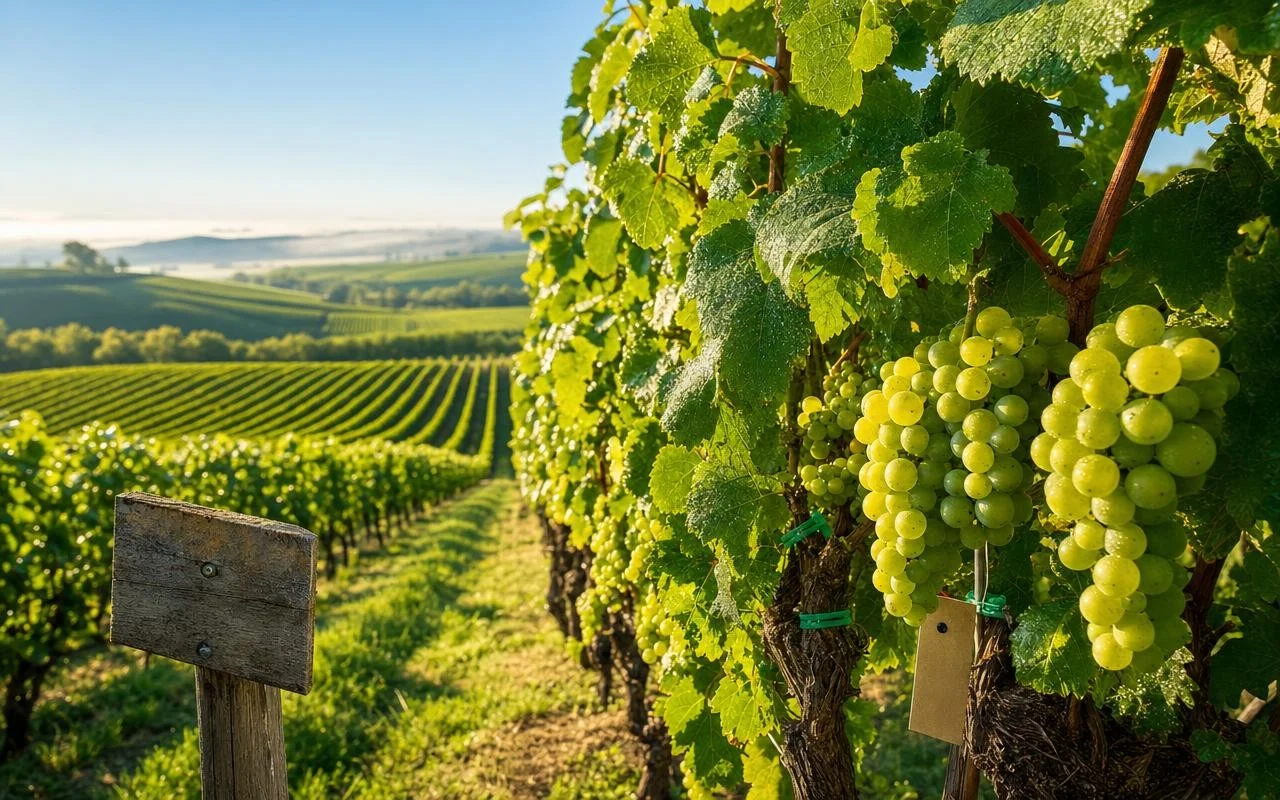
In the slopes of Champagne, a small revolution is taking place between two rows of vines. Faced with climate change and rampant diseases, the region is testing a new grape variety in Champagne that promises a very closely monitored life. The challenge: continue to produce excellent grapes while reducing spraying. It remains to be seen whether this variety will succeed in convincing until the end.
At the Clos Pompadour of the Pommery estate, in Reims, the 2026 harvest brings together tasters from the United States, China and the region to taste the grape varieties for which champagne is renowned. They discover the seven historic varieties, but also a more discreet guest: Voltis, candidate for the status of eighth grape variety of the appellation.
Voltis in Champagne, an 8th grape variety that shakes up habits
In front of these professionals, Clément Pierlot recalls the base of the region: , explains Clément Pierlot, cellar master of Maison Pommery, at the microphone of France 3. Chardonnay, pinot noir and meunier cover 99% of the vineyard, leaving arbane, petit meslier, pinot blanc and pinot gris barely 1% of the surface area for very confidential vintages.
In this locked landscape, Voltis arrives as a strategic curiosity. Planted for five years on just under ten hectares divided between winegrowers, houses and cooperatives, it is observed from every angle by the Champagne committee. Its generously weighted bunches and later harvest must remain compatible with the house style, while offering increased resistance to disease.
Fewer treatments: what the Voltis grape variety promises in the vines
On the ground, in Mailly-Champagne, winemaker Benjamin Muller sums up the interest of this new vine: , he explains. For local residents located at the foot of the rows, this means fewer sprayer passes and significantly reduced pest pressure.
Because ultimately, that’s the whole point of this resistant Voltis grape variety: to offer an alternative where constraints are increasing, between non-treatment zones near homes and societal expectations on the reduction of phytosanitary products. For winegrowers, the issue is not limited to protecting the vines, it also concerns working comfort and the environmental image of the appellation.
What future for Voltis and the next resistant grape varieties in Champagne?
Behind the experience lies a very structured protocol. , specifies Sébastien Debuisson, director of technical services of the Champagne committee. The industry has given itself until 2037 to decide on the sustainable integration of Voltis into the AOC specifications.
Until then, several vintages will still be vinified and tasted, in trial vintages or in limited blends, to verify that this Voltis Champagne remains faithful to the desired style. And research does not stop at this single grape variety: two new varieties, Serelis and Orellis, even more resistant to diseases, must be tested from 2028. Champagne is therefore moving forward in small steps, adding new tools to its palette to prepare tomorrow’s harvest.
What is the Voltis grape variety in Champagne?
Voltis is a recent white grape variety, selected for its strong resistance to downy mildew and powdery mildew. In Champagne, it is planted on just under ten hectares as part of trials supervised by the Champagne committee, with the idea of possibly making it an eighth official grape variety.
Why does Voltis help reduce treatments in the vines?
Thanks to its natural resistance to the main fungal diseases of the vine, Voltis requires much less fungicide treatments than a classic grape variety. Initial feedback from the field suggests a significant reduction in spraying, particularly near homes.
Does the taste of a champagne incorporating Voltis really change?
Testing is still underway, but Voltis has been designed to remain fairly neutral aromatically. The objective is that it can be used in small proportions in blends without distorting the profile of a champagne, while providing additional health security to the vines.
When will we know if Voltis becomes an official grape variety of the Champagne appellation?
Voltis is subject to a fifteen-year trial procedure. The Champagne industry is aiming for 2037 to decide, on the basis of agronomic and oenological results, whether it should be definitively included in the appellation’s specifications.
What place will Serelis and Orellis have alongside Voltis?
Serelis and Orellis are two other resistant grape varieties announced for tests in Champagne from 2028. They do not replace Voltis, but complement the search for new vine profiles capable of better coping with diseases and climate change.
