
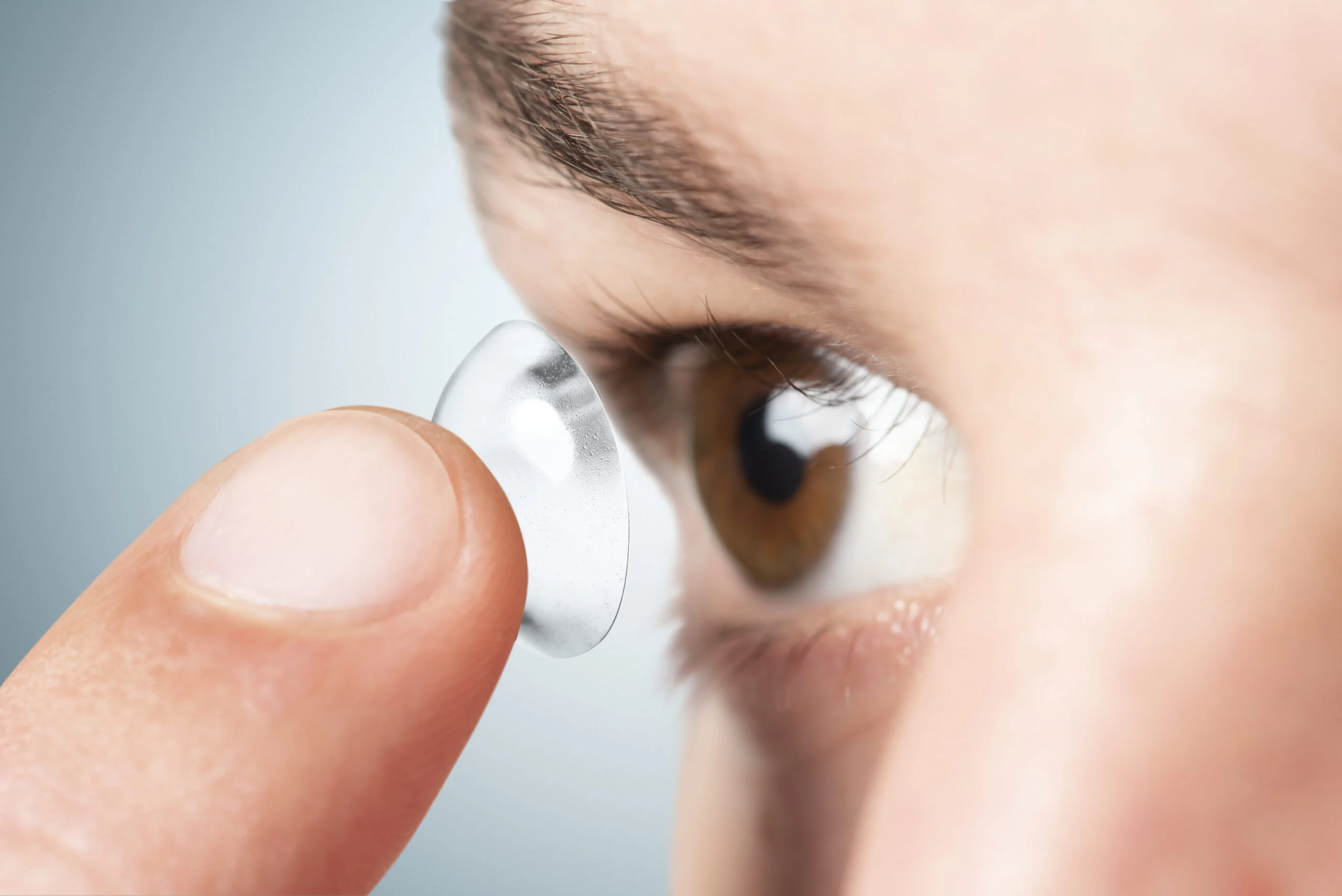
Contact lenses are one of those products that we wear every day on one of the most sensitive areas of the body, and yet many people start using them without really knowing the subtleties. Comfort, safety, wear time, type of correction: before adopting contact lenses as an alternative to glasses, a minimum of knowledge about the different options available allows you to make a choice that is truly suited to your profile and habits.
The different types of lenses: which one is right for you?
Daily lenses
Daily lenses are the most practical and hygienic: worn in the morning, thrown away in the evening. No maintenance, no case, no risk of deposit accumulation. It is the ideal solution for occasional wearers, athletes, frequent travelers or people prone to allergies. Their unit cost is higher than a monthly lens, but the savings on maintenance products offset part of the difference for irregular scopes.
Monthly and bimonthly lenses
Monthly lenses are changed every four weeks, bimonthly lenses every two weeks. They require daily maintenance with a multifunction solution or a hydrogen peroxide system, and must be kept in a clean case each night. Less expensive over time for daily wear, they require rigorous maintenance that daily wear does not require.
Toric lenses for astigmatism
Astigmatism, a very common visual defect, requires so-called toric lenses, whose specific geometry compensates for the irregular curvature of the cornea. They exist in daily, fortnightly or monthly versions. Their stabilization on the eye is more complex to design than for a spherical lens, which explains why they are slightly more expensive and why the adaptation sometimes takes longer.
Multifocal lenses
From a certain age, presbyopia sets in and makes near vision difficult. Multifocal lenses allow near and distance vision to be corrected simultaneously, avoiding the need for additional reading glasses. Adaptation to this type of lens requires several weeks and the support of a professional to optimize the correction parameters.
Materials: silicone hydrogel or hydrogel?
The vast majority of modern lenses are made from hydrogel or silicone hydrogel. Silicone hydrogel allows much more oxygen to pass to the cornea, which reduces the risk of hypoxia (lack of oxygen) and improves comfort at the end of the day. It is the recommended material for long ranges and for dry eyes. Classic hydrogel remains comfortable for short or occasional carries, but has lower oxygen permeability.
Adaptation and monitoring: an essential step
Contact lenses cannot be purchased without a valid medical prescription. An adaptation by a qualified ophthalmologist or optician is mandatory and essential: it allows you to precisely measure the curvature and diameter parameters adapted to the shape of your eye, well beyond simple visual correction. An eye with poorly adapted parameters will be uncomfortable and exposed to micro-trauma in the long term.
Annual follow-up is also recommended to check that the lens maintains its compatibility with the condition of the cornea, particularly if changes in the correction have occurred.
The golden rules for safe use
Hand hygiene, number one gesture
Before handling lenses, washing your hands carefully with soap and drying them completely with a clean towel is the absolute rule. Bacteria and micro-organisms on the hands can cause serious, sometimes irreversible, eye infections.
Never exceed the recommended wearing time
Wearing lenses beyond the duration indicated by the manufacturer exposes you to an accumulation of deposits and degradation of the material which weakens the cornea. A monthly lens worn for six weeks is no longer a monthly lens: it is a risk.
Never lentils in water
Shower, swimming pool, sea, bath: water, even treated, can contain pathogenic micro-organisms likely to adhere to the lens and cause infections. Lenses must be removed before contact with water.
Consult at the slightest sign of discomfort
Persistent redness, burning sensation, blurred vision, unusual tearing: these signs should lead you to immediately remove the lenses and consult a healthcare professional. An eye that expresses itself must be listened to without delay.
