
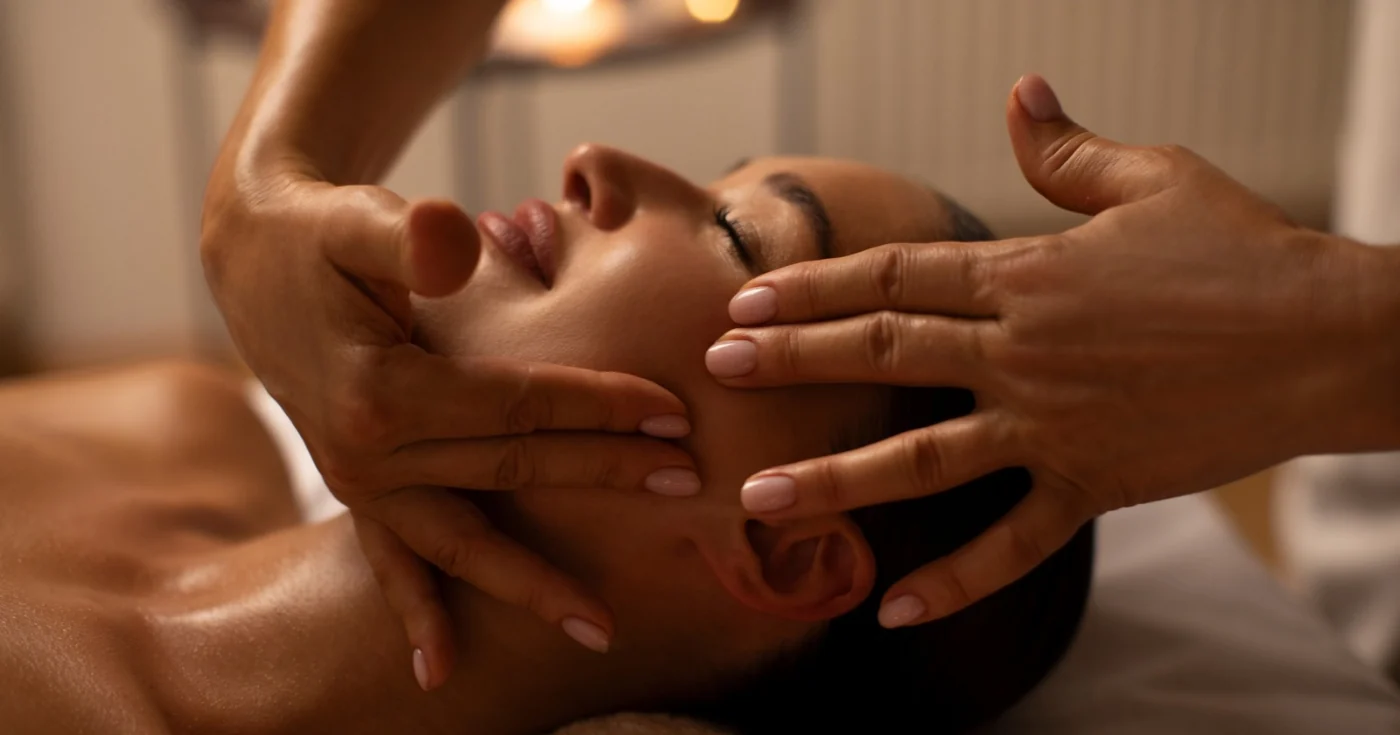
Long confined to beauty institutes, facial massages are experiencing a real revival of interest. At a time when non-invasive aesthetic techniques are becoming increasingly popular, these manual treatments are emerging as a gentle alternative for taking care of your skin and relaxing your features. On social networks, promises of a lifted face, redesigned oval or sculpted cheekbones are multiplying, to the point that it sometimes becomes difficult to distinguish the different methods.
Among the most popular practices, three names come up regularly: facialism, Kobido and lymphatic drainage. Although these techniques have in common that they require manual manipulation of the face, they are neither based on the same gestures nor on the same objectives. Some favor muscular work and the relaxation of tension, others stimulate the tissues or promote the circulation of lymph. Here’s how to differentiate them to choose the treatment best suited to your needs.
1. Facialism: a global approach to working the muscles and facial features
Facialism refers to a personalized approach to facial massage which aims to work the different facial structures: muscles, skin tissues and areas of tension. Unlike a codified technique with a single protocol, facialism brings together several gestures and methods that the practitioner adapts to the morphology, needs and concerns of each person. It can notably combine manual maneuvers, kneading, pinching, targeted pressure or even techniques inspired by facial yoga.
His goal? Restore mobility to tissues, relax muscle tension and improve the appearance of facial contours. The sessions can thus target a less defined oval, wrinkled features or tension in the jaws. Some protocols also include draining procedures to decongest the tissues. Facialism is therefore a fairly comprehensive approach, which can borrow techniques from different massage traditions. However, it should not be confused with a real facelift: the aesthetic results announced are not all scientifically proven and can vary depending on the person.
2. Kobido: the Japanese massage renowned for its lifting effect
Originating from Japan, Kobido is a traditional facial massage which is distinguished by the alternation of fast and slow gestures. It notably combines smoothing, kneading, pressure, light percussion and rhythmic movements made with the fingertips. The technique is generally performed on the entire face, sometimes up to the neck and décolleté. It is often presented as a form of passive facial gymnastics, intended to stimulate the tissues and awaken the features.
Kobido is particularly appreciated for its immediate radiance boost and its relaxing dimension. By temporarily stimulating microcirculation and mobilizing tissues, it can help give the face a fresher, more rested appearance. This is what earned it its reputation as a “natural facelift”. However, be careful with overly ambitious promises: a systematic review published in November 2025 in the, covering twelve studies and 321 participants, underlines that the scientific evidence concerning mechanical facial rejuvenation techniques remains insufficient to establish their effectiveness with certainty. Kobido has not, to date, been the subject of sufficiently robust clinical trials to confirm a true lasting lifting effect.
3. Lymphatic drainage of the face: the ideal technique to decongest the features
Unlike facialism and Kobido, lymphatic drainage is based on a specific physiological objective: to promote the circulation of lymph, a liquid which participates in particular in the transport of cellular waste and the functioning of the immune system. This technique uses very gentle, slow and repetitive movements, performed on the surface of the skin. The practitioner uses light pressure and circular or pumping movements to encourage the movement of fluids to areas where they can be taken care of by the lymphatic system.
Applied to the face, lymphatic drainage is particularly sought after to reduce swelling and bags linked to an accumulation of fluid in the tissues. It can thus help to decongest the cheeks, the eye contour or the oval of the face when they present a puffy appearance. The technique is also used in a medical setting, particularly in the treatment of certain lymphedemas, with specific protocols carried out by trained professionals. The Cleveland Clinic points out that manual lymphatic drainage can help reduce swelling, but that its benefit depends in particular on the origin of the swelling. It is therefore not a method for losing fat or lastingly refining your face.
Facialism, Kobido or lymphatic drainage: which one to choose according to your needs?
These three massages do not exactly meet the same expectations. If you want to work on the overall appearance of your face, release certain tensions and benefit from personalized treatment, facialism can be an interesting option. If you are looking for an invigorating, rhythmic and relaxing massage, with a healthy glow effect, the Kobido may appeal to you. Finally, if your main concern is swelling, bags or puffy features when you wake up, lymphatic drainage will be more suited to this goal.
It is also possible to alternate between these different approaches, provided you choose a properly trained practitioner and take into account your skin condition and any contraindications. In the event of persistent or unexplained swelling, it is better to seek medical advice rather than repeating massages. Finally, let’s keep in mind that these techniques can be part of a well-being and care routine, but do not replace dermatological care or aesthetic or medical treatment when necessary.
FAQ: frequently asked questions about facial massages
1. What is the difference between facialism and Kobido?
Facialism is a comprehensive and personalized approach to facial massage, which can combine different manual techniques. Kobido is a Japanese massage method recognizable by its rapid gestures, percussion and rhythmic pressure. The first can integrate several approaches, while the second relies on specific gestures.
2. Which facial massage to choose to have a lifting effect?
Kobido and certain facialism techniques are particularly popular for their tightening effect and their action on the appearance of facial contours. They can give the impression of fresher and rested features after a session. On the other hand, none can reproduce the results of a surgical facelift.
3. Which massage should you choose to deflate your face?
Lymphatic drainage is most suitable when the objective is to reduce swelling linked to fluid accumulation in the tissues. Its gentle gestures aim to promote lymphatic circulation and decongest certain areas, notably the eye contour and cheeks.
4. How often can you do a facial massage?
The frequency depends on the technique used, the needs of the skin and the practitioner’s recommendations. A one-time massage can already provide a feeling of relaxation and a healthy glow. For regular support, it is better to establish a suitable protocol rather than multiplying sessions without a specific objective.
5. Are facial massages really effective against wrinkles?
Massages can help relax features and temporarily improve the appearance of the skin. Some research has also observed localized changes after regular practices. However, a systematic review published in 2025 highlights the lack of sufficiently solid evidence to confirm the long-term anti-aging effectiveness of these techniques. They therefore do not replace dermatological treatments whose effectiveness on skin aging is better documented.
