
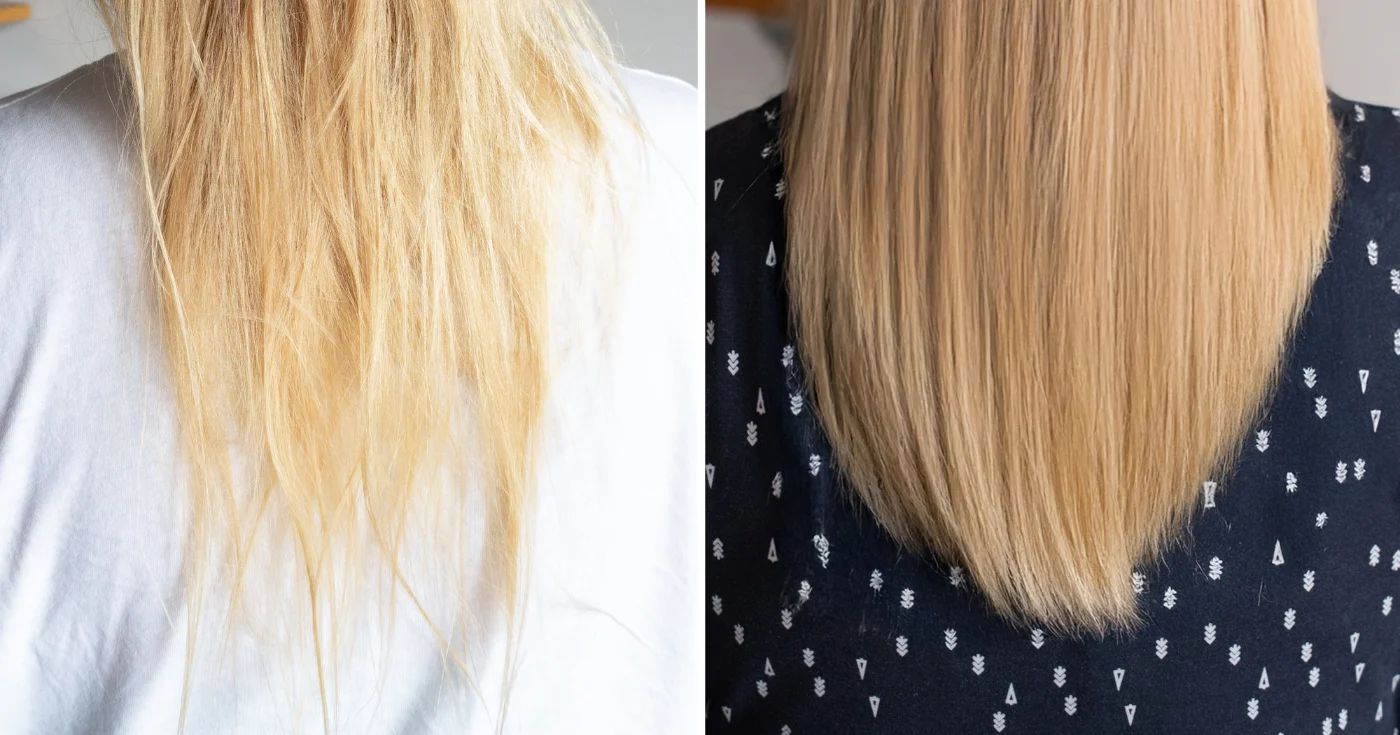
Sometimes your hair says it all before you know it. Less volume, more breakage, a scalp that feels tight or regreases too quickly… Nothing dramatic, but enough to frustrate you in front of the mirror.
What if the solution was not found in a complicated routine or extensive products, but in a simple, almost forgotten gesture? A natural, accessible treatment that fits easily into your daily life without disrupting everything.
Organic rosemary oil, why it’s a game changer for your hair
Behind its 200 ml bottle at $10.95, this hair oil hides a simple but extremely effective formula. The principle is based on a well-known combination: rosemary and castor oil.
Rosemary is known for its stimulating action. Applied to the scalp, it activates microcirculation, which helps the roots function better. As a result, the hair grows in better conditions, with more strength from the base.
For its part, castor oil provides a rich texture that deeply nourishes. It coats the hair fiber, limits breakage and restores density to often weakened lengths.
This mixture therefore acts on two fronts at the same time:
- the scalp is stimulated
- the hair fiber is reinforced
This dual effect explains why this type of treatment often comes up in the routines of those looking to restart hair growth or slow down hair loss.
And that’s not all. Its composition of 100% natural origin, certified organic, vegan and made in France reassures those who want to avoid overly loaded or aggressive formulas.
Grow, shine, resistance, what you can really expect
When you start using this type of oil, the first effects are not limited to growth. It is often the overall appearance of the hair that changes.
From the first applications, the scalp appears more balanced. Less itching, less excess sebum for some, and above all a feeling of comfort that changes everything.
On the lengths, the observation is just as visible. Hair gains shine, becomes more supple to the touch and, above all, less brittle when styling.
With regular use, several benefits gradually become apparent:
- naturally promoted hair growth
- a more resistant hair fiber
- visibly shinier hair
- better overall hold of the hair
This treatment is also aimed at all profiles: fine, soft, brittle hair, oily scalp or temporary hair loss.
How to Use Rosemary Oil for Visible Results
No need to turn your bathroom into a laboratory. It’s still simple to use, and that’s what makes all the difference.
You can apply it in two ways, depending on your pace and your needs:
When massaging the scalp, a few drops are enough. You lightly warm the oil between your hands then massage gently for a few minutes. This gesture activates circulation and helps active ingredients penetrate.
In an oil bath, you can go further. Apply generously to the roots and lengths, leave on for at least 30 minutes – or even overnight – before shampooing.
This ritual, repeated once or twice a week, is generally enough to observe a gradual improvement.
What makes the difference is not the quantity, but the regularity. This is often where everything plays out.
Does rosemary oil really make hair grow?
Rosemary oil is known to stimulate scalp microcirculation. By promoting root activity, it creates an environment more conducive to hair growth. Results generally appear with regular use over several weeks.
Can this oil be used on all hair types?
Yes, this treatment is suitable for all hair types. It is particularly recommended if you have fine, brittle, limp hair or if you notice hair loss. It is also suitable for oily scalps thanks to its balancing effect.
How often to use rosemary oil for visible results?
The ideal is to use this oil once or twice a week. In scalp massage or oil bath, regularity is essential to obtain visible results on hair growth and quality.
Should you apply the oil to dry or wet hair?
Rosemary oil is best used on dry hair before shampooing. This allows the active ingredients to better penetrate the scalp and hair fiber. In an oil bath, it acts more effectively when left for several tens of minutes.
Does rosemary oil leave a greasy effect on hair?
Photo credit: @shutterstock
