
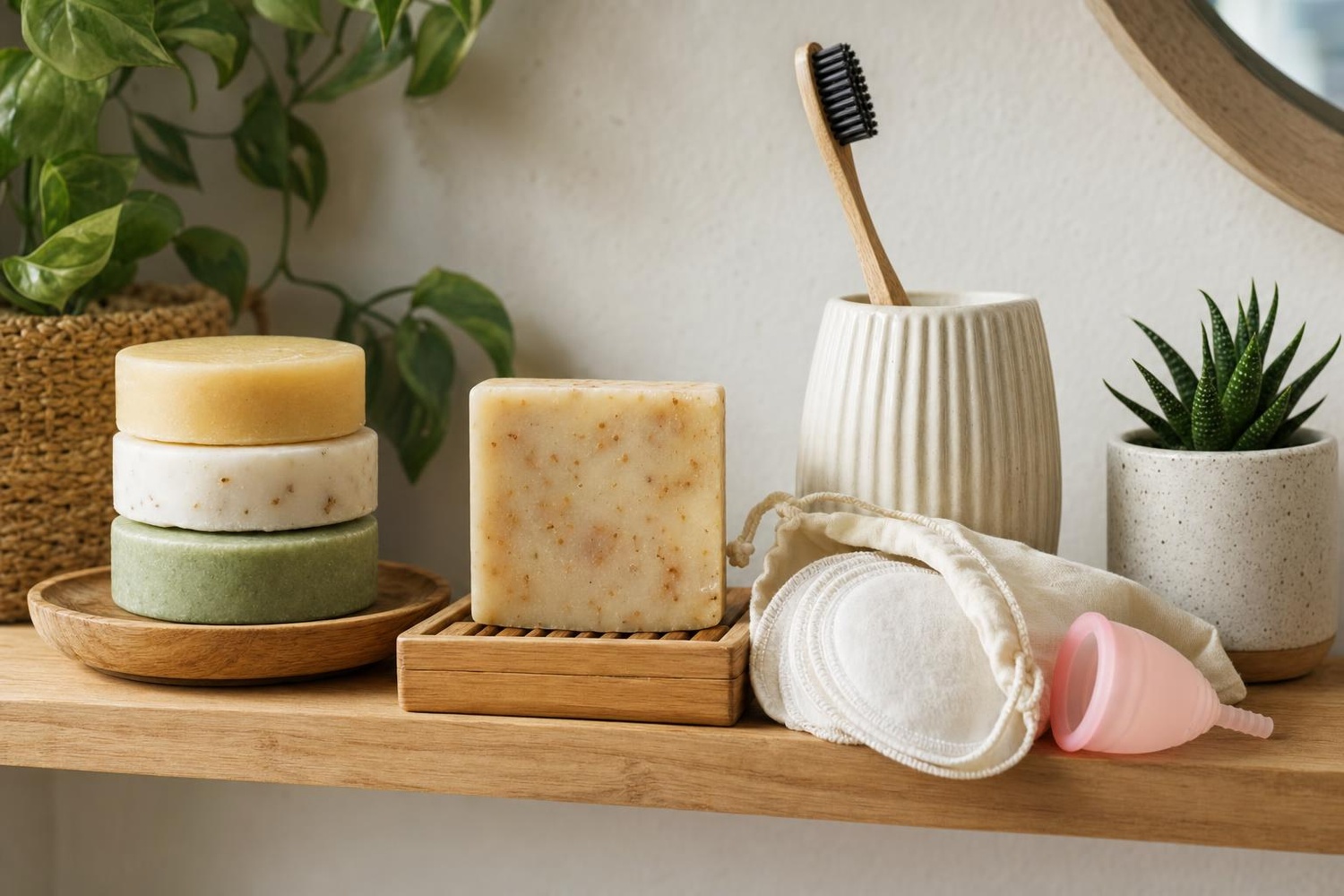
Is your bathroom cupboard overflowing with opened shower gels and forgotten shampoos? In beauty, most cosmetic packaging ends up in the trash, made of plastic and rarely recycled. What if, rather than stacking bottles, you switched to a few well-chosen bars?
The context makes you want to act: as 900.care reminds us, The zero waste approach then applies five simple reflexes to each product in your routine.
Reducing plastic in your skincare routine: sorting it out
Before changing texture, we start by changing our reflex: buy less, finish what we have. A product that we love and that we really finish generates much less waste than several creams that have barely been used. A quick sorting of your shelves already clarifies the situation.
To reduce quickly, target the largest volumes: shower gels, shampoos, body lotions. Stick to a versatile body formula and a basic face duo, rather than an entire collection that rarely finishes all the way through.
Switch from bottles to bars in the shower and at the sink
In the bathroom, the most visible change is to swap bottles for solid cosmetics. Greenpeace advises buying solid soaps for the body or hands rather than bath gels, or even shaving soap instead of spray foams. To make them last, place them on a draining, well-ventilated soap dish between two showers.
Shampoos and conditioners are available in bars suitable for different hair types. You can start with a single solid shampoo, test for a few weeks, then complete. At the sink, cleansing gels or deodorants in bottles give way to dermatological bars and solid deodorants.
Zero plastic bathroom: teeth, makeup removal and intimate protection
Small objects weigh heavily over time. To clean your teeth, there are toothbrushes with wooden handles with replaceable tips, and solid toothpaste or tablets which avoid tubes. For the ears, plastic cotton swabs have been banned in France since January 1, 2020: they are replaced by paper sticks, washable silicone models or an oriculi.
On the face side, disposable cottons give way to reusable organic cottons, which slip into the machine with the rest of the laundry. For periods, zero waste alternatives exist: menstrual cup, menstrual panties or washable organic cotton pads, which generate much less waste than traditional plastic protection. The few remaining bottles can be used as refills or reusable glass.
Where to start to successfully reduce plastic?
Sort it out, finish your opened bottles, then replace shower gel and shampoo with solid formats.
Is robust care really effective?
Yes, solid formulas have progressed a lot; test several references to find the one that suits you.
What reusable options for hygienic protection?
Menstrual cup, menstrual panties and washable organic cotton pads effectively replace disposable protection.
