
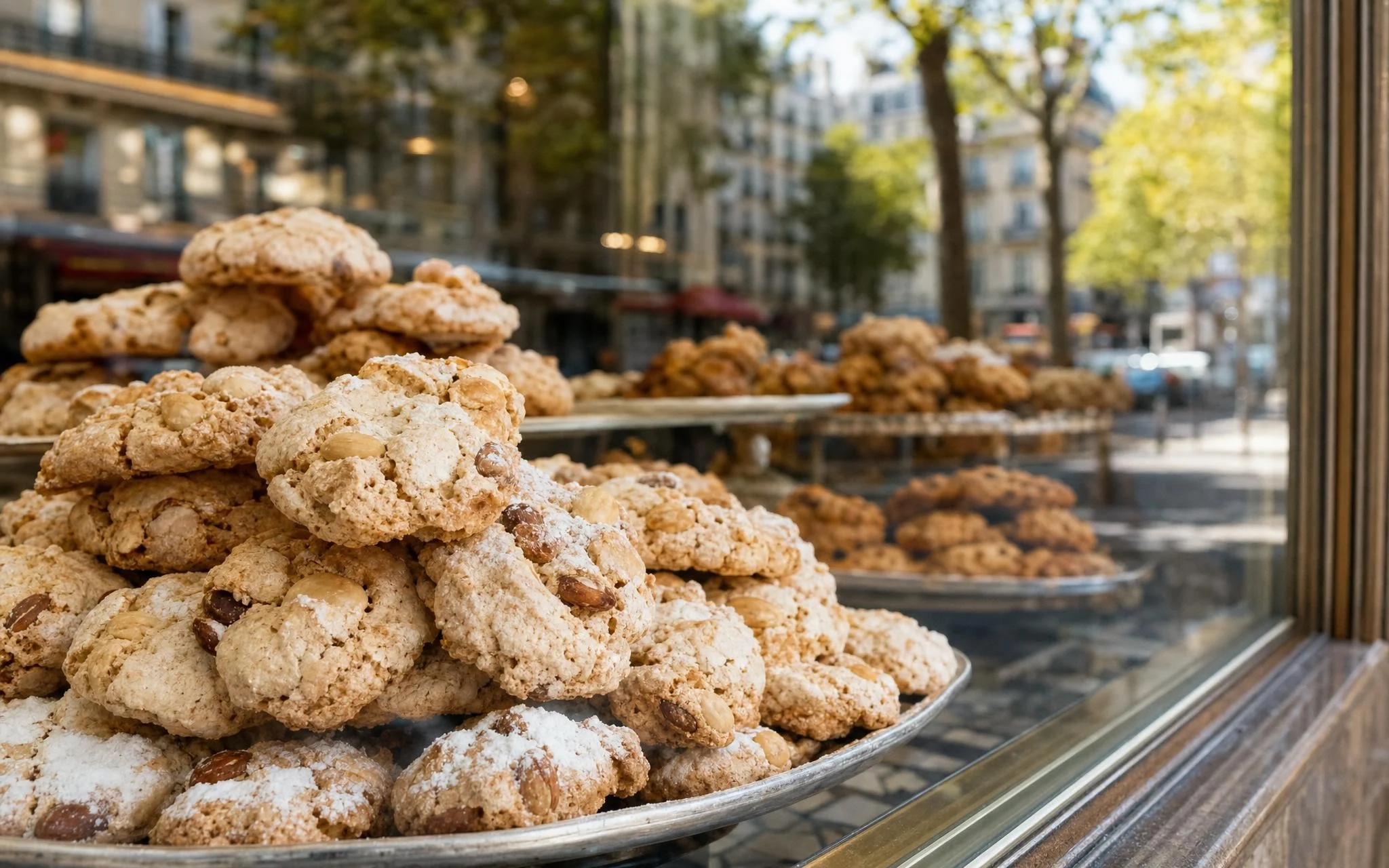
In the windows of some Paris pastry shops, a small beige mound, dented and cracked, catches the eye of curious people. Nothing to do with glossy tarts or mirror desserts: this so-called ugliest cookie of the summer completely assumes its look of a failed batch.
Its Italian name is immediately amusing: brutti ma buoni, literally. Behind this wink, a specialty from Northern Italy which has made a discreet but solid place for itself in the capital, to the point of becoming one of the most commented biscuits of the season.
Brutti ma buoni, the ugly but cult Italian cookie
In Italy, especially in the north, these small irregular piles of hazelnuts have accompanied coffee shared with family or friends for generations. We find them on holiday tables, in neighborhood pastry shops, as a gesture of indulgence that is almost obvious on sunny days.
In Paris, a few places have chosen to import this tradition without trying to embellish it. The brutti ma buoni remain deliberately bumpy, asymmetrical, far from desserts calibrated for Instagram. And it is precisely this contrast that intrigues gourmets in search of flavors rather than filters.
From Northern Italy to Parisian batches: a story and three ingredients
Their origin lies between Piedmont and Lombardy, regions renowned for their hazelnuts and almonds. A legend tells that a pastry chef, disappointed by the appearance of his biscuits, almost threw them away before tasting them; won over by the result, he would have kept the recipe and the name. Several towns, including Gavirate and Alessandria, still claim this invention today.
Behind this apparent rusticity, the recipe is on an ultra-short list:
- egg whites
- sugar
- roasted hazelnuts, sometimes almonds
The dried fruits are roasted then roughly crushed, mixed with a soft meringue which is lightly cooked in a pan before forming, with a spoon, small irregular clusters. Double cooking gives a unique texture, between meringue, rustic macaroon and soft nougatine, often without flour and therefore naturally gluten-free.
In Paris, where can you eat this ugly biscuit from Italy?
No need for a train to Milan: from neighborhood Italian pastries to transalpine grocery stores, brutti ma buoni are now slipping into the Parisian sweet landscape. At Pasticceria Simona, for example, we find a version faithful to the original spirit, to nibble while still warm or with an espresso for a moment of vacation without leaving the city.
For many Italians living in Paris, this biscuit remains above all an emotional madeleine. The actress Roberta Cecchi, who describes herself as , likes to prepare them with her mother, reports France 3 Régions. And then, at a time when social networks promote impeccable cakes, the show with Yvan Hallouin has fun with this revenge of the imperfect dessert. Enough to make brutti ma buoni a serious contender for the title of ugliest cookie of the summer… and one of the most endearing.
What is the Italian brutti ma buoni biscuit?
Brutti ma buoni are small Italian biscuits with hazelnuts or almonds, with an irregular and dented appearance. Their particularity: a dried fruit meringue base, crispy on the outside and soft on the inside, which focuses on taste rather than aesthetics.
Where to eat brutti ma buoni in Paris?
They can be found in certain Italian pastries in the capital, such as Pasticceria Simona, but also in some delicatessens specializing in transalpine products. The ideal is to ask for them at the counter, often near the biscuits to enjoy with coffee.
Are brutti ma buoni gluten free?
Traditionally, these cookies contain only egg whites, sugar and dried fruit, without flour, which generally makes them gluten-free. However, it is still advisable to check the list of ingredients in case of particular sensitivity.
How to enjoy and store brutti ma buoni?
They can be enjoyed with coffee, tea or as a small treat after a meal. To preserve their crunch, it is best to keep them in an airtight container, at room temperature, away from humidity and direct heat.
