
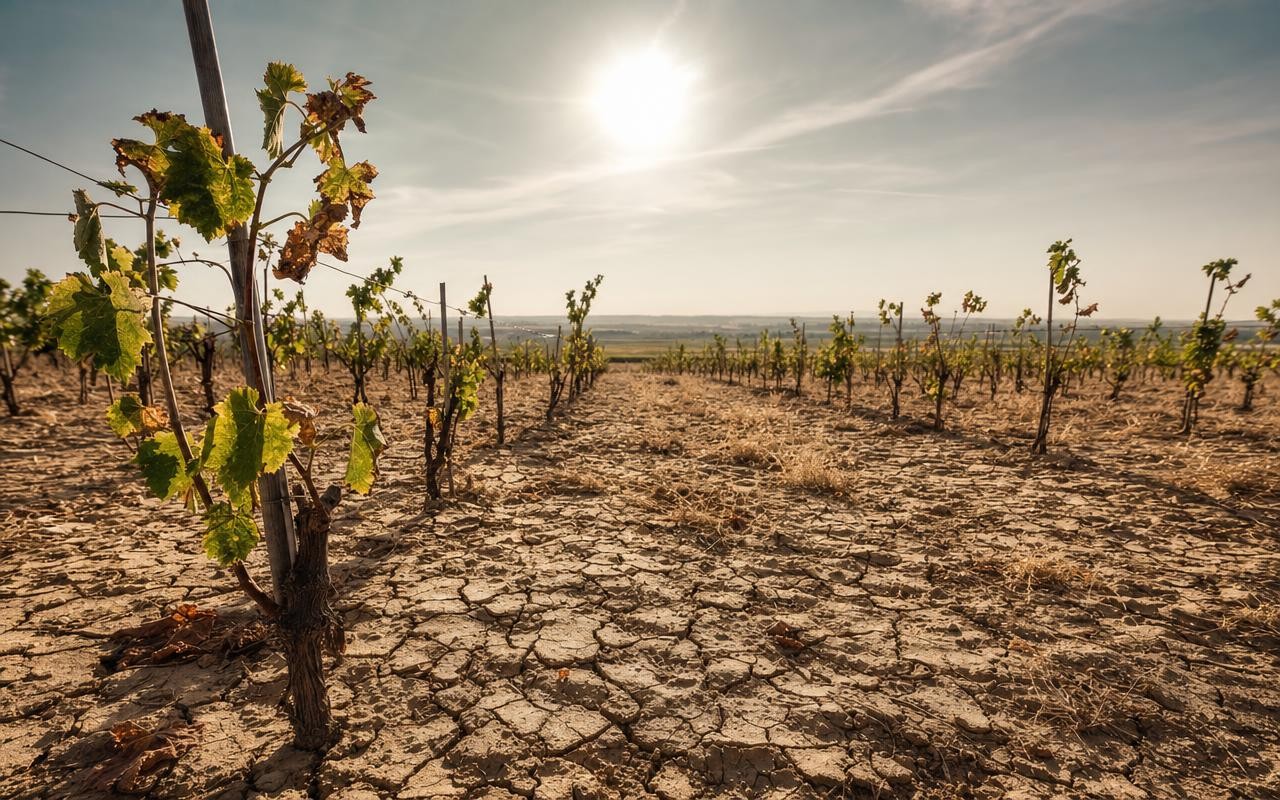
In Charcenne, at temperatures above 38°C, young vines burn and the soil cracks. Overwhelmed, Xavier Guillaume sums it up: , he confides to France 3.
This department, long considered too far north to withstand extreme wine-growing heat, now has only around 147 hectares of vines, compared to nearly 14,000 in the 19th century, and suddenly discovers the fragility of its Haute-Saône vines.
Heatwave 2026: the vines of Haute-Saône under stress
Since the start of summer, several waves of heat waves have followed one another in Franche-Comté, with heavy nights and little rain. The vines draw on their reserves, to the point of the famous water stress. , admits Xavier Guillaume.
In his plots, the old vines with deep roots still resist, but the recently planted rows are emptying. , notes the winegrower, worried about losing his young vines.
In Charcenne, young vines watered and warmer wines
To limit breakage, the winegrower ended up watering his new plots almost every week, an unusual gesture for the vines. , he repeats.
Regarding the profile of the vintages, however, he remains calm: , he predicts.
Guillaume nursery: more resistant vines for tomorrow
In the neighboring greenhouses of the Guillaume Nursery, which produces nearly 12 to 15 million plants each year, the response is being prepared over the long term. , explains Pierre-Marie Guillaume.
To achieve this, his team selects varieties that ripen later and also observes what is done in Greece or Spain. , underlines Pierre-Marie Guillaume.
Heatwave 2026: what impact on the vines?
It dries out the soil, causes severe water stress and especially weakens young vines.
Why are young vines most affected?
Their shallow roots do not reach water reserves, unlike old vines.
Will the taste of Haute-Saône wines change?
They will be a little warmer, less acidic, while remaining predominantly Pinot Noir.
Sources
- Beauty Test
“In this Corsican vineyard the harvest is now done in August, the surprise strategy of these winegrowers in the face of the high heat”
