
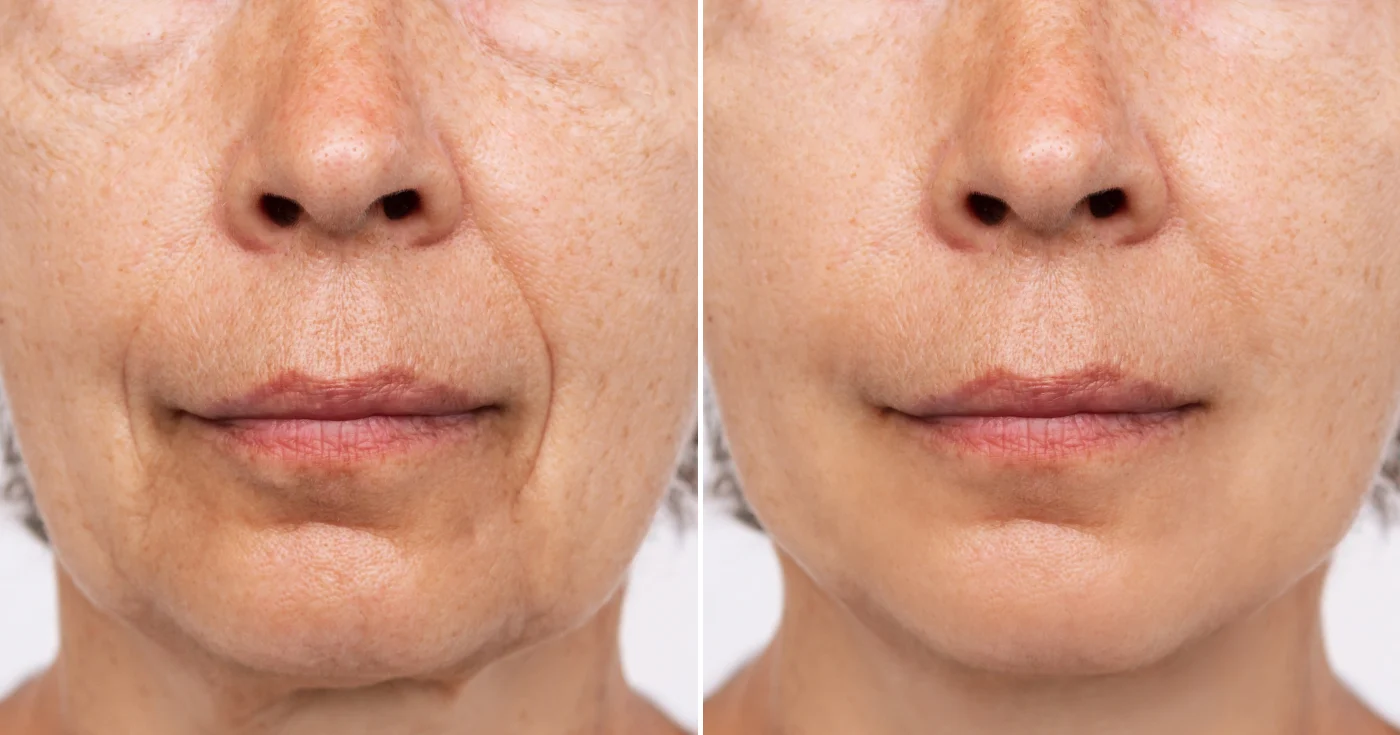
The world of K-beauty continues to highlight promising new ingredients. After centella asiatica, peptides and mucins, another active ingredient attracts the attention of anti-aging skincare enthusiasts: PDRN. Behind this somewhat mysterious acronym lie fragments of DNA, used for several years in certain medical contexts and now put forward in serums and creams intended for the general public.
On social media, PDRN is often presented as an ingredient capable of promoting skin regeneration, improving its appearance and reducing the signs of aging. Some Korean formulas contain it in particular under names associated with salmon DNA, while others rely on alternatives of plant origin or resulting from biotechnological processes. But between marketing promises and actually demonstrated results, it is necessary to sort things out. Is PDRN really more effective than retinol for smoothing wrinkles, or is it the new darling of Korean cosmetics?
PDRN: what is this Korean asset that everyone is talking about?
PDRN, for or poly deoxyribonucleotide in French, refers to purified DNA fragments. In dermatology, it is particularly studied for its tissue repair properties and its potential effects on the mechanisms involved in skin regeneration. Traditionally, these molecules are obtained from animal sources, notably salmon or trout, but the origin and manufacturing process vary depending on the product. Some brands are also developing alternatives from biotechnology. Be careful, however: PDRN does not correspond to a single molecule with identical effects in all formulations.
Its interest lies in particular on its interaction with certain cellular mechanisms associated with tissue repair. Scientific work suggests that it may promote certain processes involved in the production of extracellular matrix components, including collagen, a protein essential for skin firmness. These properties explain the interest it arouses in regenerative dermatology and aesthetic medicine. A study published in the scientific journal in July 2026 notably evaluated a specific cosmetic formulation based on PDRN, with encouraging results on several parameters of skin aging. However, these data remain preliminary and do not allow the benefits to be generalized to all products that contain this ingredient.
What are the benefits of PDRN for the skin?
In cosmetic care, PDRN is mainly used to support skin showing signs of aging. It could help improve the overall appearance of the skin, its suppleness and texture, depending on its concentration, formulation and ability to penetrate the skin layers. Brand promises also concern complexion radiance and the appearance of fine lines. It is nevertheless necessary to distinguish between the effects observed in the laboratory, the results obtained after injections and those of a serum applied daily at home: these different methods of administration are not interchangeable.
Another important point: PDRN is not a miracle ingredient capable of erasing deep wrinkles. The potential results concern more the gradual improvement of certain skin quality parameters than the complete disappearance of the marks of aging. In addition, a cream containing PDRN does not guarantee the same effects as a treatment carried out in a doctor’s office. The size of the fragments, the stability of the formula and the technologies used to promote penetration can in particular influence the results. Before choosing a product, it is therefore better to examine its complete composition and the clinical data available on the formula itself rather than relying solely on the presence of this active ingredient on the label.
PDRN versus retinol: which is more effective against wrinkles?
This is the question that particularly interests skincare enthusiasts. Retinol, derived from vitamin A, benefits from significant scientific research in anti-aging care. It acts in particular on cell renewal and helps to gradually improve the appearance of wrinkles and the texture of the skin. However, its effectiveness depends on its concentration, formulation and regularity of use. It may also cause irritation, redness, or dryness, especially at the beginning of the routine.
PDRN presents a different profile: it is studied for its properties associated with skin repair and remodeling of the extracellular matrix. A study published in July 10, 2026 compared an eye cream containing 0.1% PDRN-850K to a formula containing 0.1% retinol. In this randomized, double-blind trial, conducted among 31 women aged 35 to 55 years for 28 days, the PDRN formula performed better on several measured parameters, including periocular wrinkles, elasticity and skin density. This study therefore brings an interesting element to the debate, but its limited number, its short duration and the fact that it concerns a specific formulation prevent us from concluding that PDRN is generally superior to retinol.
How to use PDRN in your skincare routine?
If you wish to test this active ingredient, choose a cosmetic product whose composition and recommendations for use are clearly indicated. PDRN can be found in serums, creams or eye contour treatments. Apply the product according to the manufacturer’s instructions, usually after cleansing and before moisturizer when texture permits. If you have sensitive skin, introduce it gradually and watch how your skin reacts, although a formula that is well tolerated by some people does not guarantee that everyone will not react.
PDRN can be integrated into a routine including other active ingredients, but it is not necessary to multiply the ingredients to obtain better results. If you already use retinol, you can consider a PDRN treatment as a complement, provided you choose compatible and well-tolerated formulas. In case of reactive skin, introduce only one new product at a time so that you can identify the source of possible irritation. Finally, don’t forget the essential: broad-spectrum sun protection, ideally SPF 30 to 50, remains essential to limit UV-related damage and prevent premature skin aging. No anti-aging serum replaces this step.
PDRN in cosmetics: what to remember before getting started
The success of PDRN illustrates the growing interest in active ingredients that do not just hydrate the skin, but seek to act on the biological mechanisms associated with its aging. The first scientific results are encouraging, particularly for certain formulations studied in the laboratory and in the clinic. However, the data remains too limited to assert that all PDRN cosmetics can effectively smooth wrinkles or surpass existing references.
To make the right choice, it is better to favor a consistent routine, daily sun protection and products adapted to your skin. If your primary goal is to prevent and reduce the signs of aging, retinol remains a documented option. PDRN can represent an interesting alternative to explore, especially if you are looking for care focused on skin quality, but its real benefits will depend on the formula used and the results that future studies will confirm.
FAQ: the most frequently asked questions about the PDRN
1. Is PDRN really effective against wrinkles?
Early studies suggest that certain PDRN formulations may improve the appearance of wrinkles and certain skin quality parameters. However, the data remains limited and does not guarantee an identical result with all cosmetics that contain it.
2. Is PDRN more effective than retinol?
A clinical study published in 2026 observed better results with a PDRN eye contour formula than with a retinol formula on several criteria. However, these preliminary results are not enough to demonstrate that PDRN is systematically more effective than retinol.
3. Is PDRN suitable for sensitive skin?
Tolerance depends on the complete product formulation and individual sensitivity. The PDRN does not guarantee the absence of irritation. It is best to introduce the treatment gradually and check its compatibility with your usual routine.
4. Can PDRN and retinol be used together?
Yes, these two active ingredients can be integrated into the same routine if the products are compatible and well tolerated. It is not necessary to apply them simultaneously: if your skin is sensitive, start by introducing one product at a time.
5. How long does it take to see the effects of PDRN?
The deadline depends on the product, its formulation and the desired objective. A clinical trial of a specific formula evaluated its effects after 14 and 28 days, but that doesn’t mean all PDRN treatments produce results that quickly. A longer evaluation is necessary to better understand the sustainability of the effects.
