
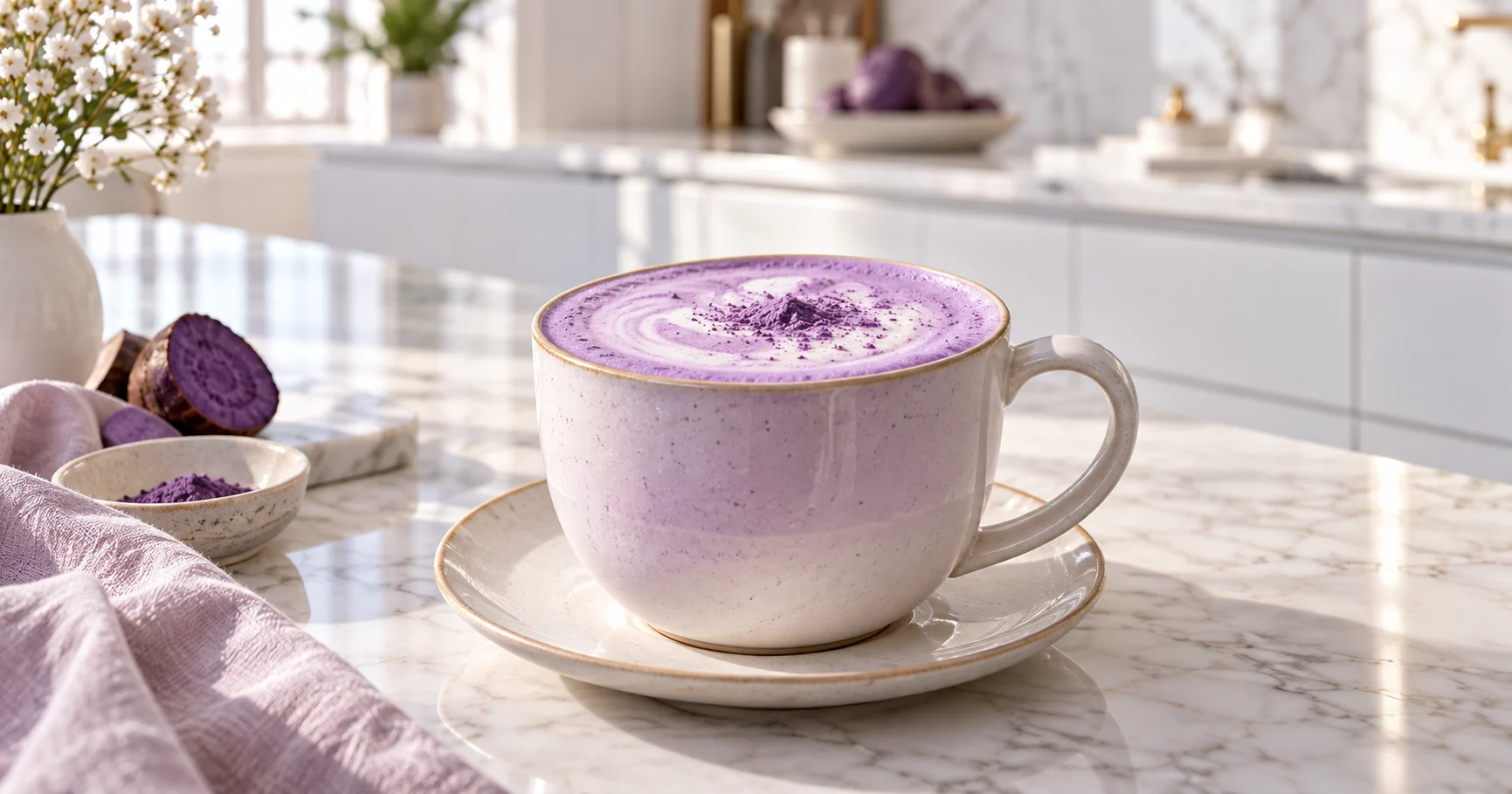
Matcha had already colonized our coffee shops, our cupboards and even our skincare products. Now, it’s the turn of the ube, this famous purple yam from Asia, to slip into absolutely everywhere. And obviously, beauty was not going to be missed.
Laborantin has just made it the heart of its collagen powder. The idea? Transform the collagen treatment, which can sometimes be a little dull, into a real little gourmet ritual, with a stunning purple color and a mild taste with slightly vanilla notes. But behind the very Instagrammable side, the formula is mainly concerned with the firmness, hydration and radiance of the skin.
+15% firmness and +23% hydration: these are the figures that speak for themselves
The heart of the formula is based on Naticol® marine collagen peptides, a patented active ingredient of which Laborantin highlights several clinical studies. After several weeks of supplementation, the data communicated indicate in particular +15% firmness, +14% elasticity and +23% skin hydration in three months*. Particularly interesting results when the skin begins to appear thinner, less plump and a little less luminous than before.
Be careful though: these figures relate to studies carried out on Naticol collagen, and not a clinical test.
Ube especially brings the antioxidant side… and much more pleasure
So why add ube to collagen? This purple yam is naturally rich in antioxidant pigments. Laborantin chose it in particular to complete its formula around protection against oxidative stress and radiance of the complexion. But let’s be honest: its other huge advantage is that it makes the cure much more pleasant to drink.
The powder has a pretty purple color and a slightly vanilla flavor, with no added sugars. Mixed with oat or almond milk, it easily transforms into an ube beauty latte (and we’ve had worse anti-aging routines). The formula also contains vitamin C, which contributes to the normal formation of collagen to ensure the normal functioning of the skin.
Ube latte, smoothie or yogurt: difficult to find a cure easier to adopt
The main problem with dietary supplements? We buy them with good intentions and then forget about their existence in the back of a cupboard two weeks later. Here, Laborantin simply recommends mixing the powder with a drink, yogurt or culinary preparation.
For a preventive beauty routine, the brand recommends one measuring spoon per day. A larger quantity is offered for more in-depth anti-aging support, always respecting the recommendations indicated on the product. So you can slip it into a latte, a smoothie or even pancakes. This is probably the best way to not abandon it after five days.
Does Drinking Collagen Really Work on Skin?
Some studies on hydrolyzed collagen peptides show an improvement in parameters such as hydration and skin elasticity after several weeks of supplementation. Results vary depending on the type of collagen, the dose and the duration of the treatment. They are therefore not identical for all products. A balanced diet and sun protection obviously remain essential.
What is ube?
Ube is a variety of purple yam that is particularly popular in the Philippines. Its color comes naturally from antioxidant pigments. Its taste is mild, slightly sweet, with notes reminiscent of vanilla and hazelnut. Here, it serves as much to enrich the formula as to make the drink much more delicious.
How to take ube collagen from Laborantin?
The powder can be mixed into milk, a vegetable drink, yogurt or smoothie. Laborantin recommends a daily dose adapted to the desired objective. Regularity is important since the benefits studied on collagen are observed after several weeks. Pregnant or breastfeeding women should seek advice from a healthcare professional before taking any supplement.
*Results from clinical studies communicated on Naticol® marine collagen: +15% firmness, +14% elasticity and +23% hydration after 8 to 12 weeks. These results do not come from a clinical trial carried out specifically on Collagen Ube from Laborantin.
