
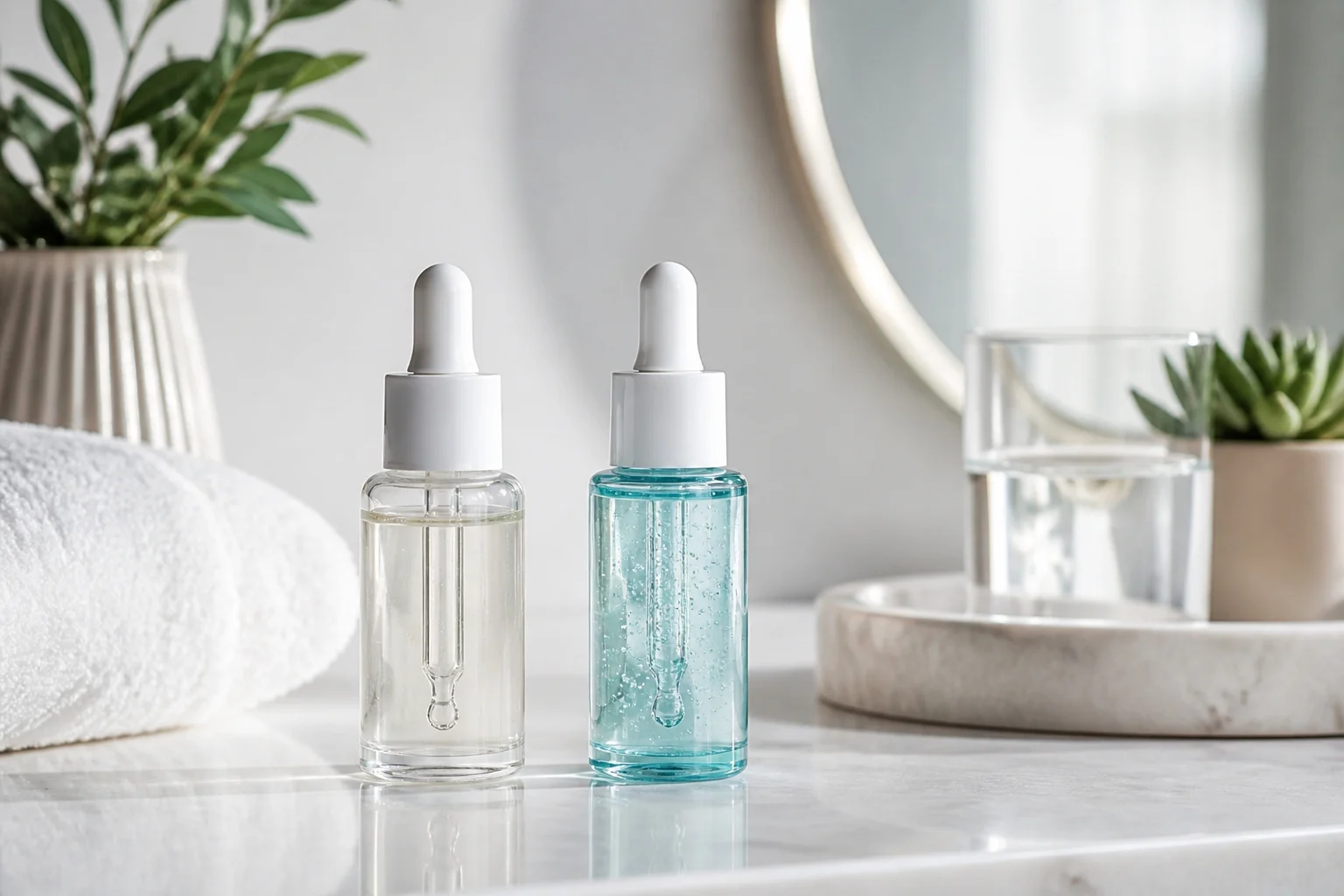
Niacinamide or hyaluronic acid: the quick answer to choose wisely
The main difference between niacinamide and hyaluronic acid is their cosmetic function. Hyaluronic acid is a humectant active ingredient, used to support surface hydration and limit the feeling of tightness. Niacinamide, derived from vitamin B3, is mainly chosen to help balance the skin, improve the appearance of pores, visually reduce certain redness and contribute to a more even complexion. In 2026, this duo remains central to skincare routines, but it does not meet the same need.
In practice, skin that is dehydrated, uncomfortable or marked by fine lines from dehydration often turns first to hyaluronic acid. Combination to oily skin, prone to shine, imperfections or post-pimple marks, is more likely to turn to niacinamide. The two active ingredients can also coexist in the same routine if the overall formula remains well tolerated.
What is niacinamide used for in a facial routine?
Niacinamide is a versatile active ingredient, appreciated because it fits into many skin profiles. In facial treatments, it is often used to improve the appearance of skin texture, visually reduce enlarged pores, limit excess sebum and support the radiance of the complexion. Niacinamide is also of interest to sensitive skin, because it is generally better tolerated than certain exfoliating or very acidic active ingredients, even if the concentration and formula remain decisive.
Cosmetic brands such as L’Oréal, Garnier, Guerlain, Aroma-Zone, Weleda or NAOS offer, depending on their ranges, treatments which are part of this logic of skin balance, with different formulation approaches. For the reader, the challenge is not to look for an isolated active ingredient name on the label, but to understand whether the product is mainly aimed at radiance, sebum regulation, evenness of complexion or comfort of the skin.
What is hyaluronic acid used for in a facial routine?
Hyaluronic acid is best known for its ability to attract and retain water. In a serum or cream, it is generally used to provide a more supple, plumper and less uncomfortable skin effect. This active ingredient is particularly suitable for skin that is dehydrated, dull or weakened by a dry environment, excessively harsh cleansing or an overly aggressive routine. It does not replace a cream, but it complements a hydration strategy well.
In the market offering, L’Oréal, Garnier, Guerlain, Aroma-Zone, Weleda and NAOS are among the players often associated with moisturizing or plumping care, with varied textures and positioning. The important point remains overall consistency: a hyaluronic acid serum works best when applied to slightly damp skin then followed by a treatment that helps limit water loss.
Which active ingredient to choose according to your skin needs?
The choice between niacinamide and hyaluronic acid becomes simpler when we start from the concrete problem to be solved. Skin that feels tight after cleansing, that lacks suppleness or that has fine lines linked to dehydration will benefit more directly from a treatment with hyaluronic acid. Skin that shines quickly, whose pores are visible or which retains marks after imperfections will more often benefit from niacinamide.
The table below summarizes the most common cases.
| Main need | Active often the most suitable | For what |
|---|---|---|
| Dehydration | Hyaluronic acid | Helps retain water and improve skin comfort |
| Pulling | Hyaluronic acid | Provides a feeling of more supple and plumped skin |
| Visible pores | Niacinamide | Often chosen to visually refine skin texture |
| Excess sebum | Niacinamide | May help better balance shine |
| Uneven skin tone | Niacinamide | Contributes to a more uniform appearance |
| Simple routine | Both as needed | The two active ingredients are often compatible in the same routine |
Can niacinamide and hyaluronic acid be used together?
Yes, niacinamide and hyaluronic acid can generally be used together, as their functions are complementary. Hyaluronic acid mainly targets hydration, while niacinamide acts more on the overall balance of the skin and the appearance of the complexion. For many users, the association allows them to avoid an overly exclusive choice between immediate comfort and progressive correction of certain visible imbalances.
In a simple routine, it is common to first apply the most fluid treatment, then continue with a suitable cream. Some formulas already combine the two active ingredients. This is the case for many references on the market, from L’Oréal, Garnier, Guerlain, Aroma-Zone, Weleda or NAOS, even if the concentration, texture and presence of other ingredients can modify the experience of use.
What criteria should you look at before buying a serum?
The name of the active ingredient is not enough to judge a serum. The texture, tolerance, presence of fragrance, place of the active ingredient in the formula and compatibility with the rest of the routine are just as important. Sensitive skin may prefer a short, soothing formula. Oily skin may want a lightweight finish. Mature or dehydrated skin may prefer a more enveloping texture, as long as it remains comfortable on a daily basis.
Before choosing, it is useful to check several points:
- The main need of the skin: dehydration, pores, radiance, discomfort or imperfections.
- The desired texture: gel, fluid serum, lotion or richer treatment.
- Personal tolerance: perfume, alcohol, tingling sensation or sticky finish.
- Compatibility with existing routine: exfoliants, retinoids, vitamin C or barrier cream.
- Possible regularity of use: a good product is first and foremost a product that we tolerate well.
What mistakes should you avoid with these two assets?
The first mistake is choosing an active ingredient for the wrong reasons, due to a trend rather than the actual condition of the skin. Another common mistake is accumulating too many serums without logic, making it difficult to identify irritation or lack of effectiveness. With hyaluronic acid, you should avoid relying solely on the serum without then applying an emollient or occlusive treatment if the skin lacks comfort.
With niacinamide, caution is especially focused on very concentrated formulas or on the association with an already very active routine. Skin sensitized by exfoliating acids or retinoids may prefer a gradual introduction. The ranges from L’Oréal, Garnier, Guerlain, Aroma-Zone, Weleda and NAOS can meet different profiles, but the best benchmark always remains the actual tolerance of the skin after several regular applications.
Niacinamide and Hyaluronic Acid FAQs
Is niacinamide better than hyaluronic acid?
No, niacinamide is not better in itself: it simply meets other skin needs.
Niacinamide is often favored for visible pores, shine, blemishes and uneven skin tone. Hyaluronic acid is chosen more for dehydration, tightness and loss of flexibility. The right asset therefore depends on the main problem to be treated. Skin can also need both, provided that the routine remains simple, progressive and well tolerated.
Which active ingredient to choose for dehydrated skin?
For dehydrated skin, hyaluronic acid is generally the most straightforward and consistent choice.
Hyaluronic acid helps attract water and improve the feeling of comfort, especially when skin feels tight after cleansing or appears less supple. It is ideally used with a suitable cream to limit water loss. If dehydrated skin also has mild redness or uneven skin tone, niacinamide can then complement the routine without replacing the hydration step.
Which active ingredient to choose for visible pores and imperfections?
For visible pores and blemishes, niacinamide is often the most suitable option initially.
Niacinamide is sought after for its action on skin balance, excess sebum and the appearance of skin texture. It can therefore be better suited to combination or oily skin that shines quickly. Hyaluronic acid is not useless in this case, but its role is different: it mainly supports hydration and comfort, without primarily targeting pores or post-imperfection marks.
Can we apply both active ingredients in the same routine?
Yes, niacinamide and hyaluronic acid can generally be combined without major difficulty.
This association is common because it meets two complementary needs: moisturizing on one side, balancing and visually smoothing on the other. The order depends mainly on the texture of the products, often going from the most fluid to the richest. If the skin is sensitive, it is better to introduce only one new treatment at a time in order to more easily identify the best tolerated formula.
Is niacinamide suitable for sensitive skin?
Yes, niacinamide is often suitable for sensitive skin, provided you choose a well-tolerated formula.
Niacinamide is generally considered a versatile and relatively accessible active, but tolerance always depends on the concentration, fragrance and the rest of the formula. Reactive skin may prefer a simple product, without accumulation of powerful active ingredients in the same routine. In case of discomfort, it is preferable to space out the applications and first strengthen the skin barrier with gentle care.
Is hyaluronic acid enough to hydrate the skin?
No, hyaluronic acid alone isn’t always enough: it works best as part of a complete hydration routine.
A serum with hyaluronic acid mainly provides humectant support. To maintain skin comfort, it is often useful to add a cream which helps limit water evaporation. This logic is particularly important for dry skin or skin exposed to a low humidity environment. The objective is not to stack products, but to combine a moisturizing active ingredient with appropriate protection of the skin barrier.
