
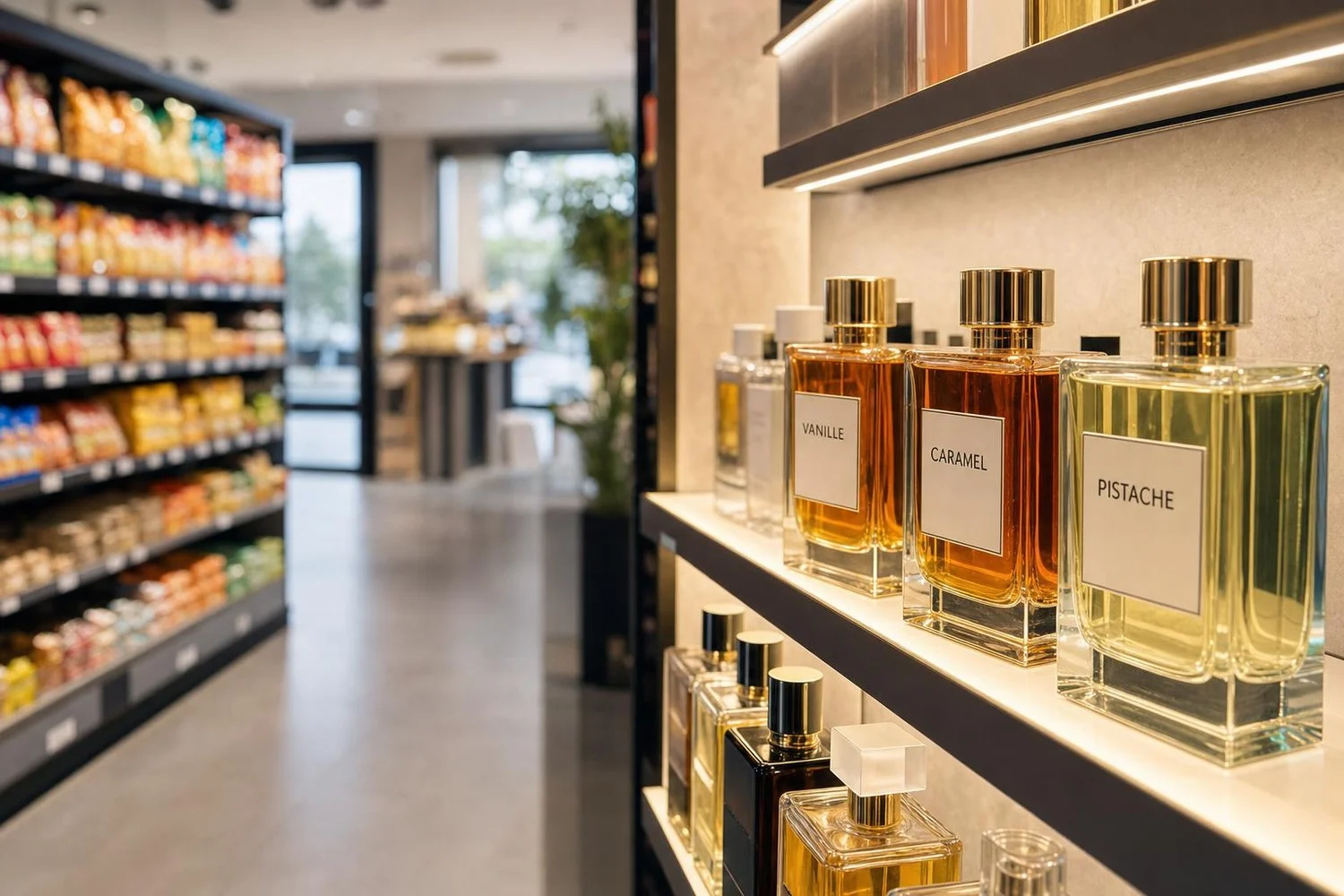
A bottle of vanilla instead of a muffin, a pistachio mist rather than a packet of biscuits. In the United States, the “Ozempic effect” is no longer seen only on the scales, but also in the beauty aisles: sales of gourmet perfumes are exploding among people undergoing GLP-1 type treatments.
These medications, including Ozempic, Wegovy or Mounjaro, suppress the appetite and reduce the attraction to fat and sweets. Result: when desserts no longer appeal as much, part of the sweet pleasure shifts to… the nose. Macaron, pavlova, tarte Tatin, almond milk or grilled pistachio are appearing in the bottles, and this shift in desire is beginning to weigh heavily on the perfume market.
When GLP-1 suppresses appetite, the brain seeks other rewards
GLP-1 analogues act on satiety centers and reduce the taste for high-calorie foods. In the United States, approximately one in eight people have already used these treatments, and estimates suggest up to $4 billion in lost sales for the food industry, especially snacks and sweets. This money does not disappear: it moves towards other “little pleasures” perceived as more compatible with weight loss, including perfumes.
Neuroscience reminds us that smell and taste use common pathways in the brain. Notes of caramel, cake or candied fruit activate reward circuits, provide comfort and can reduce anxiety, without actual ingestion. Some experts speak of a sensory substitute for dessert: we “wear” the sugar on the skin instead of eating it.
Gourmet perfumes booming, from the United States to Europe
The figures confirm the phenomenon. The Swiss group Givaudan observes an increase of around 23% in perfume consumption among Americans under Ozempic. At the same time, market studies report a 24% increase in sweet fragrance launches in one year. In terms of online behavior, searches for “gourmand fragrances” have increased by around 170% since 2023.
In Europe, the dynamic follows: “gourmet perfumes” requests have increased by around 140% in one year. The pistachio note, star of social networks, shows spectacular growth of more than 800% in perfume searches. Body mists, scented milks and sweet balms appeal to both women and men, with one key motivation: to improve mood and create a comforting cocoon.
France: GLP-1 reimbursements and new deal for perfume
Since June 15, 2026, Wegovy and Mounjaro have been reimbursed at 65% by Health Insurance for certain forms of obesity. France is in turn entering a medical “Ozempic era”, well supervised, but potentially massive. If we transpose, even partially, the American scenario, part of the budget released on cakes, sweets or sweet drinks could shift towards perfumes, makeup or fashion.
Brands like Sephora, Marionnaud or supermarkets could therefore accentuate their sweet ranges, from tarte tatin eau de parfum to vanilla-coconut mists. However, research firms recommend focusing the discourse on olfactory well-being, joy and comfort rather than on slimming or “zero calories”. The phenomenon also goes beyond just patients on GLP-1: generation Z, very active on TikTok, already favors dessert-style perfumes, treatments or not.
