
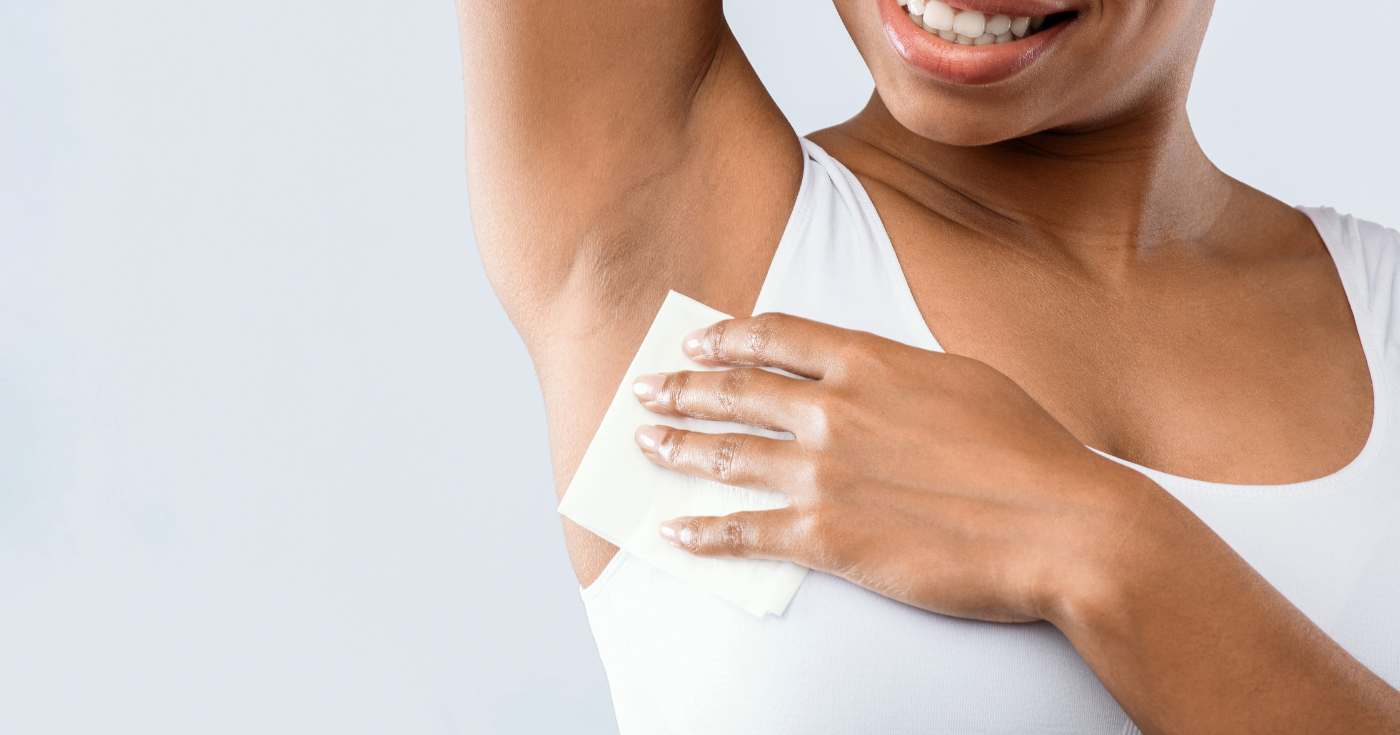
Where do the yellow traces really come from?
Contrary to popular belief, perspiration in itself is colorless. What causes these stubborn spots is the chemical reaction between sweat, naturally salty, and aluminum salts present in many deodorants. Over time, this mixture oxidizes and yellows the fabric. The more abundant the perspiration, the more the garment absorbs this cocktail, and the more difficult the stain becomes to eliminate.
One of the most frequent errors is to apply your deodorant just before putting on your clothes. Not only does the product not have time to dry, but it is transferred directly to the fabric. Another misstep: use a too large quantity of deodorant by thinking of being better protected. In reality, the thick layers saturate the textiles and accentuate the yellowish residues.
Many people also neglect the choice of formula. Anti -transpirant deodorants rich in aluminum salts are the main responsible for yellow halos. Finally, washing your clothes at low temperature or without pre -pricing the stained areas leaves the residues to settle permanently in the fibers.
How to limit damage?
The first tip is to completely dry your deodorant before dressing, even if it means waiting for a few minutes. It is also better to apply a thin layer of product rather than multiplying the passages. The choice of the formula plays an important role: deodorants without aluminum salts or in the form of natural cream considerably limit the risk of traces.
On the maintenance side, it is advisable to quickly rinse your clothes worn during strong sweating, or to apply a specific stain remover on the areas concerned before the machine passage. Soda bicarbonate and white vinegar can also help dissolve encrusted deposits, provided you act quickly.
Solutions to clean the traces already installed
Even if some brands are particularly stubborn, there are some effective tips to mitigate them. The baking soda, mixed with a little water to form a paste, can be applied directly to the stained area before washing. White vinegar, used in soaking, also helps dissolve inlaid residues. For white tissues, oxygenated water is sometimes effective by whitening the fiber. Be careful however: on colorful or delicate clothes, it is better to test the method on a small area before treating the whole.
When nothing helps …
If the stain is too old and deeply encrusted, it can be very difficult to eliminate it completely. In this case, the garment often keeps a slight halo, especially on clear textiles. The best solution therefore remains prevention: choosing the right deodorant, adapting your application and acting quickly at the time of washing.
