
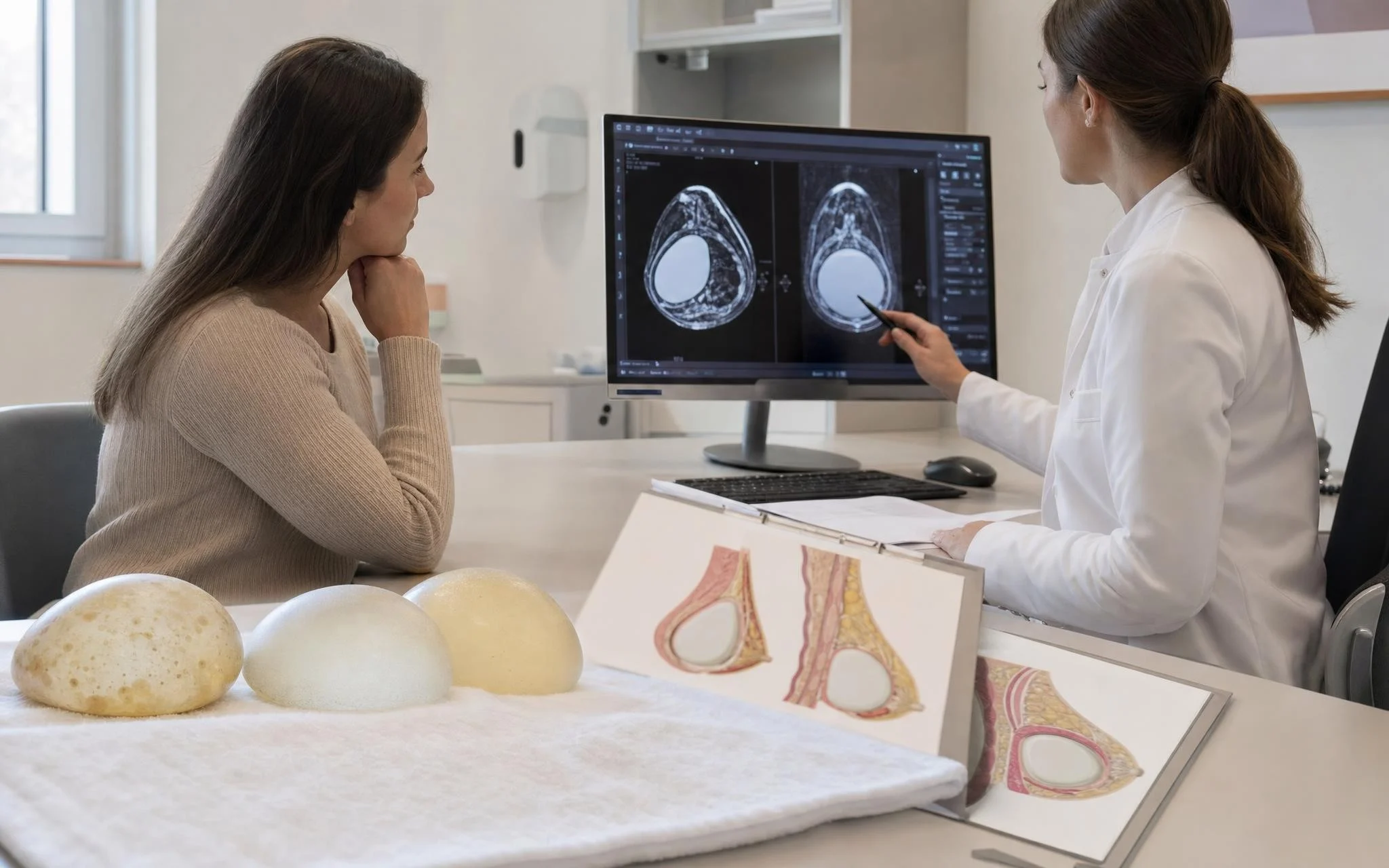
Long presented as discreet and durable, silicone breast implants are reaching a turning point. In cosmetic surgery practices, requests for changes or removal are increasing sharply, to the point that some are already talking about a “wave of implant revisions”. A wave that questions.
According to recent data, around 71% of women with implants have already considered a revision of their breast implants, and the demand for this type of intervention jumped by almost 90% at the start of 2026. In the background, we find the generation of implants placed from 2011, which has now reached 10 to 15 years of hindsight.
Why breast implant revision is exploding
A large part of revision decisions, almost 29.4%, is linked to the age of the implant. Surgeon Olga Bachilo recalls that revisions work in cycles, as the prostheses age. , explained plastic surgeon Olga Bachilo, quoted by NewBeauty. Women aged 60 or 70 also request replacements to benefit from new generation implants.
At the same time, national registers show an increase in replacements and explants, with several hundred revisions coded each year for disorders attributed to implants. This dynamic is consistent with what aesthetic appointment booking platforms are seeing, where revision is now among the fastest growing surgeries.
Between aesthetics and health: what motivates you to change your breast implants
For 25.6% of patients, revision is primarily a question of appearance: pregnancies, weight variations or simple aging modify the breasts. describes surgeon Michael Edwards. Other mechanical complications, such as capsular contracture or malposition, sometimes require repositioning or changing the implants.
Around 16% of revisions mainly respond to a change in desire: size deemed unsuitable, desire for something more natural, or even a desire to turn the page on prostheses. observes surgeon David Alfonso. Some even choose removal with facelift and lipofilling to remodel without an implant.
When health makes you switch to the revision of breast implants
A study cited by a Belgian surgeon concerns 389 women with silicone gel implants: 384 had silicones in the tissues, or 98.8%, with no difference between recent cohesive gels and old non-cohesive gels. For Doctor José Budo, he explains in an interview with RTBF. The authors believe that recent implants can therefore potentially cause as much harm as older ones.
Doctor José Budo links these problems to ASIA syndrome, a form of autoimmune disease induced by adjuvants. , he explains. . He describes diffuse symptoms: The practitioner also points out the risk of cancer of the lymphoid system, the opacity on the precise composition of the implants, difficult monitoring – to check the integrity, he says – and questions the relevance of mammograms under strong compression in implanted women.
Revision of breast implants: do they necessarily have to be changed after 10 years?
No. Specialists point out that implants do not have a fixed lifespan. The 10-year milestone serves above all as a benchmark to strengthen clinical and radiological monitoring, not an automatic obligation for replacement.
What signs should you consider breast implant revision?
Pain, visible deformation, hardening breast, new asymmetry, but also chronic fatigue, joint pain or memory problems justify a consultation. A clinical examination, supplemented if necessary by ultrasound or MRI, makes it possible to decide on replacement, removal or simple monitoring.
Is an explant enough to make the symptoms related to breast implants disappear?
According to the experience reported by Doctor José Budo, more than half of patients see their symptoms improve after explantation. However, this is not guaranteed for everyone, and the decision must be made on a case-by-case basis with the medical team.
