
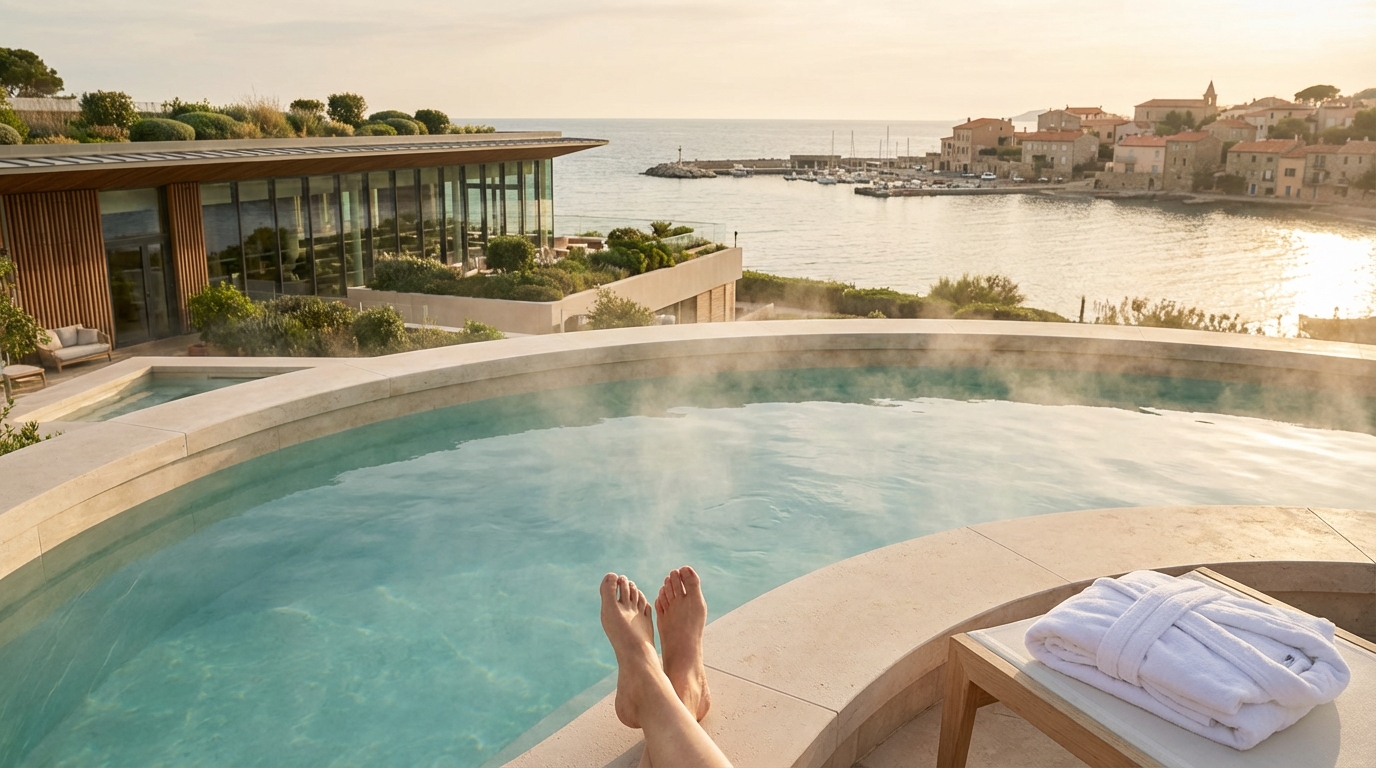
Thalassotherapy weekend booked six months in advance, spa sessions offered at Christmas, mini-cures booked when you’re tired: in just a few years, wellness tourism has gone from being a luxury break to an almost banal reflex. Thermal baths, thalassotherapy centers, urban and hotel spas display enviable occupancy rates for many, including in low season. And this success is no longer limited to iconic destinations alone.
Behind this rush for hot water and massage tables lies a real economy: heavy investments, thousands of jobs, complete repositioning of certain cities. A sector which, despite the crises, continues to break records… and raises a simple question: where does this seemingly unstoppable growth come from?
A well-being market that is exploding in France
The numbers set the tone. The global wellness economy reached $6.3 trillion in 2023, or nearly 5.8 trillion euros, and could climb toward $9 trillion (around 8.3 trillion euros) by 2028. In this landscape, France ranks 4th in the world for spa with a turnover of around $6.36 billion, or nearly 5.9 billion euros.
On the French market alone, spas and wellness activities generate between 5.5 and 5.8 billion euros, with nearly 2,400 establishments and 80 to 100 openings per year since 2021. Hydrotherapy, for its part, has around a hundred establishments and 88 stations, 440,000 approved spa guests, 2.8 million wellness admissions, more than 22 million overnight stays and around 4.1 billion euros in benefits for 22,300 direct and indirect jobs.
Thalasso, thermal baths, spas: three drivers of the same success
Hydrotherapy remains the historical backbone: anchored in often rural or mountain resorts, it has long relied on reimbursed three-week medical cures. The attendance of these spa guests remains behind, with a drop of around 18% compared to 2019 and around 472,000 spa guests in 2024, but the resorts are compensating by increasing the number of mini-cures, short stays and spa areas open to a wider clientele.
Thalassotherapy is moving into a more hedonistic niche. Around 50 centers welcome nearly 500,000 spa guests per year, with an annual increase of close to 2% and accommodation occupancy rates of around 70%, for a turnover of around 300 million euros. Particularity: 45% of the clientele is male, and 75% of 18-34 year olds say they are ready to try a thalassotherapy, while 78% of French people believe that sea water has a positive effect on health.
Why the French have never focused so much on their well-being
Burn-out, hyperconnection, teleworking… Demand is exploding. Nine million French people have consumed at least one wellness treatment in two years, or one in seven adults. In spas, around 45% of stays are now oriented towards prevention or “better living” rather than strictly curative. And then the formats changed: room for short stays of three or four days, easy to offer or to afford, which can generate more revenue per night than traditional long cures.
Digital has done the rest: gift boxes, specialized reservation platforms, “train + spa” offers, photos of infinite pools on Instagram… Everything contributes to making these experiences desirable and accessible. Hotels have understood this well: almost 60% of 5-star hotels now have a spa, and 80% of customers use it when it exists. Some studies show that adding a wellness offer can increase revenue per customer by around 20%, especially when healthcare, catering and cosmetic sales are added.
What is the economic weight of the well-being sector in France?
Between spas, thermal baths and thalassotherapy centers, the French well-being market is worth several billion euros per year, with benefits estimated at 4.1 billion euros for hydrotherapy alone.
What is the difference between thalassotherapy, thermal baths and spa?
The thermal baths use medically recognized mineral waters, thalassotherapy is based on sea water and the marine environment, the spa brings together broader equipment and well-being treatments, often without medical indication.
Who visits thalassotherapy centers?
The clientele is rather urban and wealthy, with 45% men and a strong appetite for 18-34 year olds, many of whom are considering a thalassotherapy stay.
Why is wellness tourism growing so much?
Rising stress, search for prevention, short stay formats and high visibility on social networks are driving demand upwards.
