
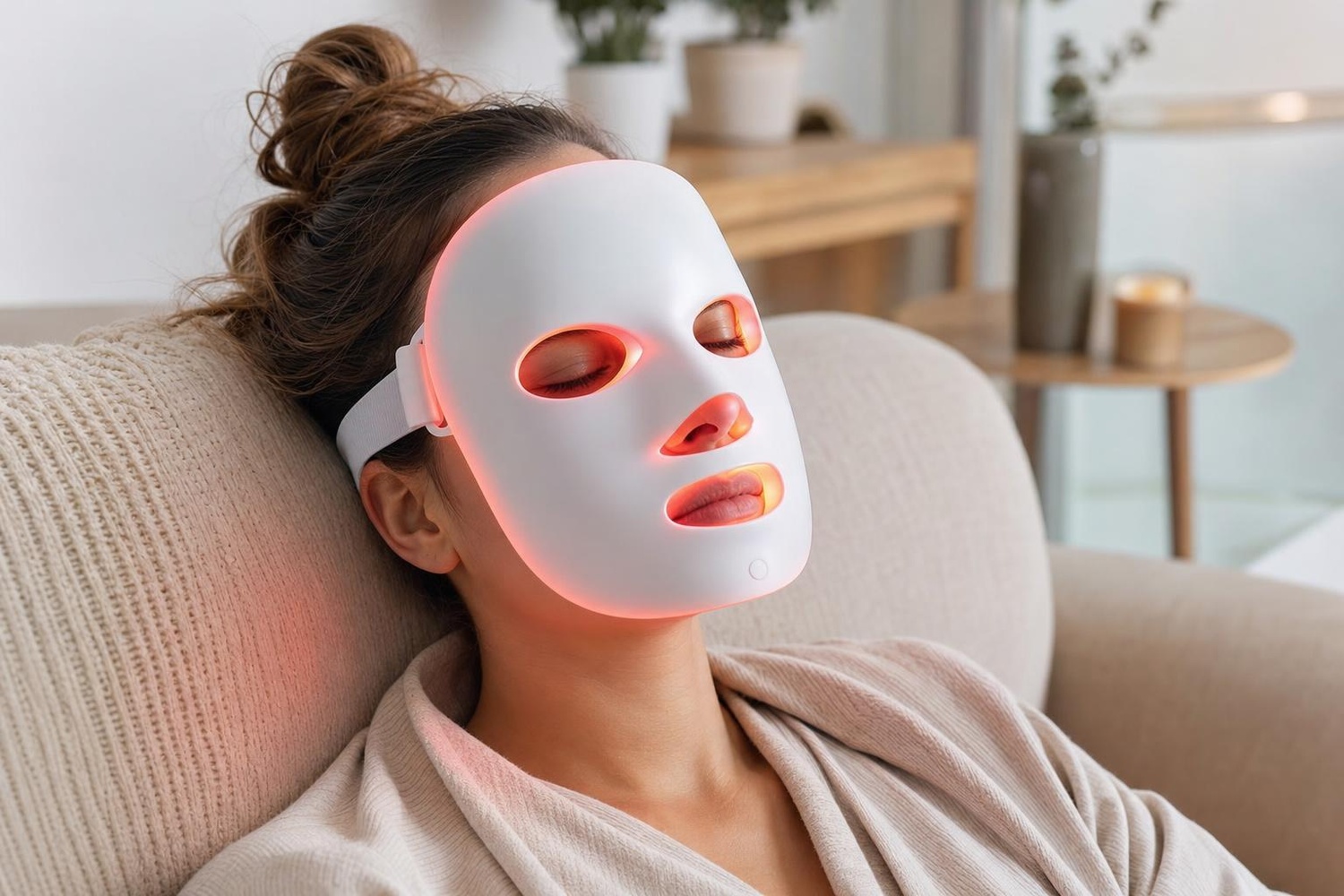
LED masks have invaded Instagram and TikTok feeds with a very simple promise: smoother, clearer skin, without stinging or aggressive peeling. Between anti-aging promises, acne treatment and immediate “glow”, it is difficult to know which device really deserves its place in the bathroom. And even more so when prices rise quickly.
Updated on May 22, 2026, this comparison combines user tests, technical sheets and expert recommendations to identify the best LED face mask according to your needs and your budget. Because basically, , recalls the writing of .
What is the best LED face mask in 2026?
For overall anti-aging and blemish use, the Foreo FAQ 202 Silicone Mask (FAQ 202) comes out on top. It uses 3 types of LEDs available in several wavelengths and aligns 600 light replicators for uniform diffusion. Its “second skin” silicone structure makes it very light, flexible and easy to wear, while limiting bacterial proliferation. Users note a gradual reduction in imperfections, particularly those linked to the cycle, with spots that are less red and less voluminous after a few sessions of 10 to 15 minutes.
In terms of value for money, the Shark Beauty CryoGlow combines 160 LEDs (blue, red and infrared) with a cryotherapy mode targeted to the eye contour. The sessions are short, between 4 and 8 minutes depending on the mode, with 3 phototherapy protocols and a cold mode to smooth and decongest the eyes. After 8 weeks of daily use, the testers observed a slightly finer skin texture, a more uniform complexion and above all a real difference in the wrinkles around the eyes. For tighter budgets, the Silk’n LED Face Mask uses 100 LEDs and 4 colors (red, blue, yellow, purple) to target wrinkles, acne, redness and skin fatigue, with sessions of 10 or 15 minutes.
How to choose your LED face mask according to your skin
Before looking at the design, you must identify your priority: anti-aging, acne or calming. Red and infrared LEDs remain the most universal for improving skin quality, boosting collagen and working on firmness. Blue light targets acne-causing bacteria and regulates sebum production, while yellow or purple LEDs focus more on redness, inflammation and sensitive skin.
To find your way around, remember this quick guide:
- red / infrared: wrinkles, firmness, overall radiance;
- blue: pimples, blackheads, excess sebum;
- yellow: redness, overheating, reactive skin;
- purple: both soothing and anti-aging action.
Use an LED face mask safely
Household LED masks remain less powerful than those used in the office, but their effectiveness relies on regularity. The studies cited indicate that use 3 to 5 times per week, for 10 to 15 minutes, allows you to see effects after approximately 6 to 8 weeks. Some devices like Nooance or TheraFace offer longer sessions, up to 30 to 50 minutes, reserved more for users ready to stick with it.
These devices diffuse cold light called photobiomodulation, which stimulates tissue repair processes, natural collagen production and helps regulate skin inflammation. The tests remain mainly in vitro, and the precise long-term action on skin aging must still be clarified. In practice, contraindications must be respected: no LED mask in the event of epilepsy, photosensitive pathology (lupus, photosensitive eczema, albinism) or treatment causing photosensitivity, nor during pregnancy as a precaution. It is finally better to integrate the LED mask into a complete routine: careful makeup removal, appropriate care and good hydration.
Which LED face mask for mild to moderate acne?
A model combining blue and red light, like the CurrentBody anti-blemish mask, helps to gradually reduce spots, tighten pores and regulate sebum, for 10 minutes, 3 to 5 times a week for 6 weeks.
Which LED mask to choose for wrinkles and sagging?
Masks rich in red and infrared LEDs, such as Foreo FAQ 202, Nooance or Rio FaceLite, mainly target collagen, firmness and radiance, with progressive results after several weeks of regularity.
How long does it take to see results with an LED mask?
The sources converge towards a period of 6 to 8 weeks of regular use, at a rate of 3 to 5 sessions per week, before taking a break of 2 to 4 months according to the recommended protocols.
Is an LED mask suitable for sensitive skin or skin prone to redness?
Yes, provided you favor red, yellow or green programs when they exist, and avoid blue light if you have pigment spots or melasma, as it can make them worse.
Should you wear glasses with an LED face mask?
For in-house models, wearing glasses is not systematic, but can improve comfort if the light bothers you, especially during repeated sessions.
Sources
- The Digitals
“Which LED mask to choose?”
