
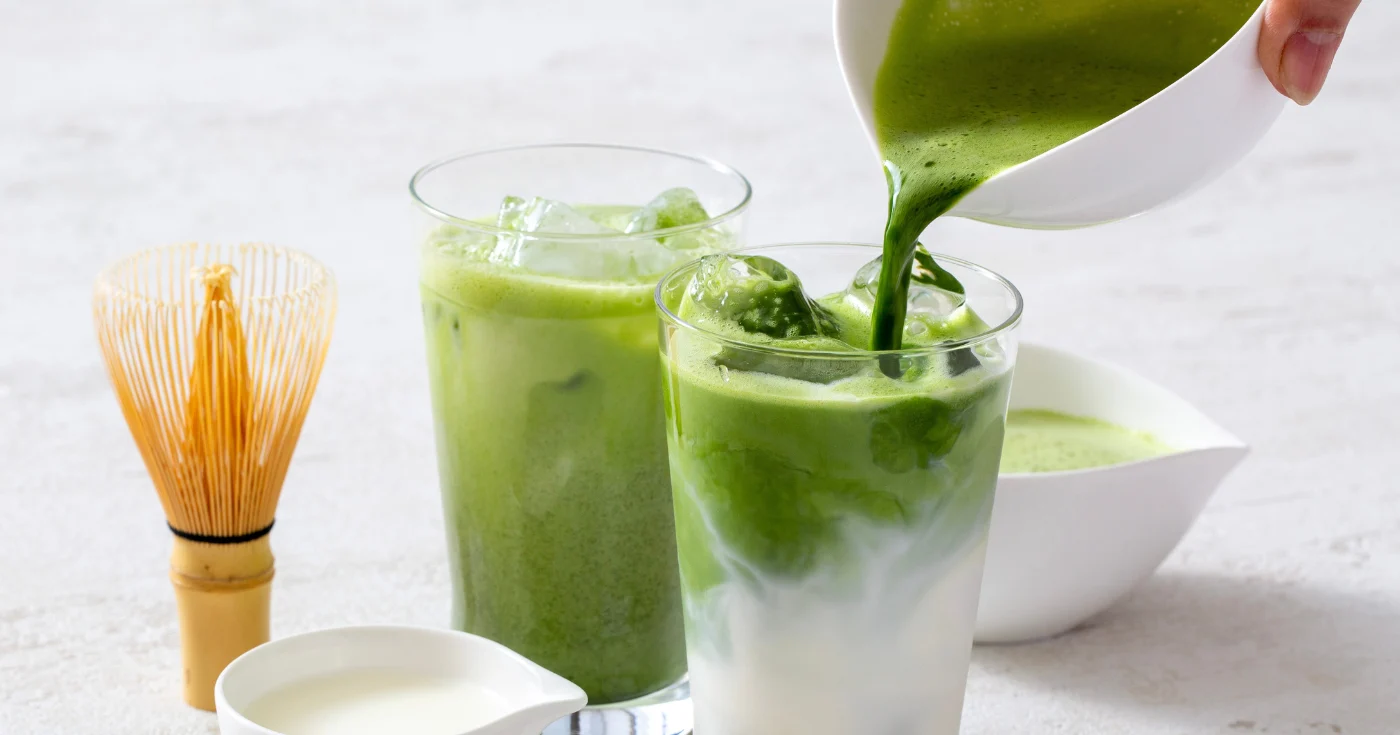
Did you think matcha had definitely won the coffee battle? With its strawberry, coconut or iced versions, the green drink seemed difficult to dislodge.
However, after the arrival of the ubé latte and its spectacular purple color, another drink began to make its mark. It also comes from Japan, but its appearance and especially its taste completely change the situation.
Hojicha, this Japanese tea which plays a very different card from matcha
Its name: hojicha. Behind its brown color hides a roasted Japanese green tea, whose history dates back to the 1920s. In Kyoto, a merchant is said to have started roasting mature tea leaves and stems with charcoal in order to prolong their conservation and limit waste.
In your glass, forget the characteristic vegetal profile of matcha. Hojicha develops a rounder taste, with hints of hazelnut and a smoky aroma. Above all, he appears less bitter. A difference that could appeal to those who have never managed to come to terms with the very particular taste of matcha.
Hojicha is also known for its richness in antioxidants and its lower caffeine content than matcha. It also contains L-theanine, an amino acid associated with improved concentration according to the BBC.
The price of matcha could give hojicha a serious boost
The timing is not trivial. The global success of matcha is beginning to weigh on its supply. In 2025, demand put the sector under pressure and prices rose, including in Japan.
At the Kyoto auction, a kilo of matcha leaves rose from 4,862 yen in 2016 to a record 8,235 yen in 2025.
Tea trader Yuji Yamakita told Deutsche Welle: “These high prices are particularly affecting tea ceremony people and confectionery manufacturers. I have heard that some people have stopped drinking matcha or are consuming it much less than before.”
Hojicha and matcha do not have the same place in Japan
There remains a significant cultural difference. Unlike matcha and its link with the tea ceremony, hojicha belongs more to everyday life.
Aki Osawa explains it: “We drink it during or after dinner, or we serve it to children and the elderly.” He specifies that hojicha is also sometimes “used in certain Japanese Buddhist practices, as an offering to ancestors.”
There remains the ecological question. Using mature leaves does not automatically make hojicha more sustainable: cultivation, processing, packaging and transport also enter into the equation. On the taste side, on the other hand, its roasted, round and less bitter profile gives it a strong card to play against the green king of coffee shops.
What is hojicha?
Hojicha is a roasted Japanese green tea. Born in Japan in the 1920s, it can be recognized by its brown color and its round, slightly smoky taste, with hints of hazelnut. Its roasting clearly distinguishes it from matcha.
What is the difference between hojicha and matcha?
Both drinks come from tea, but they differ in taste and manufacturing. Matcha has a green color and a vegetable flavor that can be bitter. Hojicha is roasted and develops nutty aromas and smoky notes. It is also less bitter.
Does hojicha have less caffeine than matcha?
Yes. According to the information reported in the article, hojicha has a lower caffeine content than matcha. It also contains antioxidants as well as L-theanine, an amino acid associated with improved concentration.
Why could hojicha replace matcha in cafes?
Its rounder and less bitter taste could attract people who don’t like the characteristic flavor of matcha. Its arrival also comes at a time when the success of matcha is weighing on its supply: at the Kyoto auction, a kilo of leaves rose from 4,862 yen in 2016 to 8,235 yen in 2025.
How is hojicha eaten in Japan?
Unlike matcha, closely associated with the tea ceremony, hojicha is more accompaniment to daily life. It can be consumed during or after dinner and served to children and the elderly. It is also sometimes used in some Japanese Buddhist practices.
