
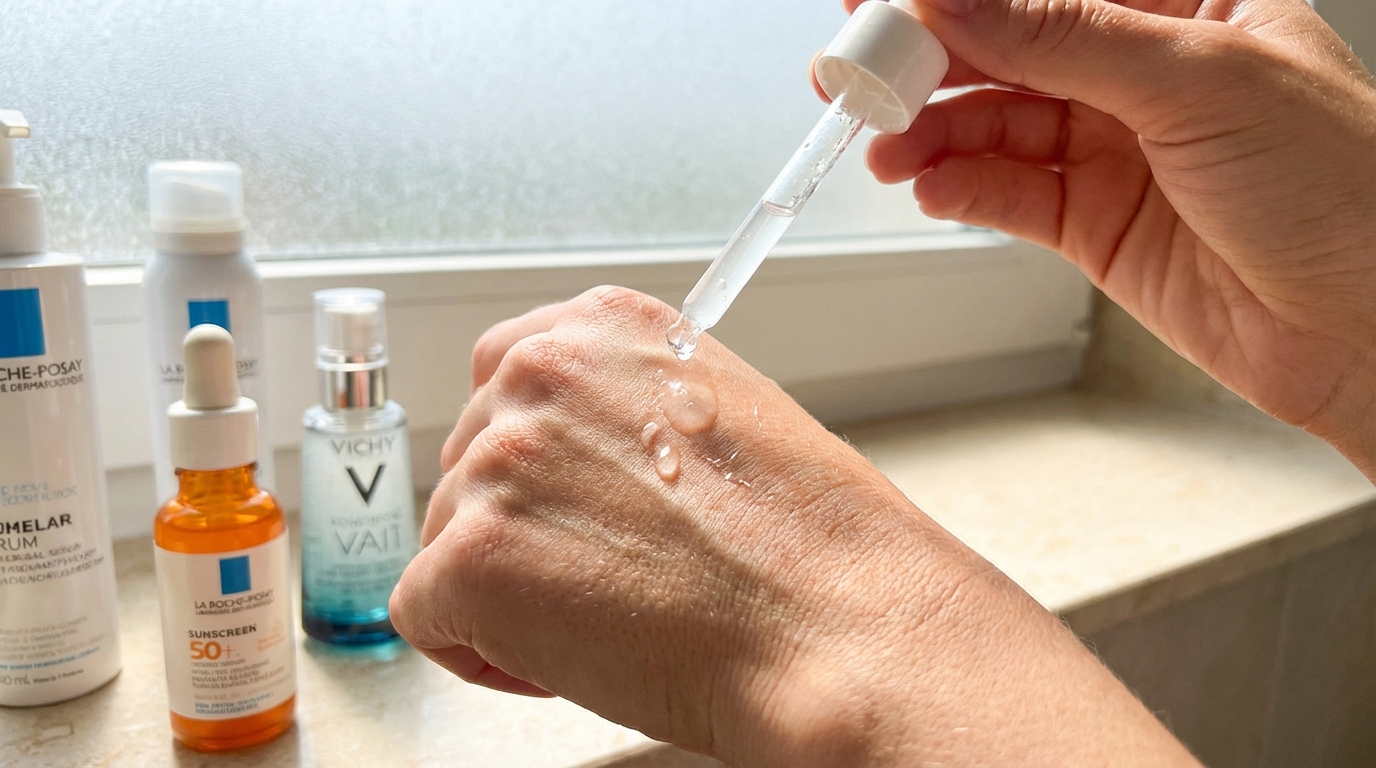
We see solar serum flourishing on the networks as well as on the shelves of pharmacies. Lighter than a cream, often presented as a day treatment which would also act as a UV shield, it promises unprecedented comfort. The gesture looks more like a classic facial serum than a “beach cream”. There remains a real question: is this fluid format really suitable for your skin?
Because behind its appearance as a simple serum, it is indeed a full-fledged sun protection, with a high index and anti-UVA/UVB filters. Its very fine, almost aqueous formula is inspired by modern skincare, enriched with active ingredients such as hyaluronic acid, niacinamide and antioxidants. An attractive promise for those who want to lighten their bathroom. But the whole challenge is to know which profiles this format really benefits.
Sun serum: an ultra-light texture designed for everyday use
Firstly, the sun serum pleases for its ultra-fluid texture. The formulations described by the magazine merge with the skin, without greasy film or white marks, which facilitates reapplications during the day. Under makeup, the complexion remains clear, without “fluff” or marked shine. In Brazil, where the UV index remains extreme almost all year round, La Roche-Posay has also designed its SPF50+ Sun Serum in Rio; Martin Josso explains in that this product, very sensitive to the dry touch and the sensation of bare skin.
Another advantage is that this format is part of the hybrid care trend. Sun serums often include hyaluronic acid, known to capture water and plump the skin, but also niacinamide or antioxidants to limit oxidative stress linked to the sun. Beautician Elena Cudworth recalls in: she explains, before adding: , an interesting combo when sun protection also becomes treatment.
Which skin types does sun serum really benefit from?
For combination to oily skin, this is often an immediate match. The fine texture limits the feeling of suffocation, avoids the “shiny T zone” effect and supports several layers of makeup well. Skin prone to imperfections appreciate this non-occlusive side, especially when the formula contains niacinamide known for smoothing skin texture. In hot or humid climates, this lightness makes protection much more bearable on a daily basis.
Dry, dehydrated or mature skin may find the sun serum a little too minimalist on its own. In this case, it is readily combined with a moisturizing cream applied underneath, to maintain comfort while benefiting from a high SPF as the last step. Sensitive skin should turn to fragrance-free textures, enriched with hyaluronic acid and vitamin B5, two active ingredients often recommended to support the weakened skin barrier.
Integrate sun serum into your routine without losing protection
In a morning routine, sun serum is generally used as the last skincare step, just before makeup. It can replace a classic moisturizing serum if its formula is already rich in skincare active ingredients, which simplifies the number of products. However, the warning often comes up among the experts interviewed by: this very fluid format requires generous and regular application to guarantee truly effective protection. Clearly, a few drops stretched too widely are not enough.
The sun serum is particularly suitable for urban life, journeys on foot or by bike, office days punctuated by breaks on the terrace. For more intense exposures, at the beach or in the mountains, many prefer to complete with more “robust” and water-resistant textures, or even alternate depending on the time of day. Because basically, this format works above all as an everyday SPF, invisible and comfortable, which we really accept to wear every day.
Can a sun serum replace classic sun cream?
For a day in the city or at the office, a high-factor sun serum can easily take the place of a cream, if applied in sufficient quantity. For long exposures or swimming, many dermatologists still recommend very water-resistant formulas, often creamier.
Is sun serum suitable for combination to oily skin?
Yes, this format was even designed for those who shy away from rich textures. Its light texture limits shine and the feeling of an oily film, while slipping easily under makeup. It remains important to choose a non-comedogenic formula if the skin is prone to imperfections.
Should you apply a moisturizer in addition to a sunscreen serum?
It all depends on the condition of your skin. On normal to combination skin, a sun serum rich in moisturizing active ingredients may be sufficient. If the skin feels tight or marks quickly, adding a moisturizing cream underneath will maintain comfort without sacrificing UV protection.
