
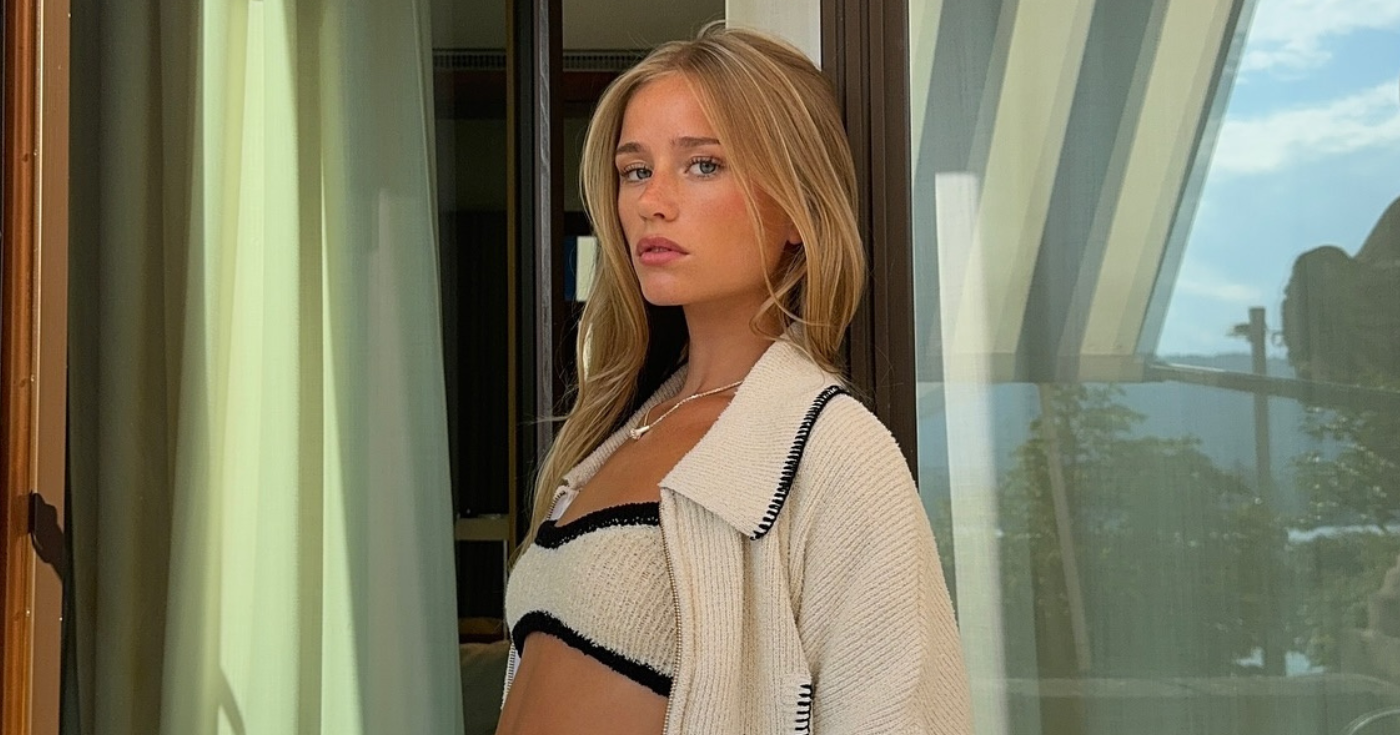
Is the reign of the square coming to an end this spring? In salons and on Instagram, a newcomer is overshadowing the French women’s favorite cut: the Scandi frilla, directly imported from the streets of Copenhagen and Oslo. Hair mood boards are filling up with this toned-down mullet, designed to move without ever appearing frozen.
Basically, nothing theoretical: this haircut was spotted in Scandinavian street style, then taken up by designers during Fashion Week. It is described as the Scandinavian haircut of the moment, adopted by girls who like retro but easy-to-wear looks. All with a twist: it promises to dethrone the square when the good weather arrives.
Scandi frilla: the Scandinavian haircut that rocks the mullet
Technically, the Scandi frilla is based on a mullet base, but in a significantly softer version. The structure remains shorter on top and around the face, with lengths retained at the nape of the neck. The gradient is light, the texture worked, and the contrast between the front and back much less marked than with a classic mullet.
Style-wise, this cut plays the Nordic card to the fullest: free, a little eccentric, but very controlled. The contours remain supple around the face, the neck retains movement, and the whole gives this effortless effect typical of Nordic countries. The idea is to obtain a modern mullet, textured but easy to wear every day, without sophisticated blow-drying.
Scandi frilla vs bob: why this cut can take over this spring
Where the square focuses on clean lines and a uniform length, the Scandi frilla introduces relief. The gradient on top adds volume, the lengths at the back create an almost conical movement, and the cut fits itself. For those who find their bob too plain, it’s a more playful alternative without going through a radical transformation.
Another strong point: regrowth. On a very structured square, a few more centimeters are enough to break the shape. With the Scandi frilla, the gradient and the longer neck make the transition much smoother. It is also part of the great comeback of retro cuts, already initiated by the wolf cut and tapered fringes, but with a more wearable everyday look.
How to adopt the Scandi frilla in the living room and at home
To ask your hairdresser, the best thing is to talk about a softened mullet, with a light layer on top, soft contours that frame the face and lengths kept at the nape of the neck. Emphasize the absence of a clear break between the front and the back, and, if you want, ask for very light tapered bangs, integrated into the gradient.
In everyday life, the Scandi frilla can be worn almost as is. Air drying, a wrinkled texturizing spray on your fingers or a dab of volumizing mousse at the roots are enough to wake up the cut. The objective always remains the same: to keep this slightly lived-in finish, as if the hair had fallen into place on its own.
Scandi frilla FAQ: understand everything in a few questions
Scandi frilla: who is this Scandinavian haircut suitable for?
The Scandi frilla works well if you like layered cuts that keep length at the nape and a slightly tousled look.
How to explain the Scandi frilla to your hairdresser?
Talk about a very softened mullet with light gradient on top, soft contours around the face and faded lengths behind, without strong contrast.
Does the Scandi frilla require a lot of maintenance?
The cut has been designed to require little styling, with a simple refresh of the layer every few weeks depending on the speed of regrowth.
Can you easily go from a square to a Scandi frilla?
Yes, the hairstylist can maintain the existing length, work the nape slightly longer and create a gradual gradient to transform a bob into a Scandi frilla.
