
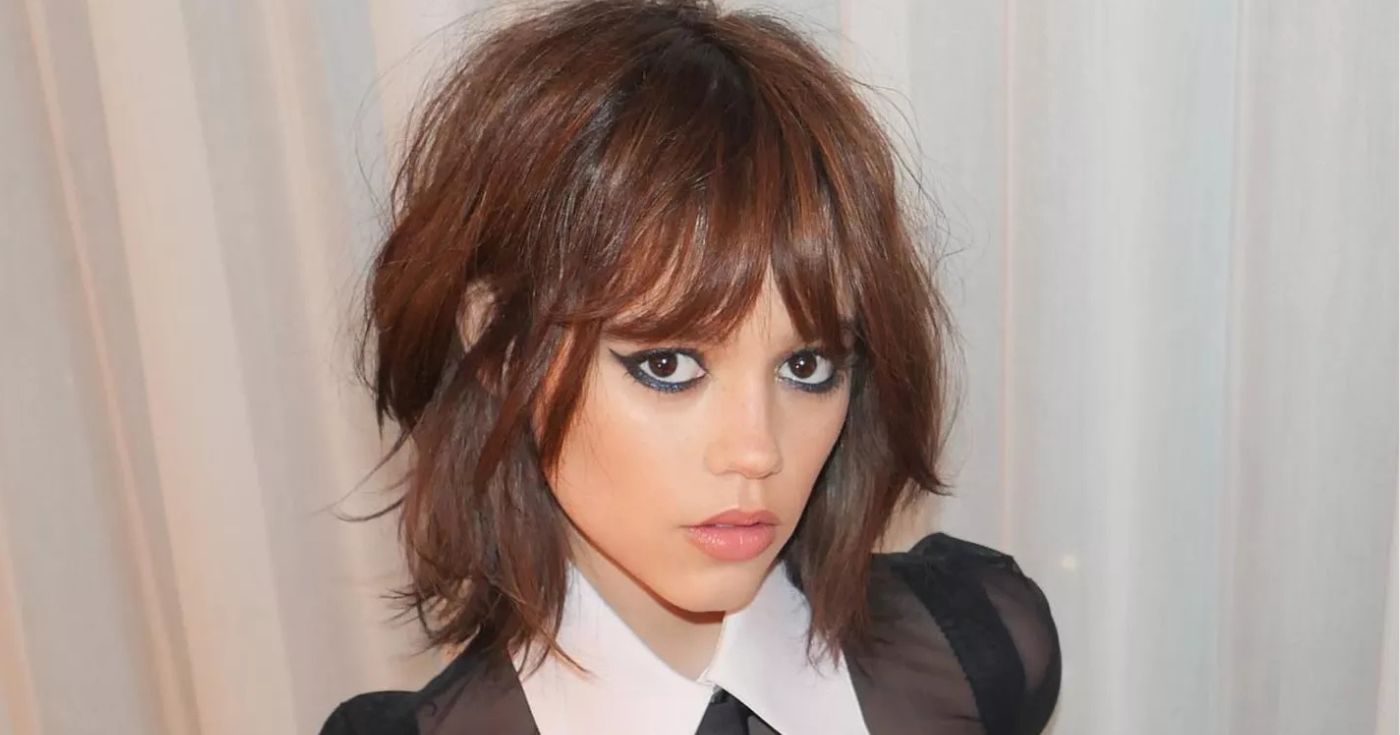
The Torn Bangs is one of the new names that structure the hairstyle trends from the start of the school year. Behind this English name, a bangs with a particular look, designed to accompany the natural movement of the hair. It is part of a wider dynamic: that of soft hairstyles, easy to maintain, which contrast with the freelines and the strict cuts of the previous seasons.
Torn Bangs: What is it exactly?
The term “” designates a fringe cut irregularly, with a deliberately vague rendering. Unlike a right or symmetrical fringe, it is based on a more natural effect, with slightly tapered strands that follow the movement of the hair.
She does not try to supervise the face in a rigid way and can integrate into an existing cut, without redefining the whole hairstyle. It is sometimes compared to a curtain fringe in a more flexible and less marked version.
@kyliekake Channeling my inner @Shaysullivan 🙌🏼 #bangs #haircut @eggie Salon Studio @adrienne Connelly adams #layeredhaircut #blondehair
♬ Original Sound – Brezzy2low_
Who is Torn Bangs to and why we adopt it?
This style can suit those who wish to wear a fringe without imposing a strict styling routine. Due to its irregular shape, it gradually grows back and adapts to different hair lengths.
Some women with fine hair are interested in its flexible rendering, which can help create a feeling of volume. It can also adapt to several textures, although the result varies depending on the nature of the hair.
The Torn Bangs is sometimes confused with the Broken Fringe, another irregular fringe with the more marked structure, composed of a short central wick and degraded side lengths. More angular and less melted in the cut, it gives a more graphic effect. Conversely, the Torn Bangs integrates more naturally throughout the hair.
How to wear Torn Bangs in the fall without headache?
In the fall, when humidity and attached hairstyles become more frequent, the Torn Bangs remains easy to live. Thanks to its irregular cut, it does not require specific placement on a daily basis. In case of regrowth, it can simply blend into a wick or be swept on the side.
It works as well attached as in released hair. In a blurring bun or a low ponytail, it keeps its movement without breaking the hairstyle line. Its flexibility also allows it to style it with a finger, without a specific tool, including on slightly damp hair.
This is also what makes it an option adapted to mid-season: it does not require rigorous brushing or frequent retouching, while keeping an identifiable shape.
FAQ – Everything you need to know before adopting a fringe
1. What form of fringe for what type of face?
The round faces tolerate the tapered or long fringes well on the sides. Straight fringes are suitable for oval or elongated faces. The important thing remains the balance with the volumes of the cut.
2. Does a fringe require a lot of maintenance?
Yes, depending on its shape. A straight or short fringe requires frequent touch -ups. The more vague or degraded versions offer more flexibility to regrowth.
3. Can we wear a fringe with curly or wavy hair?
Yes, provided you adapt the cut to natural texture. A slightly longer or cutting bangs on dry hair allows a more controlled rendering.
4. How to avoid frizz in a fringe?
Humidity is often involved. A drying with lukewarm air, a cut adapted to the density of the hair and a good positioning from the root limit this effect.
5. How long does it take to let a fringe push?
Depending on the starting length, it takes between two and four months so that it is based in the rest of the cup. The locks can be gradually integrated into a line or a gradient.
