
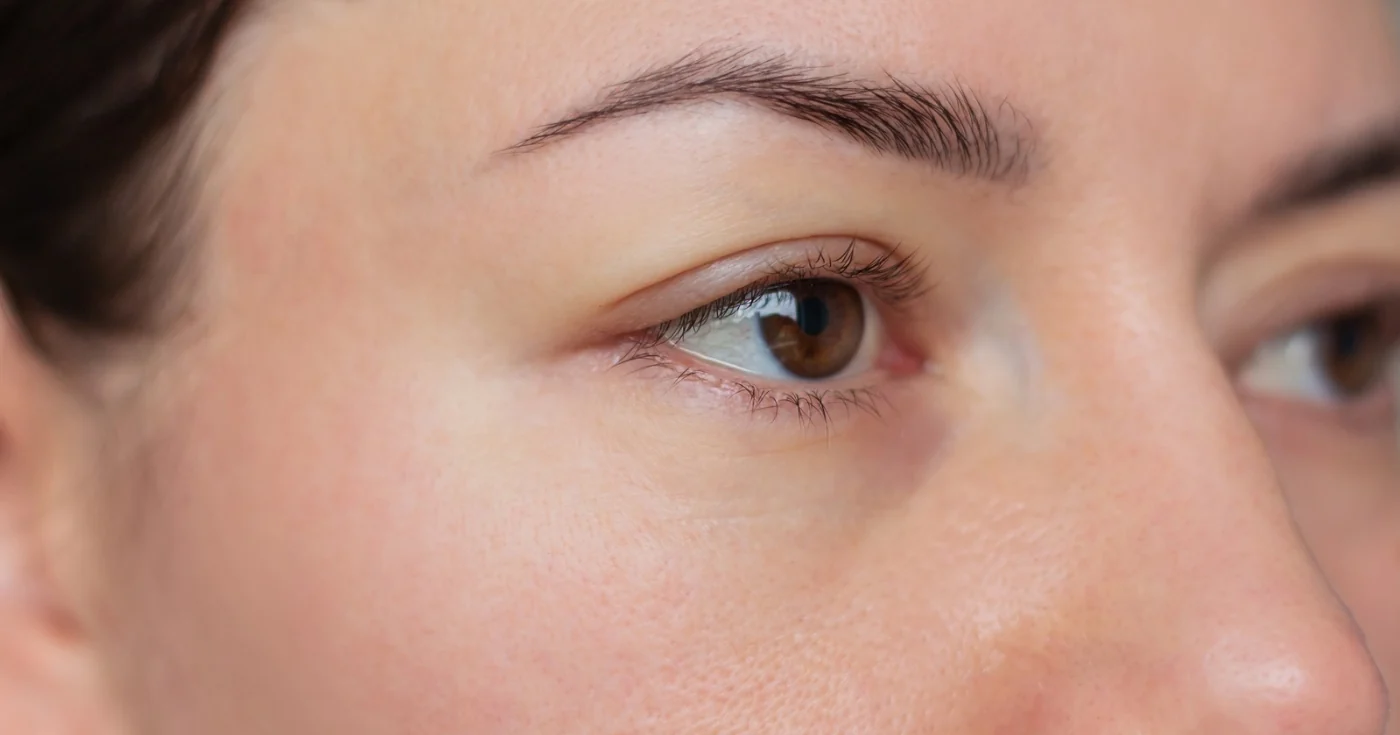
You get up, you walk in front of the mirror and the observation is always the same: your eyelids are swollen, your eyes seem smaller and your eyes appear tired. However, you got enough sleep. You sometimes even have the impression that this swelling gradually disappears throughout the morning, before returning the next day. So, should your sleep be blamed?
Not necessarily. Swelling of the eyelids upon waking can be linked to a temporary accumulation of fluid around the eyes, but also to an allergy, irritation caused by a cosmetic product or inflammation of the eyelids. In some cases, when it is persistent or accompanied by other symptoms, it may even warrant medical attention. Here are the different avenues to explore.
You may have an allergy at night
This is something we don’t always think about: if your eyes are swollen when you wake up, your sleeping environment could be to blame. Dust mites present in bedding, animal hair or even pollen can trigger an allergic reaction. This can manifest itself by swollen eyelids, but also by itching, redness, tearing or sneezing. When symptoms are particularly pronounced in the morning, it may be interesting to observe what is in your room.
The Cleveland Clinic explains that allergy symptoms may be more pronounced upon waking, particularly due to exposure to allergens present in the nighttime environment. Another possibility: a reaction to a product applied before sleeping. Eye cream, serum, anti-aging treatment, makeup remover or even nail polish (which can be transferred to the eyelids by rubbing the eyes) can cause contact dermatitis. If the swelling is accompanied by itching or small red patches, this option is worth considering.
Your body may just be retaining water
Another common explanation: water retention. During the night, when you lie down, fluid can build up in the tissues around your eyes. The skin of the eyelids being particularly thin, this sometimes modest accumulation is enough to make the swelling very visible. This is particularly why some people have more puffy eyes when they wake up, then gradually find a less puffy face after getting up.
Certain factors can accentuate this phenomenon, notably a particularly salty meal the day before, alcohol consumption or a very horizontal sleeping position. The Mayo Clinic cites fluid retention, particularly upon waking or after a salty meal, among the factors associated with bags under the eyes. It is therefore not necessarily a sign of poor lifestyle, but rather a physiological phenomenon which can vary from one day to the next.
What if your eyelids were inflamed?
It is also necessary to distinguish simple bags under the eyes from real swelling of the eyelids. When they are red, irritated, stuck to each other when you wake up or accompanied by small scales at the roots of the eyelashes, blepharitis may be the cause. This inflammation of the eyelid margins can cause itching, burning, crusting or a feeling of grit in the eyes.
The NHS reminds that blepharitis is a common condition, which can be chronic and requires regular eyelid care. Allergic conjunctivitis or contact dermatitis can also cause swelling. If your eyes are regularly red, irritated or watery, it is better not to just apply a decongestant treatment: a healthcare professional will be able to identify the cause and offer appropriate treatment.
In some cases, puffy eyes can indicate a health problem
This is the option not to be neglected when the swelling is bilateral, returns regularly and does not really disappear during the day. Certain general illnesses can indeed cause eyelid edema. Nephrotic syndrome, a kidney condition which notably leads to excessive loss of protein in the urine, can for example manifest itself as swelling around the eyes, often more visible in the morning. Thyroid disorders can also change the appearance of the eyelids and tissues around the eyes.
The MSD Manual lists kidney disease and thyroid disorders among less common causes of eyelid swelling. This obviously does not mean that puffy eyes when you wake up automatically indicate an illness: there are many benign causes. On the other hand, if the swelling persists, gets worse, or is accompanied by leg swelling, unusual fatigue, or other symptoms, it is important to talk to your doctor.
The right actions to deflate the eyes when you wake up
If the swelling is mild, bilateral and gradually disappears in the morning, a few simple actions can help reduce its appearance. You can apply a clean, cool compress to closed eyes for a few minutes, without applying pressure. Cold temporarily causes blood vessels to contract and can thus reduce the bloated appearance. However, avoid ice cubes directly on the skin, which are too aggressive for this fragile area.
To limit recurrence, try to sleep with your head slightly elevated, reduce very salty meals and alcohol in the evening, and check that your eye contour care does not cause irritation. If you suspect an allergy, also remember to wash your bed linen regularly and limit allergens in the bedroom. Finally, if the swelling is sudden and significant, especially on one side, or if it is accompanied by pain, fever, marked redness, blurred vision or difficulty moving the eye, you should consult quickly. A loss of vision or significant pain warrants emergency medical evaluation.
FAQ: questions you ask yourself about puffy eyes when you wake up
1. Why do I have swollen eyes in the morning even though I slept well?
Lack of sleep is not the only possible cause. A temporary accumulation of fluid during the night, an allergy, irritation linked to a cosmetic or inflammation of the eyelids can also explain this phenomenon.
2. Can eating too much salt make your eyes swell?
Yes. A meal high in salt can promote water retention, which can notably manifest itself in more visible bags under the eyes when you wake up.
3. Can ear mites make eyelids swell?
Yes. In allergy sufferers, dust mites in bedding can cause symptoms upon waking, such as itchy, watery eyes and swollen eyelids.
4. How to quickly deflate your eyes in the morning?
A clean, cool compress applied for a few minutes to closed eyes can help temporarily reduce swelling. It is also advisable not to rub your eyelids and to allow time for the liquid accumulated during the night to redistribute itself.
5. When should you consult for swollen eyes every morning?
If the swelling persists, worsens, or is accompanied by other symptoms, make an appointment with a doctor or ophthalmologist. In the event of significant pain, fever, loss of vision or difficulty moving the eye, an urgent consultation is necessary.
