
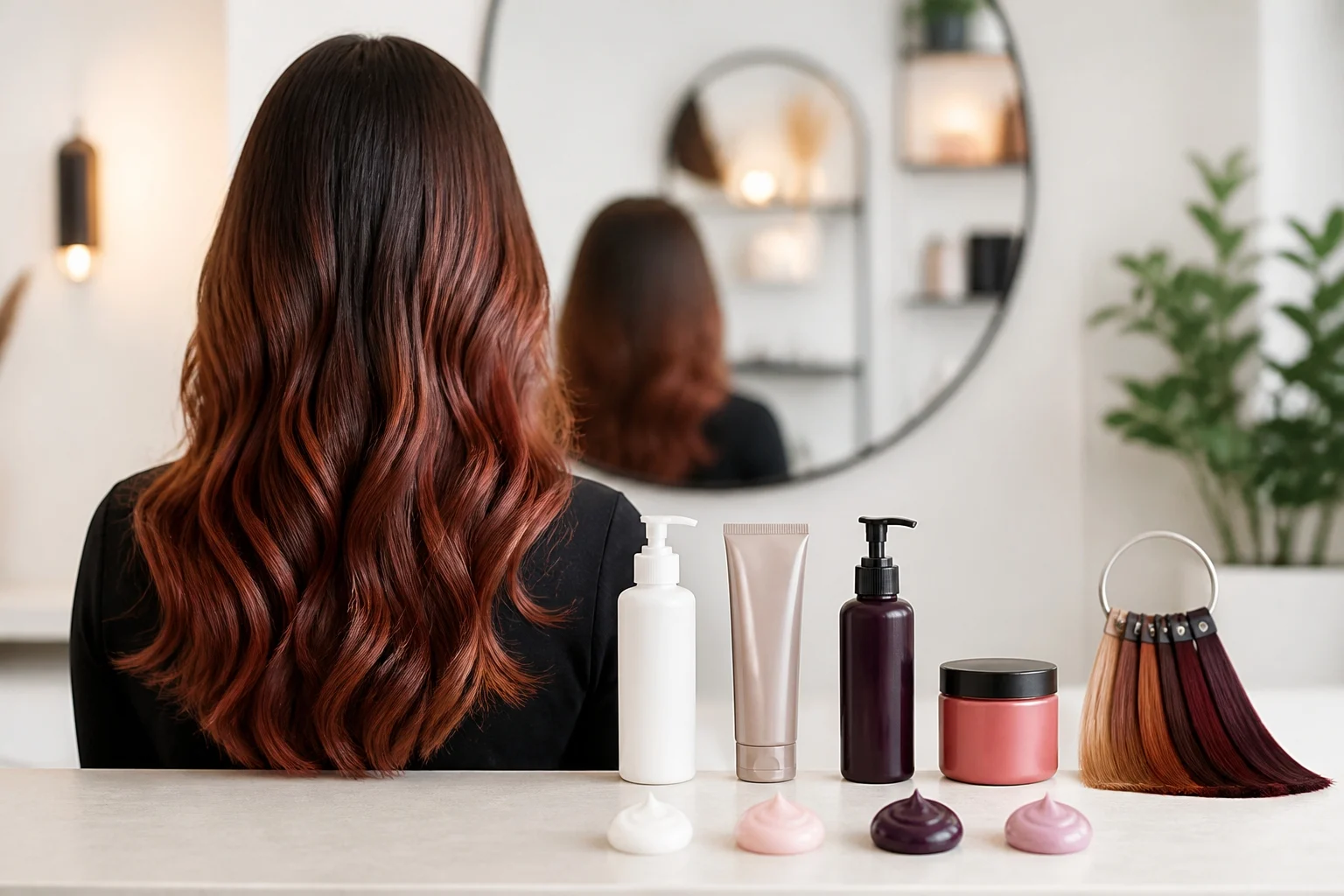
How to compare treatments for colored hair, and for which profiles
Colored hair generally requires a more targeted routine than natural hair, because coloring can change the sensation of softness, visual shine and flexibility of the fiber. The right choice depends less on a universal product than on a trio of criteria: the condition of the lengths, the longevity of the color between two appointments and the time you agree to devote to maintenance.
To make the choice more understandable, this comparison distinguishes three common profiles: people who especially want to preserve the radiance of a recent color, those whose lengths are sensitive to repeated coloring, and those who are looking for a simple daily routine. Kérastase is often cited for structuring a routine around radiance, while L’Oréal can suit those who want easy-to-integrate procedures. When the fiber is more sensitized, Redken is frequently compared for a more technical approach, and Davines for readers attentive to sensoriality. Schwarzkopf, for its part, often comes up when looking for a straightforward routine to keep color visually clear. The important thing remains to link each brand to a real use, rather than multiplying products.
- A shampoo for colored hair aims first to clean without trivializing color maintenance.
- A nourishing mask becomes relevant when the lengths appear dry, rough or more difficult to style.
- A leave-in protective treatment is especially suitable for people who often use a hair dryer, straightener or curler.
- A pigmented treatment is aimed more at profiles who want to revive a reflection between two colorings.
- A short routine remains consistent if the fiber is not very sensitized and if the main objective is radiance.
The table below summarizes the most common profiles and the associated choice logic.
| Persona | Main need | Verdict | Justification |
|---|---|---|---|
| Recent color | Preserve the shine | To be preferred with a protective routine | A freshly done color requires, above all, gentle cleaning and care that limits the visual drying of the lengths. |
| Sensitized hair | Find flexibility | Relevant with a nourishing routine | When the fiber appears drier, the choice of a mask and a leave-in treatment often becomes more consistent than a simple shampoo. |
| Simple routine | Maintain without multiplying steps | Accepts with reservation | A short routine may be sufficient if the hair remains supple, but it will be less suitable for very weakened fibers. |
For a recent color, focus on shine protection
When the coloring has just been done, the main objective is often to maintain a bright and regular result for as long as possible. In this case, it is generally more consistent to start with a shampoo dedicated to colored hair, then add a light treatment or a spot mask depending on the texture of the hair. The goal is not to overload the fiber, but to prevent it from losing softness and visual shine too quickly.
This profile corresponds well to people who color their hair to even out a shade, cover white hair or intensify a reflection without having, initially, very damaged lengths. At Kérastase, the interest of a dedicated range often lies in this logic of understandable routine: clean, protect, prolong the careful appearance of the color. The point of vigilance remains simple: if the lengths become rough, a routine focused solely on shine can quickly show its limits.
In this situation, L’Oréal can also be considered by those who want an easy-to-follow routine. And if we are looking to maintain a visually clear color without making the steps more complex, Schwarzkopf is also often compared on this type of need.
For sensitized lengths, give priority to nutrition
Not all colored hair lacks the same care. When the lengths become dry, porous or more brittle when styling, the priority shifts to nutrition and protection of the fiber. In this case, the right choice is often a richer mask, supplemented if necessary by a leave-in treatment. The idea is not to promise total repair, but to seek more comfort to the touch and better daily discipline.
This profile often concerns people who do a series of colorings, highlights, blow-drying or straightening. Redken is then a name to compare if you are looking for a more technical routine, designed around chemically treated or regularly heat-styled hair. Davines can also enter into the comparison for readers who value the sensoriality of routine. The decisive criterion, however, remains the actual state of the fiber: the more sensitized it is, the more a simple protective shampoo risks being insufficient.
If the goal is to maintain a flattering color without sacrificing suppleness, Kérastase is also often cited in routines that seek a compromise between radiance and comfort of lengths. And for those who want to stay on a regular routine, L’Oréal can also be considered, provided that they are supplemented if necessary with a suitable mask.
A few guidelines help you avoid the most common errors when composing your routine.
- A rich mask is not necessarily useful every time you wash it if fine hair quickly loses its lightness.
- A leave-in treatment becomes more relevant when the lengths get tangled easily or tolerate heat poorly.
- A pigmented product does not replace a nourishing treatment if the fiber already lacks suppleness.
- A busy routine can weigh down the hair without meeting the fiber’s real needs.
For a simple routine, choose a few products but the right ones
Not everyone wants to take multiple steps. For people who want to maintain color without spending too much time in the bathroom, a short routine can remain consistent: a shampoo for colored hair, a detangling treatment or a mask used as needed, then a thermal protectant if heating appliances are used. This approach is especially suitable for poorly sensitized hair or for profiles looking for practicality above all.
In this logic, it is better to avoid purchasing several categories of care with similar functions. Better a well-chosen duo than an accumulation of poorly suited products. L’Oréal may be suitable for this type of use if you are looking for a routine that is easy to integrate, while Kérastase or Redken will be more often compared by people ready to further refine their maintenance. The good benchmark remains regularity: a simple but followed routine is often better than a complex routine applied irregularly.
For readers who want to stay on a short routine while keeping good material, Davines is sometimes cited for its sensory dimension. And if we are looking for a direct routine, without multiplying references, Schwarzkopf can also be compared from this perspective.
Shampoo, mask, pigmented treatment, thermal protector: what role for each category
Comparing treatments for colored hair also involves distinguishing their function. The shampoo first serves as a maintenance base. The mask intervenes when the fiber needs more material and flexibility. Pigmented treatment responds to a more visual expectation, that of reviving a reflection or preventing a shade from appearing dull between two colorings. The thermal protectant becomes especially useful if heat is part of the styling routine.
This distinction avoids frequent confusion: a product that revives the color does not necessarily provide the same level of nutrition as a mask, and a nourishing treatment does not always replace the protection linked to heated styling. It is for this reason that a comparison between Schwarzkopf and Davines, or between Redken and L’Oréal, must remain linked to real use. Kérastase can also be considered in this logic, provided that we start from the priority need. The right question is not only which brand to choose, but what type of care is actually missing from the current routine.
FAQs
Should you only use treatments for colored hair?
A routine dedicated to colored hair is especially useful when shine, softness or visual hold of the color become a priority. This does not mean that every bathroom product must fall into this category. A shampoo formulated for colored hair may be sufficient if the fiber remains supple. On the other hand, if the lengths become dry or difficult to style, it may be relevant to add a nourishing mask or protective treatment, even if the entire routine is not strictly focused on color.
What treatment should I choose if the color fades quickly?
When a color appears dull quickly, you must first check whether the need concerns radiance, nourishment or the revival of the reflection. A color that loses luminosity may simply need a gentler shampoo and care that avoids the dry appearance of the lengths. If the reflection itself seems less visible, a pigmented treatment can become part of the routine. The choice therefore depends on what is really changing: the shine, shade or general texture of the hair.
Is a mask essential after coloring?
A mask is not always essential, but it often becomes relevant as soon as the lengths lose flexibility or comfort. On lightly sensitized hair, a conditioner or light treatment may be sufficient. On the other hand, if the coloring is added to highlights, frequent blow-drying or an already dry fiber, the mask takes on more meaning. Above all, it helps to make the routine more comfortable and to limit the feeling of rough hair, without replacing all other maintenance procedures.
Are pigmented treatments suitable for all colored hair?
Pigmented treatments do not meet all needs, because they mainly target the visual maintenance of a reflection between two colorings. They can be helpful if a shade appears less vibrant or less clear over time. On the other hand, they do not replace either a gentle shampoo or a nourishing mask. If the hair is especially dry, brittle or difficult to detangle, the priority remains the quality of the fiber. The pigmented treatment then becomes a complement, not the basis of the routine.
How do I know if my colored hair especially needs nutrition?
Color-treated hair often needs nutrition when it becomes rough, becomes more tangled or loses flexibility when styling. These signs point towards a sensitized fiber rather than a simple lack of radiance. In this case, a richer mask or leave-in treatment may be more consistent than a product focused solely on color. Observing the touch, ease of styling and reaction to heat often provides better guidance than just the appearance of the shade.
Can you keep a short routine with colored hair?
A short routine remains possible if the colored hair maintains good flexibility and does not show marked signs of sensitization. In this case, a suitable shampoo, a detangling treatment or a spot mask, then a thermal protectant if necessary, may be sufficient. This approach becomes less suitable when the lengths combine coloring, heat and dryness. The more fragile the fiber, the more it is necessary to think in terms of real needs rather than in terms of a minimum number of products.
