
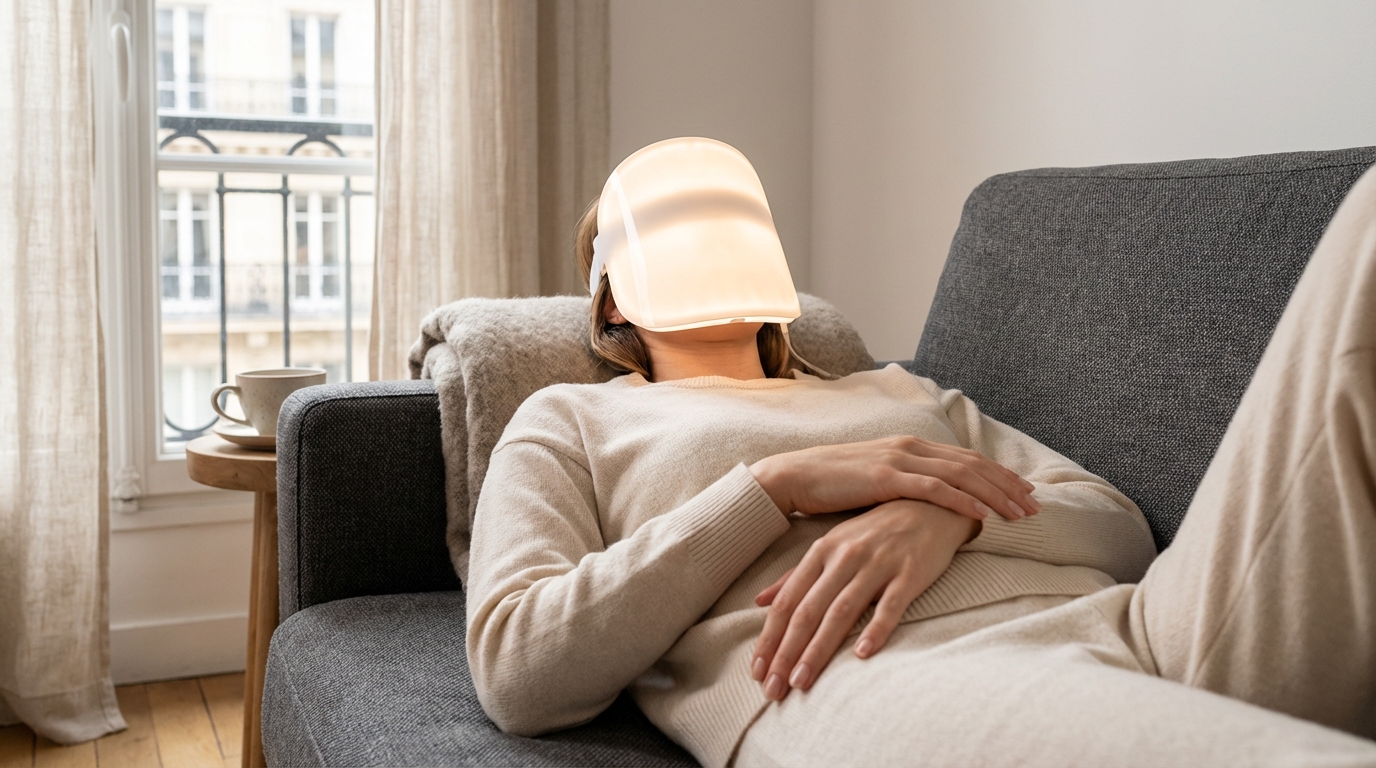
We see these faces lit up in red or blue everywhere on the networks, proof that the LED mask has entered the bathrooms as much as serums. Anti-aging, anti-imperfections, immediate radiance: the promises are tempting. But in real life, some obtain astonishing results, others put the device away after three weeks. The difference often comes down to a few very simple, almost invisible gestures.
Tests carried out on devices like the Shark CryoGlow, which combines 480 red, blue and infrared LEDs and a targeted cold function, have shown over 8 weeks a tangible improvement in skin texture and a more even complexion, provided it is used regularly. The idea is therefore not to multiply gadgets, but to learn to get the best out of the one you already have.
Prepare your LED mask and your skin for maximum effectiveness
It all starts before you press the button. For the LED light to penetrate correctly, specialists recommend perfectly clean, makeup-free and dry skin: makeup remover, gentle cleansing, then no very rich creams or oils just before the session. A greasy film can block light, leave more residue on the device and require more frequent cleaning.
Another key point: frequency. The user guides converge towards sessions of 10 to 20 minutes, two to five times a week depending on the device instructions and the desired objective. It’s better to stick with it over time rather than doing sessions every day for two weeks and then stopping altogether.
During and after the LED mask: the gestures that really make the difference
Once the mask is on, the important thing is that it fits well and close to the skin, with no gray areas on the cheeks or forehead. With a rigid and fairly heavy model, like the Shark CryoGlow which weighs around 700 g, a lying position helps you stay still and maintain consistent contact throughout the duration of the session.
After removing the mask, the skin benefits fully from a hydrating or soothing serum containing, for example, hyaluronic acid or niacinamide, then a suitable cream. Stronger treatments (scrubs, concentrated AHA/BHA, retinoids) should be placed at a distance from the session to avoid irritation. And if you go out afterwards, sun protection remains essential, especially in a routine targeting the signs of aging.
Cleaning the LED mask and regularity: the duo that determines the results
A poorly cleaned LED mask can accumulate sebum, sweat, sun filters and bacteria. In the long run, this risks irritating the skin and reducing the effectiveness of the LED mask, because light passes through a dirty surface less well. After each session, it is advisable to turn off and unplug the device, let it cool for a few minutes, then wipe the interior with a soft cloth or slightly dampened microfiber.
Once or twice a week, a damp cloth with a mild, fragrance-free soap allows for more thorough cleaning; removable straps can be hand washed and air dried. Manufacturers advise against strong alcohol, bleach or abrasive products which cloud the diodes and damage the plastic. Thoroughly dried, the mask is then stored away from dust, humidity and direct light. At the same time, studies on photobiomodulation indicate initial effects on radiance from two weeks, then improved firmness around eight to ten weeks if we keep the rhythm of the sessions.
How often should you use an LED mask to be effective?
Most protocols recommend sessions of 10 to 20 minutes, two to five times per week depending on the power of the device and the sensitivity of the skin. The key remains regularity over several weeks rather than intensive use over a short period.
What to put on the skin before and after an LED mask?
Before the session, the skin must simply be clean, makeup removed and dry, without very rich cream or oil. Afterwards, we focus on moisturizing and soothing treatments, then on sun protection if we are exposed, reserving potentially irritating active ingredients for another time.
How to properly clean an LED mask without damaging it?
After each use, wipe the interior with a soft, slightly damp cloth, with the device turned off and unplugged. Once or twice a week, a mild fragrance-free soap on a damp cloth is sufficient, avoiding strong alcohol, bleach, abrasive sponges and complete immersion.
