
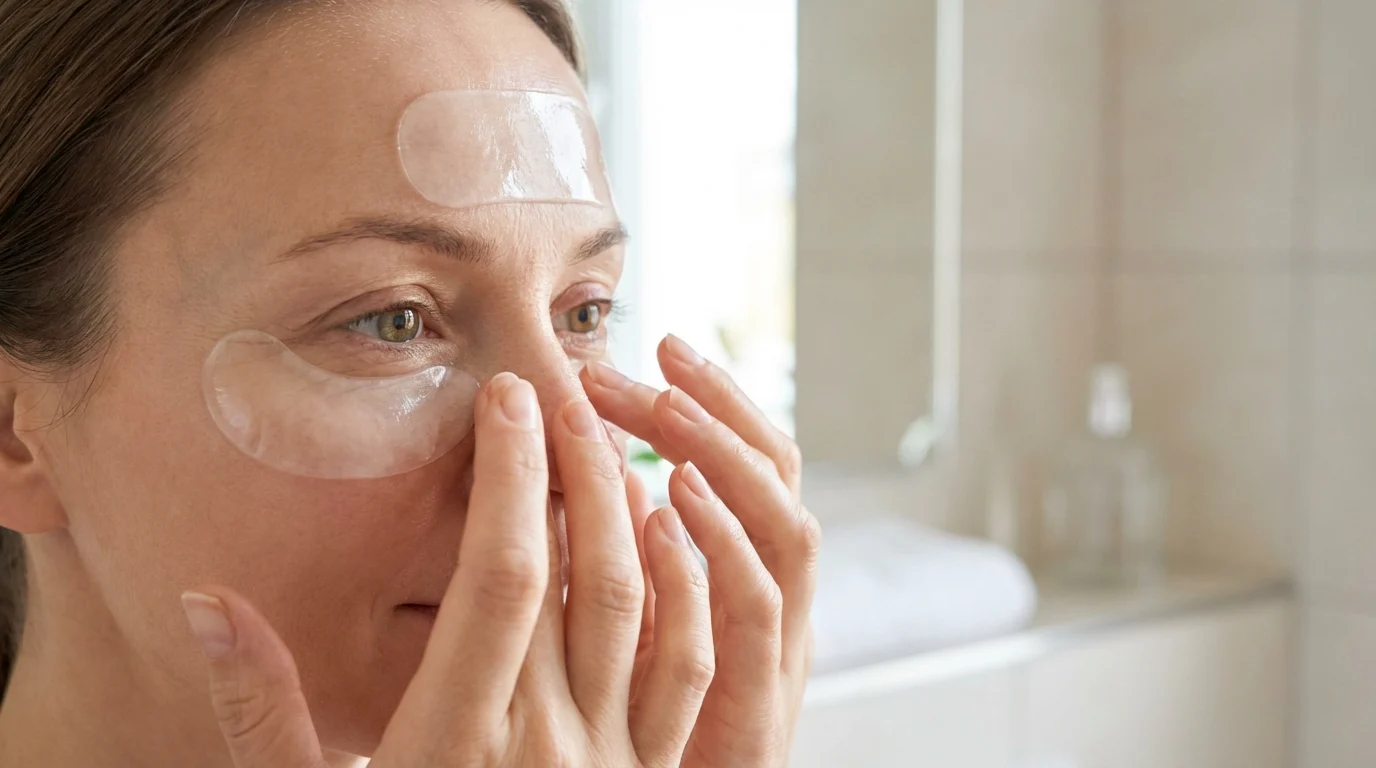
Night too short, unforgiving mirror, well-marked fatigue lines: anti-wrinkle patches promise to smooth it all out in a single gesture. Placed on the forehead, the eye contour or the furrows, they play the card of immediate results, almost like a beauty filter.
Between fabric patches soaked in hyaluronic acid, reusable silicone patches, “Botox-like” versions from TikTok or even microneedling patches, the offer has exploded. They all promise plumped skin, but not with the same technologies or the same duration of effect, and that’s where the difference really lies.
Anti-wrinkle patches, the new express gesture for plumped skin
Unlike a cream which acts on the entire face, a patch targets a specific area and creates a sort of “second skin”. This thin layer limits water evaporation, concentrates the active ingredients on the wrinkle and helps the skin appear smoother and plumper from the first application.
The “Botox” patches which are a hit on the networks are used at night, like adhesive strips which immobilize the skin and relax the muscles. Their results remain very fleeting. Cosmetic surgeon Ross Perry recalls this, quoted by the British site: , he specifies.
How anti-wrinkle patches work to smooth skin
The fabric or hydrogel patches are full of moisturizing and smoothing active ingredients such as hyaluronic acid, plant collagen, vitamin C, niacinamide, caffeine or peptides. The occlusive effect promotes their penetration and offers this famous “flash effect” in 15 to 30 minutes, with a result that can be seen for 24 to 48 hours depending on the comparisons.
Microneedling patches go further: they are dotted with painless micro-needles which melt on contact with the skin to deliver active ingredients beneath the superficial layers. They are aimed at wrinkles, but also at spots or imperfections. The exposure time must be scrupulously respected, especially if the formula contains acids such as salicylic acid, otherwise it may cause irritation.
How to choose the best anti-wrinkle patches for your face
The key is to associate each type of wrinkle with the right patch:
- Dehydration wrinkles and wrinkled look: hydrogel eye patches with hyaluronic, polyglutamic acid, vegetable collagen, caffeine.
- Forehead wrinkles and nasolabial folds: reusable silicone patches or “Botox-like” strips worn at night.
- Marked wrinkles and mature skin: patches loaded with retinol and peptides, preferably in the evening.
- Brown spots or marks: niacinamide patches; inflammatory spots: patches with salicylic acid.
Experts generally recommend occasional use, once or twice a week for treatment patches, or before an event for a targeted radiance boost. Silicone models are often worn for several hours, or even overnight. All remain a complement to a daily anti-aging routine with serum, cream and sun protection, not a replacement.
Do anti-wrinkle patches replace anti-aging cream?
No, they provide a targeted smoothing and plumping effect, but for a limited duration. Daily care (serum, cream, SPF) remains essential to affect the quality of the skin in the long term.
How long does the plumping effect of anti-wrinkle patches last?
Express patches offer visible results after 15 to 30 minutes, for an effect generally noticeable within a few hours to 24 or 48 hours. “Botox-like” patches have a mostly short-lasting impact.
How often can anti-wrinkle patches be used?
Care guides often recommend one or two uses per week for patches soaked in active ingredients, respecting the indicated exposure time. Reusable silicone patches can be used more regularly, depending on skin tolerance.
