
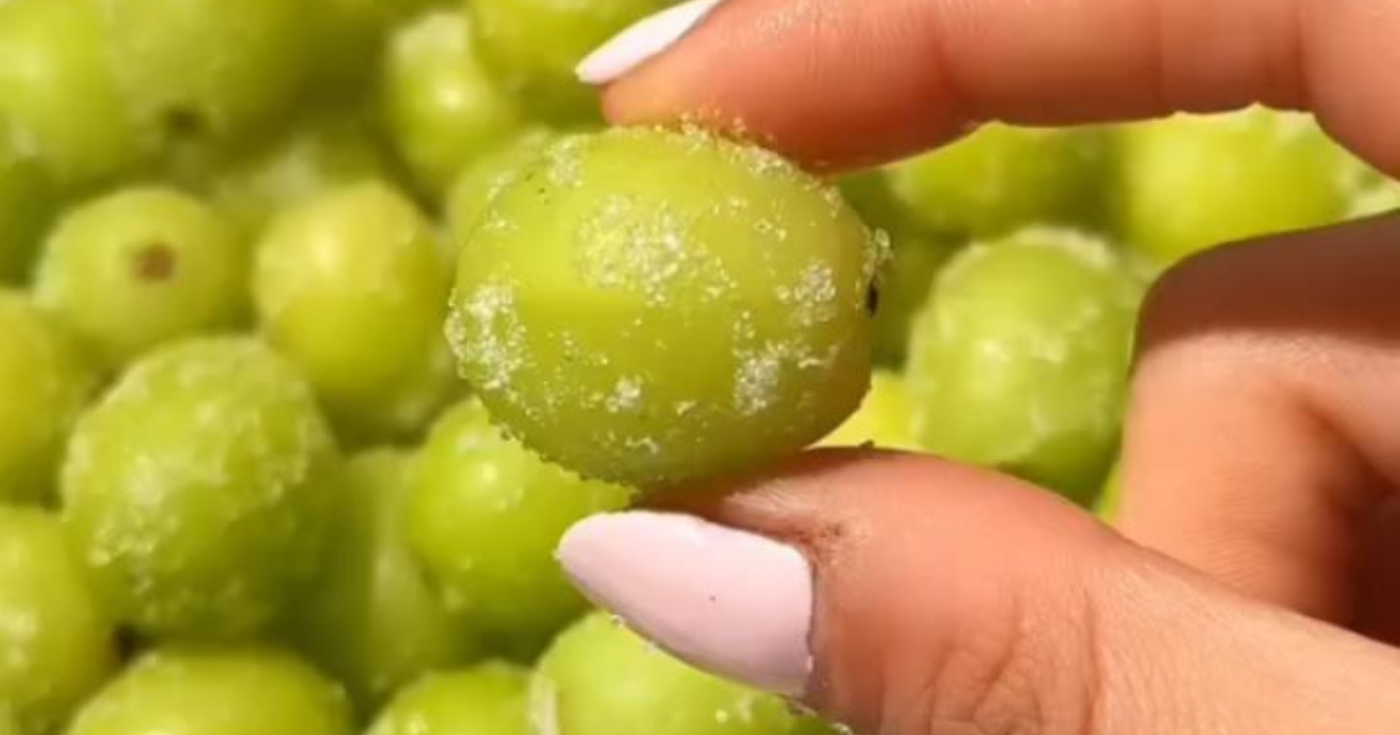
Sunscreen, glasses, hat… what if a simple fruit could offer an extra layer of defense against the sun? For several years, dermatology teams have been looking into the case of grapes and its possible effect on the skin’s response to UV rays. The intriguing question: could grapes really act as internal protection?
The subject is not anecdotal: approximately 90% of non-melanocytic skin cancers and 86% of melanomas are associated with UV rays, and almost 90% of skin aging is attributed to the sun. In this context, several clinical studies are exploring the possibility of grape UV protection for the skin, in the form of whole grape powder equivalent to a few daily servings.
Grape and UV protection of the skin: what the studies say
A study conducted at the University of Alabama at Birmingham and published in the gave 19 adults a whole grape powder equivalent to about 2.25 cups of grapes per day for 14 days. The minimum erythema dose (MED), i.e. the amount of UV needed to cause redness 24 hours later, increased on average by 74.8% after the treatment.
Skin biopsies showed less DNA damage, less skin cell loss and lower inflammatory markers. Dermatologist Matthew Mahlberg sums it up, he tells the Skin Cancer Foundation.
Grape polyphenols: an “edible sunscreen”?
According to the researchers, this effect is linked to grape polyphenols, in particular those present in the skin and seeds: powerful antioxidants, they neutralize part of the oxidative stress generated by UV and seem to limit inflammation and DNA damage. An analysis published on Santelog reports this formula from the authors: .
Other work, published in the journals and , goes in the same direction. After two weeks with three servings of grapes per day, around a third of the volunteers had skin more resistant to sunburn, and all showed changes in the expression of genes involved in the skin barrier, with a drop in oxidative stress markers after UV exposure. The effect varies depending on individuals, possibly linked to the intestinal microbiota.
How far to rely on grapes against UV rays on a daily basis
Dermatologists remain very clear: grapes do not replace sunscreen. The American Academy of Dermatology and the Skin Cancer Foundation recommend broad-spectrum sunscreen SPF 30 or higher for the face and exposed areas, and at least SPF 15 daily, in addition to shade and clothing. As Matthew Mahlberg reminds us, .
The studies used standardized whole grape powders, equivalent to approximately 2 to 3 servings of fresh grapes per day for 14 days. This benchmark remains indicative: it is not a medical dosage, and the sugar content calls for caution in diabetic or overweight people. Another key point: this work is funded by the California Table Grape Commission, which pushes specialists to request independent confirmations. And then, the results concern the whole grape, not the wine: the Skin Cancer Foundation even points out that certain wines can increase the risk of skin cancer.
Can grapes replace sunscreen to protect the skin from UV rays?
No. Studies show moderate internal reinforcement against UV rays, but the main protection remains sunscreen, clothing and shade.
How much grapes to eat for a possible effect on the skin?
The trials used the equivalent of approximately 2 to 3 servings of fresh grapes per day, for two weeks, with no guarantee of response in everyone.
How long does it take for grapes to start working against UV damage?
Changes in UV sensitivity and biological markers are observed after approximately 14 days of daily grape consumption in clinical studies.
