
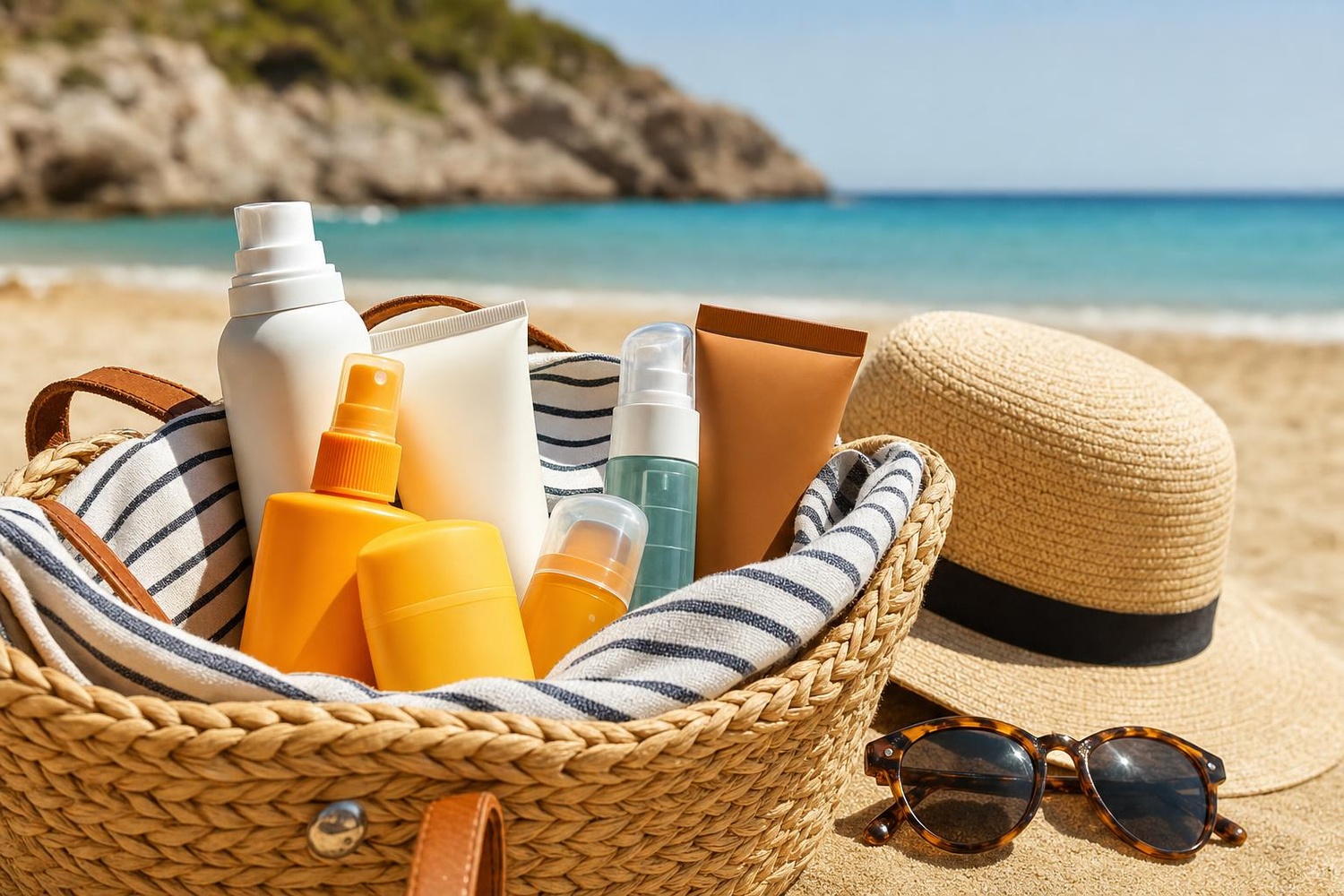
We have long associated sunscreen with a white paste that sticks to the skin, stings the eyes and leaves marks on the bikini line. Summer 2026 confirms something completely different: light textures, invisible finishes and formulas that look more like a serum or a makeup base than a classic full-screen. And behind these new features lies a real revolution in formulations.
Because the new 2026 sun creams promise better protection, more comfort and very targeted skincare benefits. It remains to understand what has really changed, and especially which products deserve a place in your beach bag sunscreen this year.
Why the new 2026 sunscreens no longer look like those of yesterday
The figures recalled by Vogue France speak for themselves: 84% of French people apply sun protection when they are exposed for several hours, but only 31% reapply it during the day, and 19% never use it, while 9 out of 10 skin cancers are linked to overexposure to UV rays. For their part, Doctissimo and the American Academy of Dermatology point out that SPF 30 filters approximately 97% of UVB rays, compared to 93% for SPF 15, and recommend a minimum SPF 30 daily, often 50 for greater safety.
Result: sunscreen has become the number one anti-aging gesture, well before retinol or acids. The laboratories have therefore worked on new generation sun creams that can be worn every day: milky “milky sunscreen” fluids, non-sticky gels, sprays, SPF serums that slip under makeup, but also formulas enriched with anti-oxidants, ceramides or soothing ingredients.
Milky textures, sticks and tinted sunscreen: the big trends
For cosmetic chemist Ron Robinson, founder of BeautyStat, the very notion of a single tube has disappeared. He talks about a real “wardrobe” of sunglasses, with different textures and targeted areas. He sums it up: , explains Ron Robinson, quoted by Who What Wear.
At the same time, he observed a wave of mineral launches: filters based on zinc oxide or titanium dioxide, but in a tinted version and with a transparent finish. Milky sunscreens like The Milky Sunscreen from Tatcha or mineral milks from Summer Fridays and Good Weather Skin are examples. Ron Robinson adds about a new chemical filter: , an advance which illustrates the search for more stable and more comfortable filters.
Beach bag 2026: the elite sunglasses to favor
On the face side, Tatcha-style transparent milky sunscreens are attractive for their imperceptible finish, just like the tinted mineral milks from Summer Fridays or Good Weather Skin which avoid any mask effect. SPF primers like Eadem’s Sunsuede or YSE Beauty’s Skin Glow blur pores, control oil and serve as a makeup base, while tinted serums like Supergoop’s Lightsaver Triplesome or Protec(tint) even out skin tone with light coverage.
On the beach, sticks and mists change everyday life: Shiseido’s Ultimate Sun Protector stick offers broad-spectrum protection that is water-resistant for up to 80 minutes, mineral sticks from Kopari or Abib add a glow or semi-matte effect, and mists like COOLA Scalp & Hair Mist protect the scalp without greasing the roots. For the lips, the Ultra Violette Sheen Screen or Prequel Lip Visor balms prevent dryness and stains. In the all-terrain “favorites” category, the Who What Wear editors highlight Isdin Fusion Water Magic for its 360° protection (UV, blue light, heat, pollution), Osea Marine Screen Mineral SPF 50 for its undetectable finish, or even Bioré UV Aqua Rich and Dayscreen from Beauty of Joseon, two ultra-light and hydrating formulas, easy to wear every day.
- A comfortable body lotion or fluid for long exposures.
- A light, makeup-compatible facial sunscreen.
- An SPF stick for touch-ups on the nose, cheekbones and shoulders.
- A high SPF scalp mist and lip balm.
- A tinted sunscreen if you prefer to replace foundation at the beach.
What is the difference between mineral and chemical sunscreen?
Mineral filters (zinc, titanium) reflect part of the UV rays on the surface of the skin, while chemical filters absorb them and transform them into heat. The former are often better suited to very sensitive skin, the latter offer finer textures.
Which SPF index to choose for the beach?
Data relayed by Doctissimo indicate that SPF 30 blocks around 97% of UVB rays. For the beach, many dermatologists recommend a broad spectrum SPF 50, which is more tolerant in the event of insufficient or too spaced application.
How often to reapply your sunscreen?
Vogue France reminds us that few people actually reapply their protection during the day. To stay protected, health authorities recommend reapplying the cream every two hours and after each swim or heavy sweating.
