
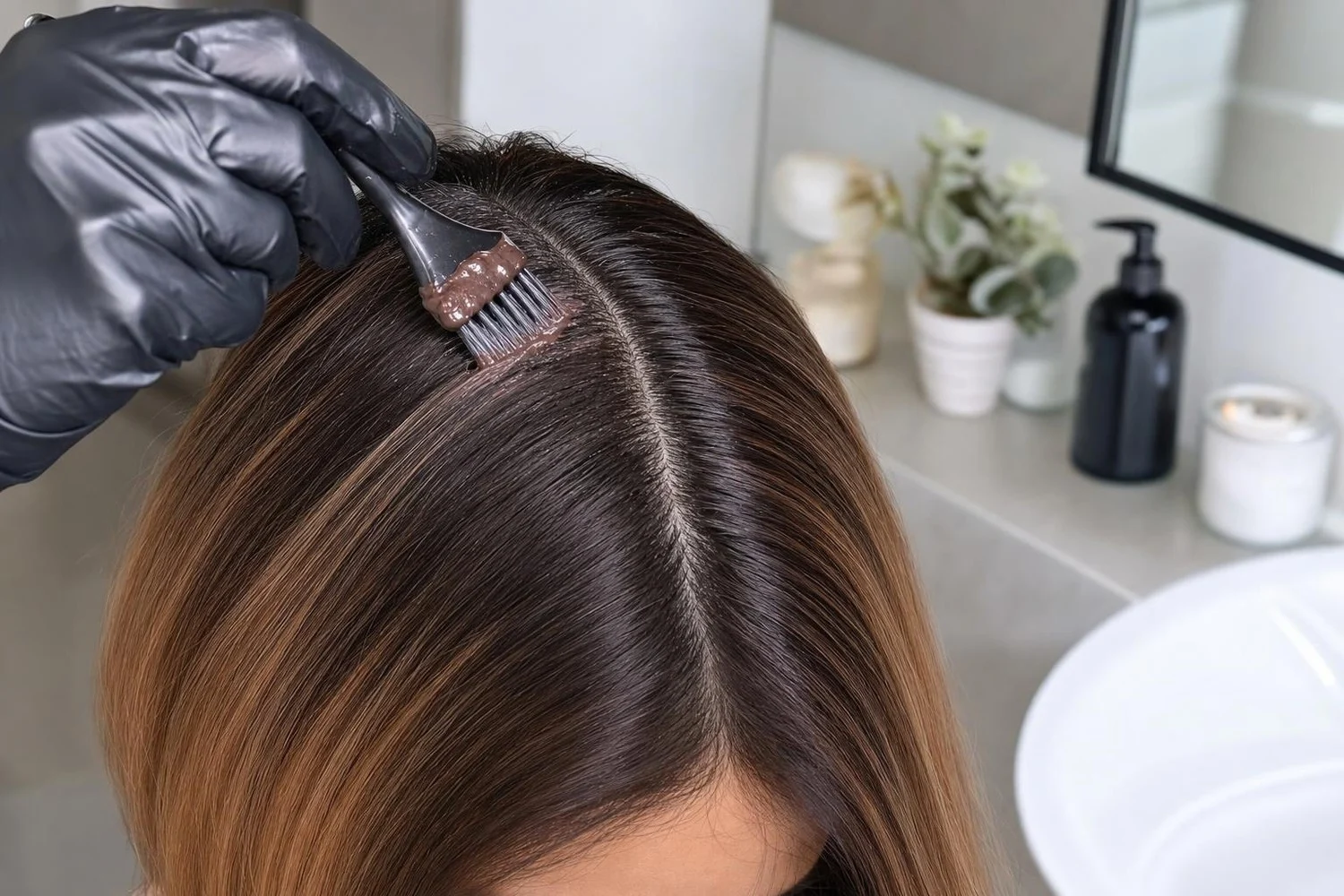
The root that reappears while your coloring still seems recent, the reflection that yellows or dulls on the lengths… Between two trips to the hairdresser, the color often seems to work against you. Re-dyeing your hair every few weeks is expensive and time-consuming, especially when the rest of your hair is doing pretty well. What if the solution was a simple treatment applied in the shower, in just a few minutes?
This is precisely the promise of the colored hair mask. This treatment deposits a veil of pigments which revives reflections, softens the root/length contrast and saves precious weeks before the next salon appointment. Far from being reserved for colored hair, it is also aimed at natural hair that wants extra shine, without lasting commitment.
Colored hair mask: how it acts on color and roots
Unlike permanent coloring with ammonia, which opens the fiber to replace the original pigment, the pigment mask remains on the surface. It coats the cuticle with a colored film without modifying the internal structure of the hair. The color fades gradually, generally after four to five shampoos, with some formulas lasting five to eight, or even up to fifteen washes for the most concentrated versions.
Because the pigments are deposited gently, the root effect is much less marked than with a classic dye. The treatment is used to revive coloring, to slightly conceal regrowth at the roots or to add highlights to natural hair. And then, most of these masks include nourishing and moisturizing agents which soften the fiber, making it a real treatment gesture rather than a simple “cover-up”.
Choose your colored hair mask according to its base and roots
For a credible anti-root result, the rule is simple: stay very close to your base color. A warm base goes well with golden, copper, honey or chocolate highlights, while a cold base will be more enhanced by cold beiges, ashes, mocha or dark brown. When the roots are darker than the lengths, you can intensify the highlights throughout the hair to blur the demarcation rather than trying to lighten the regrowth.
Corrective masks also help neutralize unwanted reflections, often very visible at the roots: blue or purple shades calm yellow or orange, ash or “cold” browns reduce copper. On the other hand, most colored masks don’t really cover white hair; They can, in a pinch, nuance a salt-and-pepper, but not offer the coverage of a dedicated coloring. In this case, they are mainly used to embellish the lengths.
Step-by-step application: the anti-root colored hair mask method
This type of treatment is applied after shampooing, on washed and well-dried hair. It’s better to put on gloves and work in sections: first around the face and the main part, then the top of the head, concentrating the product on the regrowth before stretching it slightly towards the lengths to obtain a natural fade. The application time generally varies from 3 to 10 minutes for a simple reviving, up to 15 to 20 minutes for a more intense result.
Rinse then thoroughly, without shampooing again so as not to flush out the freshly deposited pigments. You can repeat the application every two to three weeks, depending on the frequency of washing and the speed of regrowth. In between color uses, a non-pigmented protective mask like Color Brillianz Masque, which promises vibrant color for up to 24 washes while acting as a shield against UV and pollution, helps keep the glow going longer.
Does colored hair mask damage hair?
As it does not contain ammonia and simply deposits pigments on the surface, it is less aggressive than a classic coloring and is similar to a treatment, provided you respect the indicated exposure time.
How long does a colored hair mask last?
Most formulas fade in four to five shampoos, some last five to eight washes and some professional ranges last up to fifteen shampoos.
Can a colored hair mask cover white hair?
No, it doesn’t cover them like a real coloring, it can only shade them slightly, which sometimes softens a salt-and-pepper effect without making it disappear.
How often should you use a colored hair mask to camouflage the roots?
An application every two or three weeks is generally sufficient to keep the roots discreet while avoiding pigment saturation.
Sources
- Aufeminin
“Colored hair: this “anti-fading” mask was rewarded at the Victoires de la Beauté 2025/2026”
