
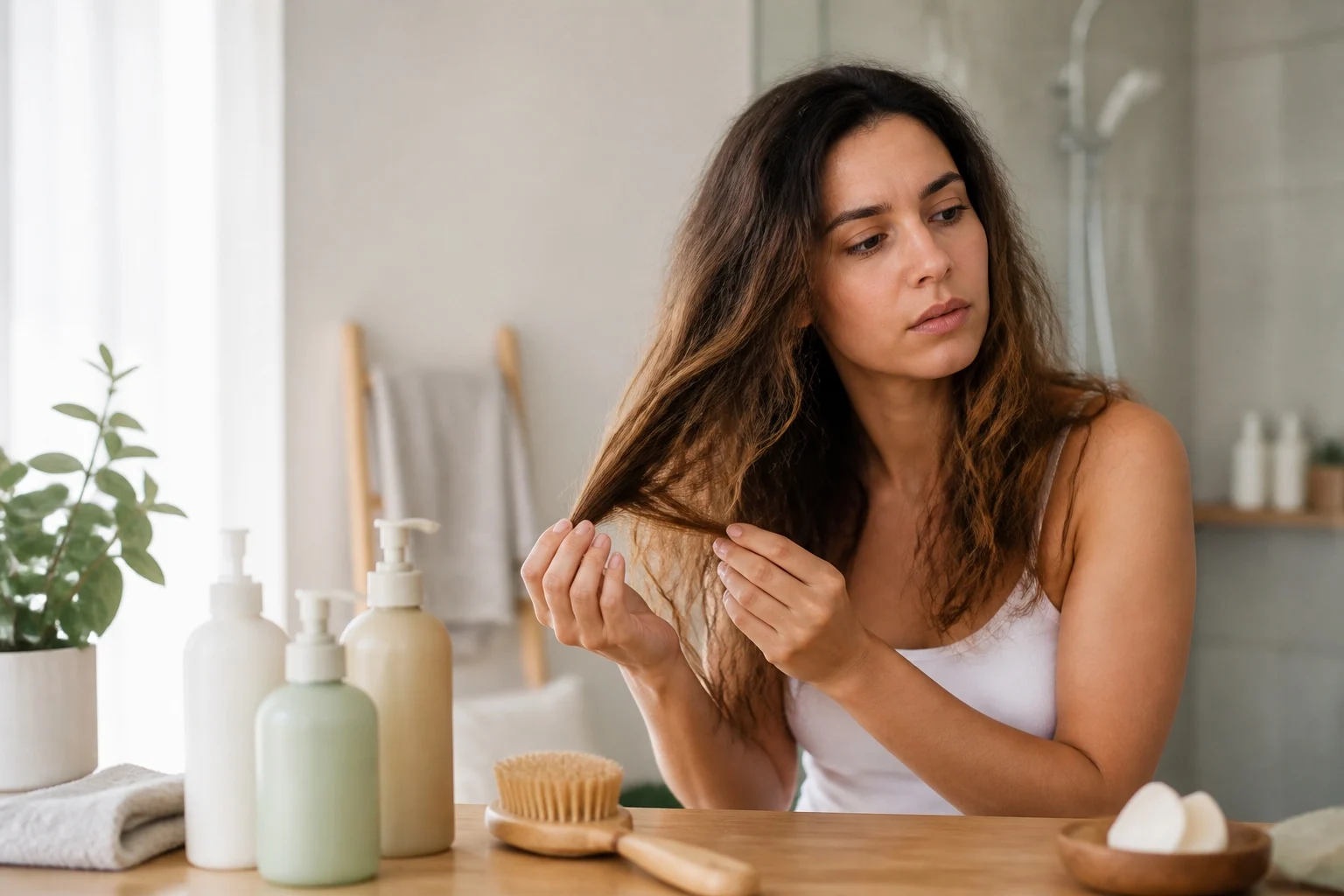
How to compare a shampoo for dry and damaged hair, and for which profiles?
A shampoo intended for dry and damaged hair does not respond to a single situation. Some people especially have a tight scalp after washing, others have rough lengths, brittle ends, repeated coloring or frequent use of heating appliances. The right choice is therefore based on the hair profile, not on a universal promise.
To establish a useful classification, three criteria have priority: the softness felt when washing, the ability of the shampoo not to accentuate dryness, and its consistency with actual use. A shampoo may be appropriate for frequent washing, but less suitable for very sensitized hair which also needs additional care. In this universe, Garnier, Yves Rocher, Melvita, Niwel and Kiko can enter into a comparison by need rather than by slogan.
- A shampoo for dry hair aims first to clean without further stripping an already weakened fiber.
- A shampoo for damaged hair is especially suitable if the lengths have suffered heat, coloring or repeated friction.
- A gentle formula is often more consistent for people who wash their hair several times a week.
- A sensitive scalp may require a different choice than very dry lengths.
- Shampoo alone does not correct all causes of breakage, especially if the routine remains aggressive.
The table below summarizes the most frequent profiles and the logic of choice to favor.
| Persona | Main need | Verdict | Justification |
|---|---|---|---|
| Dry hair every day | Wash without increasing dryness | Best used with a gentle formula | This profile above all seeks flexible and regular cleaning, with a feeling of comfort which does not aggravate rough lengths. |
| Hair colored or heated often | Limit the weakening of the fiber | Relevant with a complete routine | When the fiber is sensitized, the shampoo should remain gentle, but it works best if it is part of a coherent whole. |
| Very damaged and brittle hair | Reduce washing aggression | Accepts with reservation | Shampoo can avoid worsening the condition of the lengths, without replacing a mask, a leave-in treatment or cutting the ends. |
| Small budget or simple routine | Find a product that is easy to integrate | Suitable if the formula remains comfortable | The main criterion becomes regularity of use and daily tolerance, rather than sophistication of routine. |
For dry hair on a daily basis, first aim for gentle washing
The most common profile is not necessarily that of very brittle hair, but that of hair that lacks suppleness, becomes dull and sticks when brushed. In this case, the ideal shampoo is not the one that promises the most, it is the one that cleans without leaving an impression of rough fiber upon rinsing. A pleasant texture and a formula perceived as gentle are often more useful than a very restorative message.
For this profile, Garnier or Yves Rocher can be among the brands to compare if the objective is to build a simple and regular routine. Melvita may also interest people who are attentive to a more sensory approach or to a composition perceived as gentler. Kiko, even if it is mainly associated with the world of beauty in the broad sense, can also be cited among the brands present in an editorial comparison, according to purchasing habits and the search for simplicity. The decisive point remains the same: if the hair is dry but not very transformed, it is better to have a comfortable shampoo each time you wash it than a product that is too rich, difficult to rinse or poorly suited to the frequency of use.
A few guidelines help to avoid the most frequent errors:
- A shampoo that is too purifying can accentuate the sensation of straw on already dry lengths.
- Washing too frequently with an uncomfortable formula can cause discomfort to the scalp and lengths.
- A small, well-distributed amount often cleans better than repeated application all over the hair.
- A conditioner can be a useful addition to the routine if the ends remain rough after drying.
For colored, bleached or frequently heated hair, shampoo must be part of a consistent routine
When hair is dry and damaged due to coloring, straightening or repeated blow-drying, shampoo plays a supportive role rather than a sole solution. It must limit aggression when washing, but it cannot, on its own, compensate for already sensitized lengths. This profile therefore has an interest in choosing a gentle shampoo, then judging its effectiveness with the rest of the routine.
Niwel may be relevant for people looking for an approach focused on hair that is textured or weakened by repeated manipulation. Garnier and Yves Rocher also remain options to compare for a more accessible or easier to integrate routine. Melvita can also be included in the comparison if the objective is to favor a feeling of softness when washing. Kiko, more identified with makeup, is not the most natural actor on this hair issue, which makes him less central in a selection dedicated to shampoo for dry and damaged hair.
A shampoo for dry and damaged hair is especially useful if it does not worsen the fragility of the fiber when washing.
For this profile, the good reflex is to observe three signals after a few uses: is the hair easier to detangle, less rough to the touch and less difficult to style? If the answer remains no, the shampoo is perhaps not consistent enough with the real state of the fiber, even if its positioning appears appropriate on paper.
For very damaged, brittle or textured hair, shampoo alone is often insufficient
Very damaged hair requires a more realistic reading of the promises. When the ends break, the lengths become heavily tangled or the fiber has lost a lot of flexibility, the shampoo must above all avoid adding friction. It then becomes a first precautionary gesture, not a complete treatment. This point is particularly important for curly, frizzy or frizzy hair, which is often more exposed to dryness on the lengths.
In this context, Niwel may be a brand to consider for profiles looking for a more consistent response with textured hair. Melvita may be suitable for people who prefer a gentler and more sensory routine. Garnier can remain relevant for simple use, provided you check that the chosen formula does not leave the lengths rougher after washing. Yves Rocher can also be compared if the goal is to find an option that is easy to integrate into a regular routine. Kiko can be mentioned among the brands in the beauty world, but it generally remains less of a priority here if you are looking for a selection focused on hair care. The verdict is therefore nuanced: for very damaged hair, shampoo counts, but it must be accompanied by a detangling treatment, a mask or a leave-in product as needed.
This profile often benefits from avoiding several errors:
- Changing shampoo too quickly without allowing time to assess actual comfort over several washes.
- Confusing dry hair with oily scalp, which can lead to choosing a formula that is too harsh.
- Expect a shampoo to repair already very sensitive lengths on its own.
- Use more heating appliances without suitable protection after washing.
How to situate the brands mentioned according to usage
In the logic of editorial comparison, not all brands occupy the same place on the subject. Garnier and Yves Rocher fit more naturally into a search for an accessible and easy-to-adopt routine. Melvita can speak to an audience attentive to the experience of care and a certain perceived gentleness. Niwel appears more consistent for people who want to take into account hair texture and specific needs related to curly, frizzy or frizzy hair.
Kiko, on the other hand, remains mainly associated with makeup in the beauty world. For research focused on shampoo for dry and damaged hair, the brand is therefore less obvious to place at the same level as players more directly linked to hair care. This distinction does not make it a bad option in itself, but it does make it less of a priority in a ranking by hair use.
FAQs
How do I know if my hair is dry or really damaged?
Dry hair especially lacks flexibility, while damaged hair often presents more breakage, roughness and difficulty in styling. Dryness is noticed by a rough feel, a lack of shine and clinging lengths. Damaged hair goes further: split ends, fiber weakened by heat, coloring or friction, and more difficult detangling. This distinction helps to choose a more consistent shampoo, because a simple lack of comfort when washing does not necessarily require the same routine as a fiber that is already very sensitized.
Is a shampoo for dry hair enough to repair damaged lengths?
A shampoo for dry hair can limit aggression when washing, but it does not replace a care routine when the lengths are already very fragile. Its main role is to clean without accentuating dryness or breakage. If the hair is very sensitized, it is often necessary to supplement it with a conditioner, a mask or a leave-in treatment. Shampoo therefore remains an important base, but it acts above all as a supporting product in a broader routine, especially after coloring, bleaching or frequent use of heating appliances.
Which profile benefits from choosing a very gentle formula?
A very gentle formula is especially suitable for people who wash their hair often or who quickly feel a feeling of tightness after rinsing. This choice is particularly consistent if the lengths are dry without being extremely damaged, or if the scalp reacts badly to overly purifying shampoos. A gentle formula can also be useful in a frequent post-color or post-blow-dry routine. The objective is not to obtain an immediate spectacular effect, but to preserve the balance of the wash so as not to maintain the fragility of the fiber over the weeks.
Should we avoid purifying shampoos when hair is dry?
Purifying shampoos should not always be excluded, but they are often less suitable for frequent use on already dry lengths. They may have their place occasionally if the scalp re-greases quickly or if residues of styling products accumulate. On the other hand, with regular use, they risk accentuating the feeling of rough hair if the fiber already lacks comfort. For dry and damaged hair, it is generally better to reserve this type of formula for a specific need and the rest of the time favor a more flexible shampoo when washing.
Which brand to compare first for textured hair?
For textured hair, it is often more relevant to compare brands that take into account the natural dryness of the lengths and detangling needs. Curly, frizzy or frizzy hair often needs a shampoo that cleans without creating too much friction. In this logic, Niwel can be a coherent avenue to examine, while Garnier, Yves Rocher or Melvita can also be compared according to the softness felt and the simplicity of the routine sought. Kiko can be cited among the brands in the beauty world, but it generally remains less central if we are first looking for a very targeted hair response. The right choice then depends on the actual level of fragility and the frequency of washing.
How often to wash dry and damaged hair?
The right frequency depends above all on the scalp, lifestyle and the level of dryness of the lengths, not an identical rule for everyone. Dry and damaged hair often tolerates moderate frequency with a comfortable shampoo better than very frequent washing with a formula that is too stripping. If the scalp needs to be washed more often, choosing a gentle formula becomes even more important. The main thing is to observe the condition of the lengths after several washes: if they become rougher, the frequency or the formula deserves to be reviewed.
