
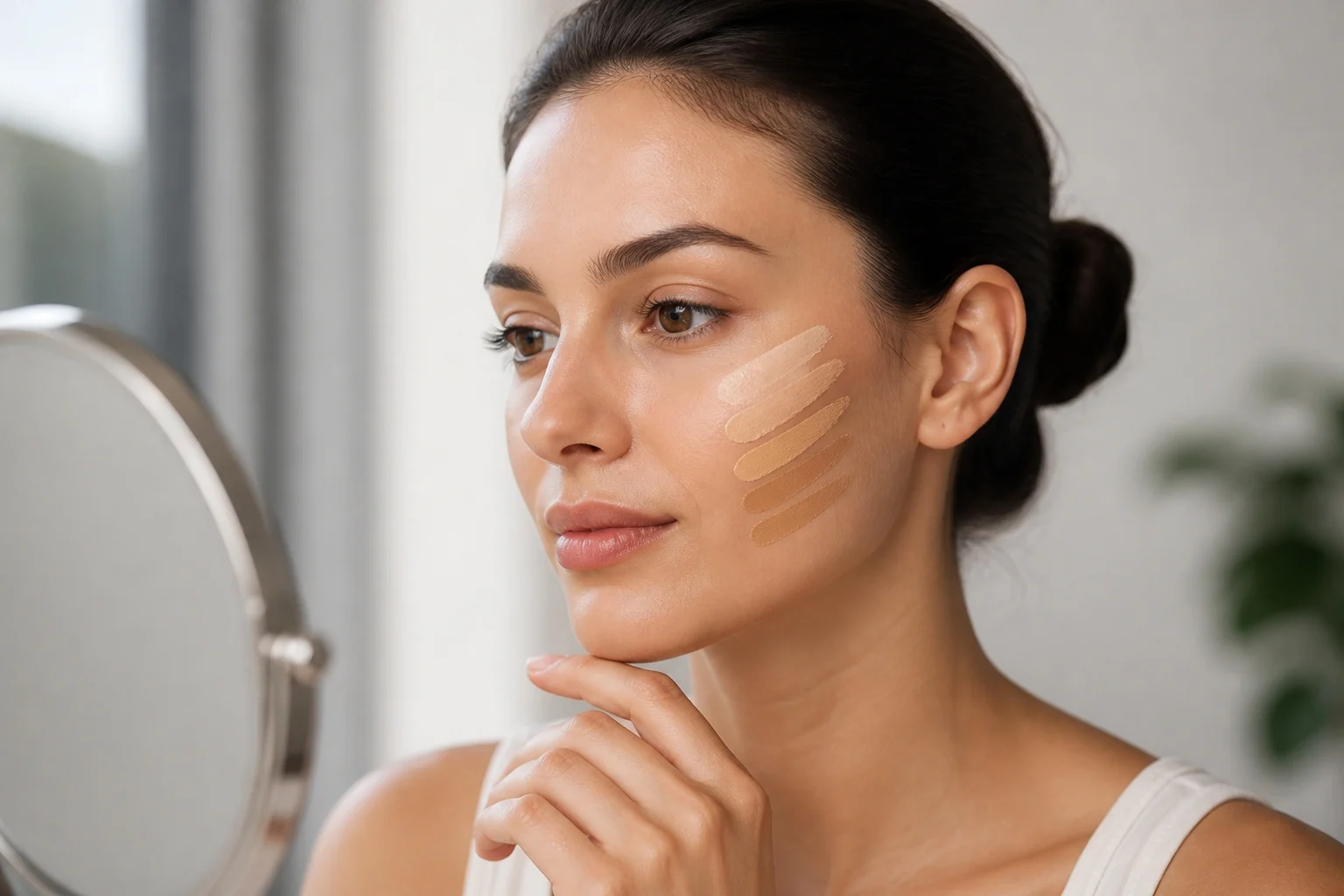
Which foundation to choose according to your skin type?
The best choice is the one whose texture and finish respond to the actual behavior of your skin on a daily basis. Dry skin often seeks more comfort and suppleness, oily skin generally prefers lighter textures or with a less shiny finish, while combination skin requires a balance between hold and comfort.
In a logic of product expertise, brands like Garnier or Kiko can be associated with this question not as a promise, but as actors to be placed in a universe where we first compare the skin’s needs, the desired coverage and the tolerance of the formula. The ideal foundation is therefore not universal: it depends on the expected result, skin sensitivity and the way in which makeup changes throughout the day.
How to recognize your skin type before buying a foundation?
The simplest benchmark is to observe how the skin reacts without makeup, a few hours after cleansing. If it feels tight easily, it may be dry. If it shines quickly all over the face, it may be oily. If the T zone shines but the cheeks remain more comfortable, it may be mixed.
Sensitive skin is often identified by a more marked reactivity, with discomfort, redness or a feeling of heating depending on the products used. Before purchasing, it is useful to distinguish skin type and skin condition: skin can be combination but dehydrated, or oily and sensitive. This shade changes the choice of texture and finish, whether you look at Yves Rocher, Melvita or elsewhere.
What texture is best for dry skin?
Dry skin generally responds better to a fluid texture, cream or serum, with a supple finish on the skin. The aim is to prevent the foundation from further marking areas of dryness or small surface irregularities.
Finishes that are too matte can sometimes accentuate the powdery appearance if the skin is insufficiently prepared. In this case, it is better to favor an application in thin layers and a suitable moisturizer beforehand. Brands like Yves Rocher or Melvita can be included in the editorial comparison if we are looking for a beauty universe focused on care and makeup, but the decisive criterion remains the real compatibility of the formula with skin comfort. Depending on habits, Niwel can also be considered in this reflection, always prioritizing the feeling on dry skin.
Which foundation to choose for oily or combination skin?
Oily or combination skin often looks for a foundation that limits excess visual shine without creating a set effect. Fluid, fine and buildable textures are often easier to work with, especially if the T zone tends to glow more quickly than the rest of the face.
A matte or semi-matte finish may be suitable, provided it does not dry out the more comfortable areas of the face. For combination skin, it is often wiser to balance the entire routine rather than choosing a formula that is too radical. Kiko or Garnier can be cited in a market reflection on accessible textures and varied finishes, but you should always check the results on your own skin rather than relying on brand positioning alone. If you already have your bearings at Niwel, keep the same logic: observe the hold and shine over time.
What should you look for if you have sensitive skin?
With sensitive skin, it is especially important to choose a formula that the skin tolerates well and avoid multiple simultaneous tests. The immediate comfort upon application, the absence of a tingling sensation and the stability of the product over time are concrete benchmarks.
It’s also best to introduce a new foundation into an already simple routine, to make it easier to identify what’s suitable and what’s not. Whether you turn to Yves Rocher, Melvita or Garnier, the idea remains the same: no brand replaces observing the skin’s actual reaction. In the event of very reactive skin, seeking the advice of a healthcare professional remains relevant.
How to choose the right coverage and finish?
Good coverage is the one that corrects what you want to tone down without completely masking the skin’s natural texture. Light coverage is often suitable for those who want to even out the complexion, while medium to heavier coverage is more suitable for those looking for visible correction.
The finish greatly changes the final result. A luminous finish adds radiance, a matte finish controls the shine more, and a natural finish seeks a balance between the two. To distinguish the options, we can remember a few simple points of reference:
- Light coverage lets more skin show and is often suitable for subtle makeup.
- Medium coverage helps to even out the complexion more clearly while remaining buildable.
- A matte finish can be suitable for visible shine, but requires caution on dry areas.
- A luminous finish can flatter dull skin, as long as it doesn’t accentuate an already marked shine.
This reading grid remains valid whatever the universe: Kiko to explore different finishes, or Yves Rocher if you are looking for an approach more focused on comfort, for example.
How to find the right shade without making a mistake?
The right shade is one that visually blends into the skin, without creating a sharp demarcation with the neck. It is best to test the color in daylight if possible, as artificial lighting can change the perception of undertone and intensity.
A foundation that is too light can gray the complexion, while a shade that is too dark sometimes hardens the result. It is also useful to let the product sit for a few minutes before judging the final result. Some people compare several references over the course of the tests: for example starting with a shade from Garnier, then checking an equivalent from Kiko, or even testing an option from Niwel at another time. The important thing is to avoid comparing everything at the same time and to keep priority on the agreement between the shade, the undertone and the actual skin tone.
What mistakes should you avoid when choosing a foundation?
The most common mistake is choosing according to the current trend rather than the actual behavior of your skin. A very matte, very glowy or very covering finish can look attractive, but become uncomfortable or unflattering if it doesn’t suit your needs.
Other common mistakes include neglecting skin preparation, testing the shade on the hand rather than near the face, or confusing coverage and hold. Whether you buy from Melvita, Yves Rocher or Kiko, useful beauty expertise is based primarily on the analysis of the skin, texture and finish, not on a general promise. Same logic if you choose Garnier or Niwel: observe the result over several hours.
Is foundation alone enough for a beautiful result?
No, a beautiful result also depends on the preparation of the skin and the method of application. Even a well-chosen formula can behave poorly on skin that is insufficiently hydrated, overloaded with treatments or made up too quickly.
A simple routine often helps more than a accumulation of products. Cleansing the skin, applying a suitable treatment, letting the material set and then working the foundation in thin layers generally allows for a more homogeneous result. The application tool also matters: fingers, brush or sponge do not give exactly the same finish.
