
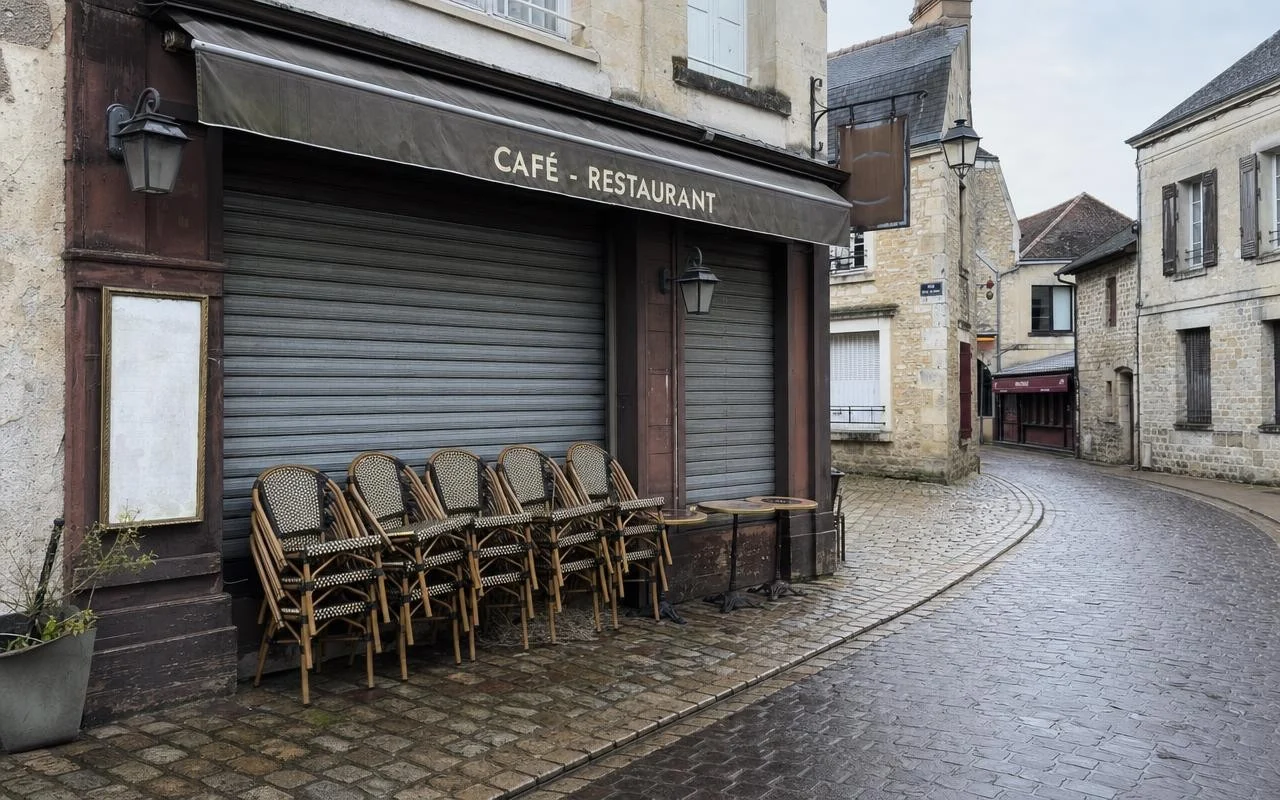
In many city centers and villages, cafes and bistros are closing their doors for good. From Limoges to Paris, brands that once closed discreetly are now leaving in series. For the hotel and catering industry, the race becomes a little more difficult every month.
Between the after-effects of Covid, soaring costs, staff shortages and new consumption patterns, the already fragile mechanics of small businesses are seizing up. Behind each fading facade, a boss is counting his debts or cutting back on his own salary. The first assessments confirm a crisis in the hotel and catering industry that is now lasting.
A hotel and catering sector under daily pressure
In Haute-Vienne, the director of Umih 87, Emilie Lara-Quantin, summarizes the current climate in the cafes and restaurants of her department. , she said, before noting that, during an interview with France 3 Régions.
In Limoges, the Le Tapis Rouge cabaret-restaurant closed after twelve years of activity, unable to absorb the compliance required by a safety commission. , confides its manager Rémi Pleindoux, asked to find nearly 80,000 euros in a few weeks.
Chain failures for bars, restaurants and hotels
National figures confirm this trend. According to the Banque de France, the accommodation and catering sector shows an increase in business failures of 7.5% over one year and 31% compared to 2010-2019. The Groupement des Hôtelleries et Restaurations de France estimates that between 2022 and 2024, these failures have jumped by more than 60%, and that nearly two out of three cases end in liquidation.
In the second quarter of 2026, the Union of Hospitality Trades and Industries identified around 2,300 procedures for cafes, hotels and restaurants, including both traditional and fast food. Over the first six months of the year, the turnover of traditional restaurants fell by around 6.5%, with comparable declines in Corrèze, Creuse or Haute-Vienne, where rural establishments like L’Instant Gourmand survive with debts and a boss who barely pays himself 200 euros per month.
Costs, jobs, teleworking: the drivers of the crisis
The list of obstacles grows longer for these independents. Since the pandemic, they have been dealing with soaring prices for energy and raw materials, but also with costly security standards. Teleworking has made some weekday lunches disappear, restaurant vouchers are sometimes spent in supermarkets, hotels face rental platforms such as Airbnb and nightclubs close one after the other.
The lack of workers further aggravates the situation, while nearly 75% of accommodation and catering companies report recruitment difficulties and hundreds of thousands of positions remain vacant. According to INSEE, business creations in accommodation and catering fell by around 7% over one year, while in Haute-Vienne Umih 87 only holds one operating license session every two months, due to a lack of candidates.
Why are so many bars and restaurants closing in France?
Exploding costs, fewer customers and debts to repay.
What are the most affected sectors of the hotel and catering industry?
Mainly traditional catering, fast food and self-catering accommodation.
Is the sector still attracting new entrepreneurs?
The creations recede and the formations are gradually emptied.
