
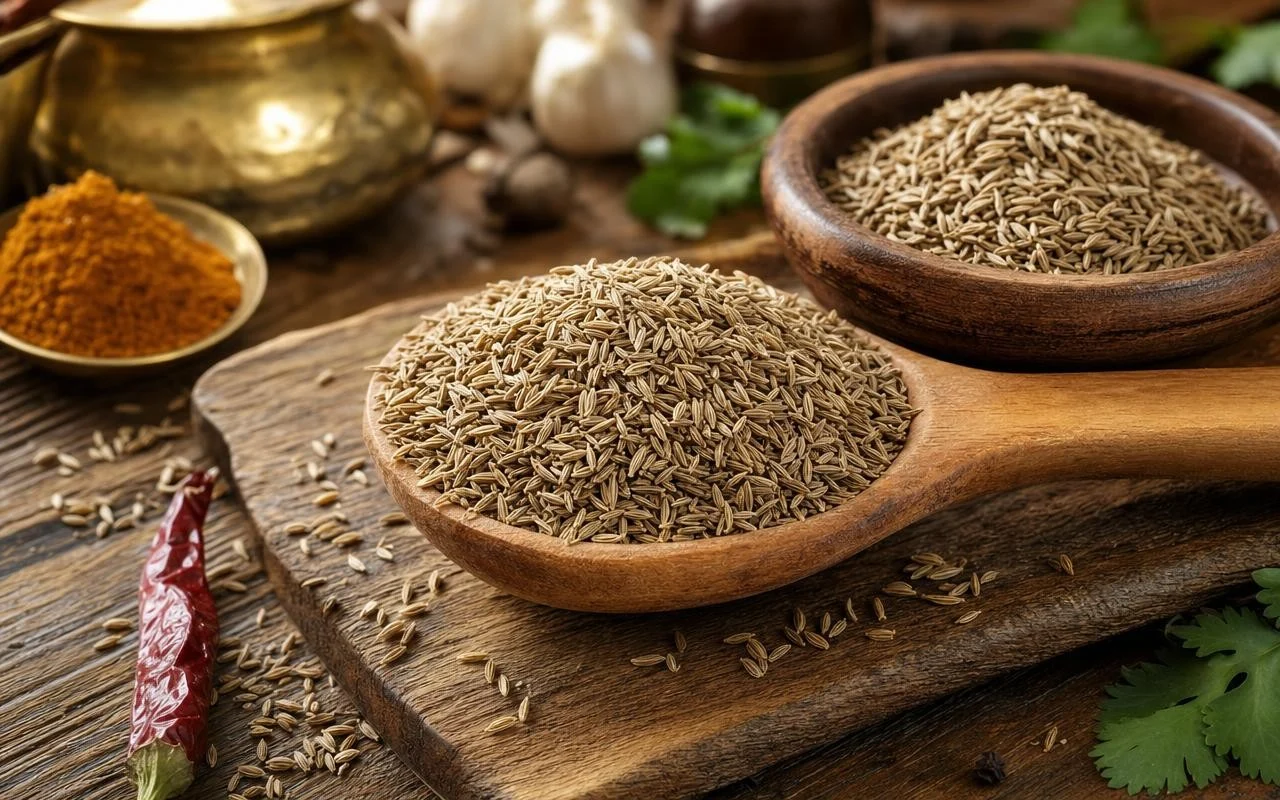
In many Indian homes, the scene repeats itself: a few seeds crackling in ghee, a spoonful of brown powder sprinkled on yogurt, a glass of infused water placed near the bed. At the end of the day, that’s about a teaspoon of cumin consumed almost without thinking. And behind this trivial gesture, science is starting to catch up with the intuition of grandmothers.
Because this small spoon – around 3 g – is increasingly intriguing to those interested in Indian rituals. Easier digestion, lighter stomach, better controlled blood sugar: the promises circulate quickly on the networks. But to understand why so many Indians insist on their daily cumin seeds, you have to look closely at what’s happening on the plate.
In India, a spoonful of cumin seeds which comes mainly from the kitchen
Cumin is one of the key spices in mixtures like garam masala described by RFI, but also lentil dahl, sautéed vegetables or Kerala fish curries. At each meal, a pinch in the tadka, another in the spice mixture, a little more in the spicy yogurt: the daily spoon is built up by accumulation. Dr. Prarthna Shah sums up this invisible potential: , she explained to Vogue.
Traditionally, in India, cumin is seen as a digestive spice which helps after heavy meals, limits gas and the feeling of bloating. Aromatic oils stimulate digestive juices and transit. , adds Dr Prarthna Shah. This very concrete vision remains at the heart of its daily use today.
What a teaspoon of cumin seeds per day does
Biochemically, cumin concentrates cuminaldehyde, flavonoids and other plant antioxidants that help reduce oxidative stress and certain inflammatory markers. Shivam Hingorani reminds us that studies are not satisfied with unrealistic doses: , he explains, according to comments reported by Vogue.
Many Indians also drink “cumin water” when they wake up. But the timing doesn’t matter. As Shivam Hingorani points out, . And he reiterates a key point:
How to eat cumin seeds every day without excess
To mimic the Indian habit, Shivam Hingorani relies on a very simple preparation: One teaspoon of ground cumin per day, or around 3 g, remains within the range used by studies on blood sugar and cholesterol.
For most healthy adults, this culinary dose is considered safe, as is the use in casseroles. Dr. Prarthna Shah especially warns against high-dose supplements: , she reminds. Caution therefore in people under treatment for blood sugar or coagulation, and during pregnancy, where we stick to small quantities on the plate rather than concentrated extracts.
How many cumin seeds can you eat per day?
Studies often use around 3 g, or a level teaspoon of ground cumin. In the kitchen, staying between 2 and 5 g per day seems reasonable for healthy adults.
Should you take cumin seeds on an empty stomach?
There is no data to show that fasting increases the effects. The most important thing remains regularity, whether in a yogurt, a dish or a drink.
Do cumin seeds help you lose weight?
Cumin can help digestion and slightly improve certain metabolic parameters, but the effects on weight remain modest and depend primarily on overall diet.
