
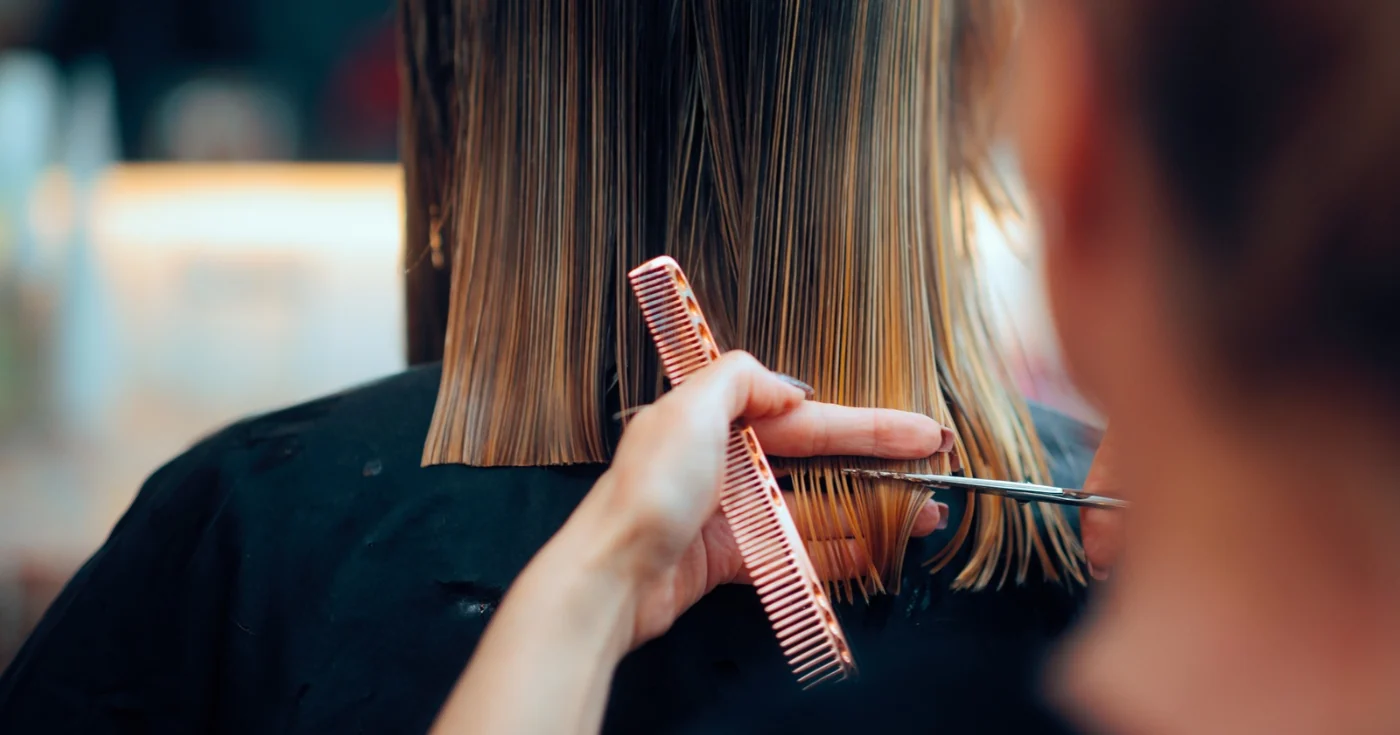
“You need to trim the ends regularly if you want your hair to grow faster. » You have certainly already heard this advice at the hairdresser, from those around you or through a beauty video. Some people even swear that after a good cut, their hair seems to grow much faster. An impression widespread enough that the gesture has become an essential part of hair routines.
But what is it really? Can cutting a few centimeters of hair send a signal to the roots and stimulate their growth? The scientific answer is clear: no. However, this habit is not completely useless when you want to gain length. And this is precisely where all the nuance lies.
No, cutting your hair doesn’t make it grow faster
It’s a preconceived idea that dies hard: cutting your ends absolutely does not change the speed at which your hair grows. To understand why, we need to look at how they work. Hair growth takes place at the level of the hair follicle, located in the scalp. This is where the cells multiply and produce hair fiber. The visible part of the hair is made up of dead keratinized cells. Once the fiber has emerged from the scalp, cutting it cannot modify the activity of its root.
On average, hair grows about one centimeter per month, although this speed varies between individuals, their genetics, their age and different physiological factors. In an article published in February 2026, notably questioned Desmond Tobin, professor of dermatological sciences at University College Dublin, who recalled that cutting hair has no influence on its follicle or its rate of growth. You can find his explanations in this article dedicated to the belief that cutting your hair accelerates its growth.
So why do we sometimes feel like they grow faster after a cut?
If this belief persists, it is also because a cut can visually change the appearance of the hair. When damaged, the ends often become thin, irregular and split. By cutting them, we find a cleaner line and a material that immediately appears denser. Hair can therefore appear thicker, more vigorous and even grow more.
Another explanation: freshly cut ends have a blunter end than naturally tapered lengths. They may therefore seem thicker to the touch. But this impression does not mean that the diameter of the hair has increased or that its growth has accelerated. The , in an article published in September 2025 devoted to preconceived ideas about hair growth, also recalls that the cut does not act on the follicle. It only modifies the visible part of the fiber.
But cutting your ends can really help you have long hair
This is where the advice of hairdressers finds all its interest. While cutting your hair doesn’t make it grow faster, it can help maintain its length. For what ? Because damaged ends tend to split and become fragile. When a fiber is split, the crack can travel up the hair shaft. The hair then becomes more likely to break, especially when brushing or styling.
By eliminating the most damaged parts, we therefore limit the risk of breakage and better preserve the lengths already acquired. This is particularly interesting if your hair is sensitized by coloring, bleaching, heating appliances or repeated handling. As dermatologist Delila Foulad explains, interviewed by the , cutting split ends can help preserve length by reducing breakage, without accelerating the biological growth process. In other words, your hair continues to grow at its usual rate, but you potentially lose less hair along the way.
How often should you really cut your hair?
There is no universal calendar. Contrary to what we sometimes hear, it is not essential to go to the hairdresser every six or eight weeks to stimulate growth. The frequency depends above all on the condition of your lengths, their texture, your styling habits and the result you wish to maintain. Hair that is minimally sensitized and let grow out may require fewer cuts than hair that is regularly bleached or exposed to heat.
If your goal is to gain several centimeters, there is no need to systematically sacrifice a large part of your length. The main thing is to have the really damaged ends removed when it becomes necessary. At the same time, adopt actions that limit breakage: gently detangle your hair, avoid excessive temperatures, use a heat-protective treatment before blow-drying and limit hairstyles that are too tight. To promote normal hair growth, a balanced diet and taking care of possible deficiencies also play a much more important role than the frequency of hairdresser appointments.
FAQ: questions you ask yourself about hair growth
1. Does cutting your hair make it grow faster?
No. Hair growth takes place at the hair follicle, in the scalp. Cutting the ends has no effect on this biological mechanism.
2. How many centimeters does hair grow per month?
On average, hair grows about one centimeter per month, or about twelve centimeters per year. This speed, however, varies depending on people and individual characteristics.
3. Why does my hair seem thicker after a cut?
A cut eliminates thinning and split ends. The hair then has a clearer line and a blunter end, which can give the impression of density and thickness.
4. Should you cut your ends every three months to have long hair?
No, it’s not an obligation. The frequency depends on the condition of the lengths and their tendency to break. It is especially important to remove damaged parts when necessary.
5. How to grow your hair longer without cutting it?
To maintain maximum length, limit breakage: avoid frequent heating appliances, protect your hair from heat, detangle it gently and use appropriate care. A balanced diet also contributes to normal hair growth.
