
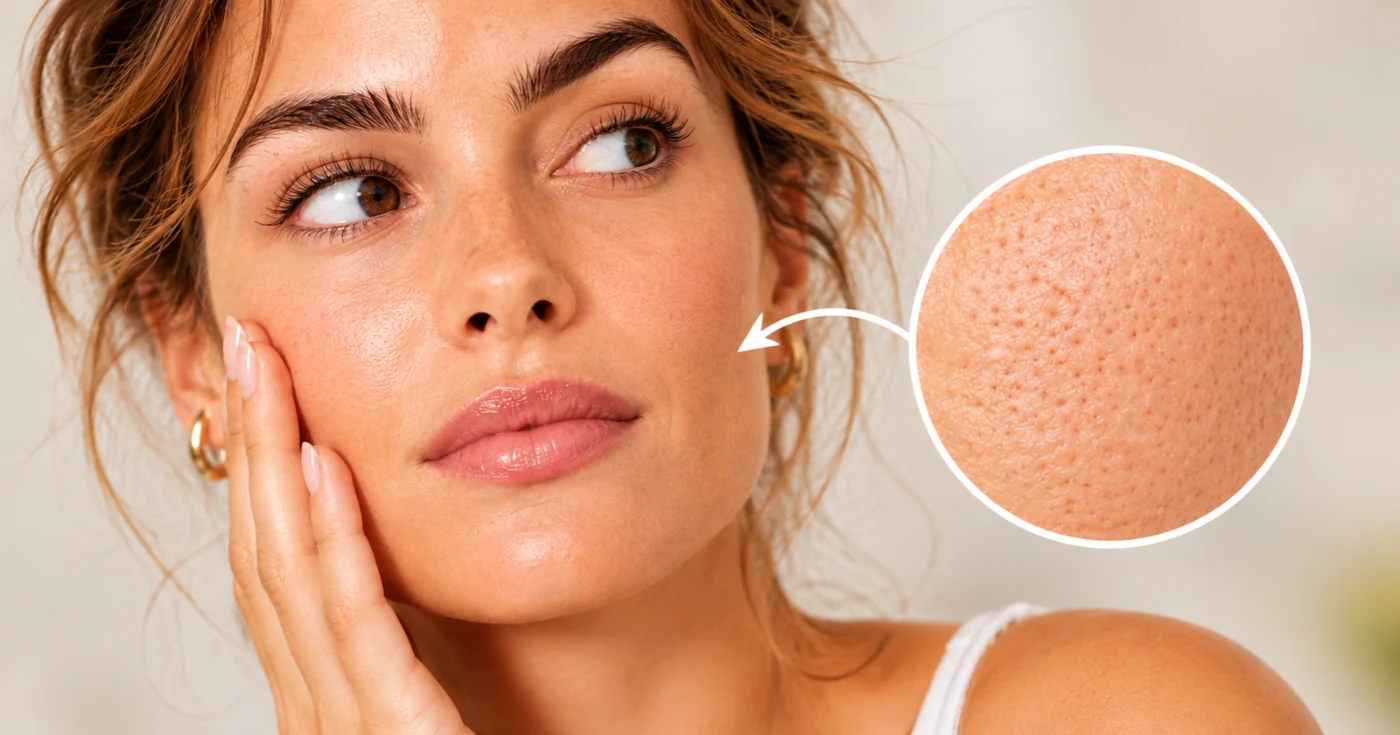
They are particularly visible on the nose, cheeks and sometimes the forehead. These little points that give the skin an irregular appearance are often at the heart of our beauty concerns. To make them disappear, we readily turn to purifying masks, exfoliants, smoothing serums or even treatments labeled “pore minimizer”. Some brands even promise to tighten pores in just a few applications.
But the reality is a little less spectacular. Pores are natural openings in the skin, essential for the evacuation of sebum and sweat. Their size depends in particular on genetic factors, sebum production and skin firmness. So, can we really tighten them? The response from dermatologists is more nuanced than one might think.
No, pores can’t open and close like doors
This is the first preconceived idea to deconstruct: pores are not small orifices with muscles capable of contracting or dilating. They do not open under the effect of heat and do not close on contact with cold. What we commonly call “dilated pores” correspond to follicular openings with a more marked appearance. Their visibility varies from person to person, notably depending on genetics, the amount of sebum produced and the structure of the skin.
In an article devoted to this question, dermatologist Jane Wu, interviewed by the Cleveland Clinic, recalls that pore size is largely determined by genetics. As we age, decreased collagen and elastin can also reduce tissue support around pores and make them more visible. Sun exposure contributes to this phenomenon by accelerating the degradation of these proteins. In other words, you cannot completely change the structure of your pores, but you can act on several factors that accentuate their appearance. The Cleveland Clinic details its dermatologist’s explanations here.
What really makes your pores look enlarged?
Several phenomena can make pores more visible. The first is excess sebum: when the skin produces a lot of it, especially in the T zone, pores can become more visible. Dead cells and impurities can also accumulate at their openings, form blackheads and accentuate the irregular appearance of the skin. This is particularly why pores sometimes seem more marked when you have oily skin or imperfections.
Age and sun damage also play a role. When the skin loses firmness, the tissues surrounding the pores support them less effectively. They may then appear wider, even if their structure has not radically changed. A scientific review published in the journal identifies three major factors associated with the appearance of pores: the production of sebum, the reduction in skin elasticity and the volume of hair follicles. This scientific journal is available on PubMed.
Active ingredients that can really make pores less visible
Good news: although it’s impossible to make them disappear, certain ingredients can improve their appearance. The first to know is salicylic acid, an exfoliating active ingredient which belongs to the beta-hydroxy acid (BHA) family. Fat-soluble, it can penetrate pores and help eliminate excess sebum and dead cells that accumulate there. It is particularly interesting when pores are associated with oily skin, blackheads or blemishes.
Another regularly recommended ingredient: retinol. Derived from vitamin A, it promotes cell renewal and can help improve skin texture. It also helps limit clogged pores and can support their appearance by acting on the signs of skin aging. The American Academy of Dermatology recommends treatments containing retinol or retinyl palmitate to make pores less visible in certain people. Be careful, however: these active ingredients can irritate the skin. It is best to introduce them gradually and seek advice from a dermatologist if your skin is sensitive. Retinoids should also be avoided during pregnancy. The AAD’s recommendations for enlarged pores are detailed here.
The right actions to prevent them from becoming even more visible
Before even multiplying the serums, a few habits can make the difference. The AAD particularly recommends choosing non-comedogenic products, that is, formulated not to clog pores. Gentle cleansing morning and evening can also help remove excess oil and residue accumulated on the skin’s surface. On the other hand, there is no point in scrubbing your face vigorously or using exfoliants repeatedly: irritation can make pores even more visible.
Sun protection is also essential. UV rays contribute to the degradation of collagen and elastin, two proteins which contribute to the firmness of the skin. Applying a minimum SPF 30 sun protection daily therefore helps to limit the damage responsible for sagging skin. Finally, resist the temptation to squeeze your pores or use extraction tools at home: these manipulations can irritate the skin and cause marks. The right goal is not to seek poreless skin, which is biologically impossible, but to preserve healthy skin and a more even texture.
And are treatments in institutes or at the dermatologist more effective?
When pores remain very visible despite a suitable routine, certain professional techniques can be considered. Chemical peels, microneedling or certain laser and radiofrequency treatments can notably improve skin texture and stimulate collagen production. Their interest, however, depends on the cause of the visible pores, the condition of the skin and the desired result. These are not universal treatments, and several sessions may be necessary.
A scientific review published in 2022 in the analyzed different methods intended to reduce the appearance of facial pores. The authors notably studied topical treatments, peels and techniques using medical devices. Their conclusion underlines the potential interest of combined approaches, while recalling that results and tolerance vary depending on the treatments. Before booking a session, it is therefore better to ask a dermatologist for a diagnosis rather than being convinced by a promise of “invisible pores”. The journal is available on PubMed.
FAQ: Questions You Ask About Enlarged Pores
1. Can you really tighten facial pores?
Not definitively. The size of pores depends in particular on genetics and the structure of the skin. On the other hand, certain treatments can make them less visible by limiting excess sebum, blackheads and loss of skin firmness.
2. Does cold tighten pores?
The cold can cause a temporary tightening effect and make pores appear less visible. But this effect does not change their actual size and disappears when the skin returns to its usual temperature.
3. Which active ingredient should I use to reduce the appearance of pores?
Salicylic acid can help unclog pores and limit oil buildup. Retinol can also improve skin texture and make pores less visible. The choice, however, depends on your skin type and its tolerance.
4. Why do pores become more visible with age?
Over time, the skin gradually loses collagen and elastin. The tissues surrounding the pores become less firm, which can accentuate their appearance. Repeated solar exposure also contributes to this phenomenon.
5. Can clay masks tighten pores?
Clay masks can absorb some of the excess oil and temporarily give skin a duller appearance. However, they do not change the size of the pores. Used too frequently, they can even dry out or irritate certain skin.
