
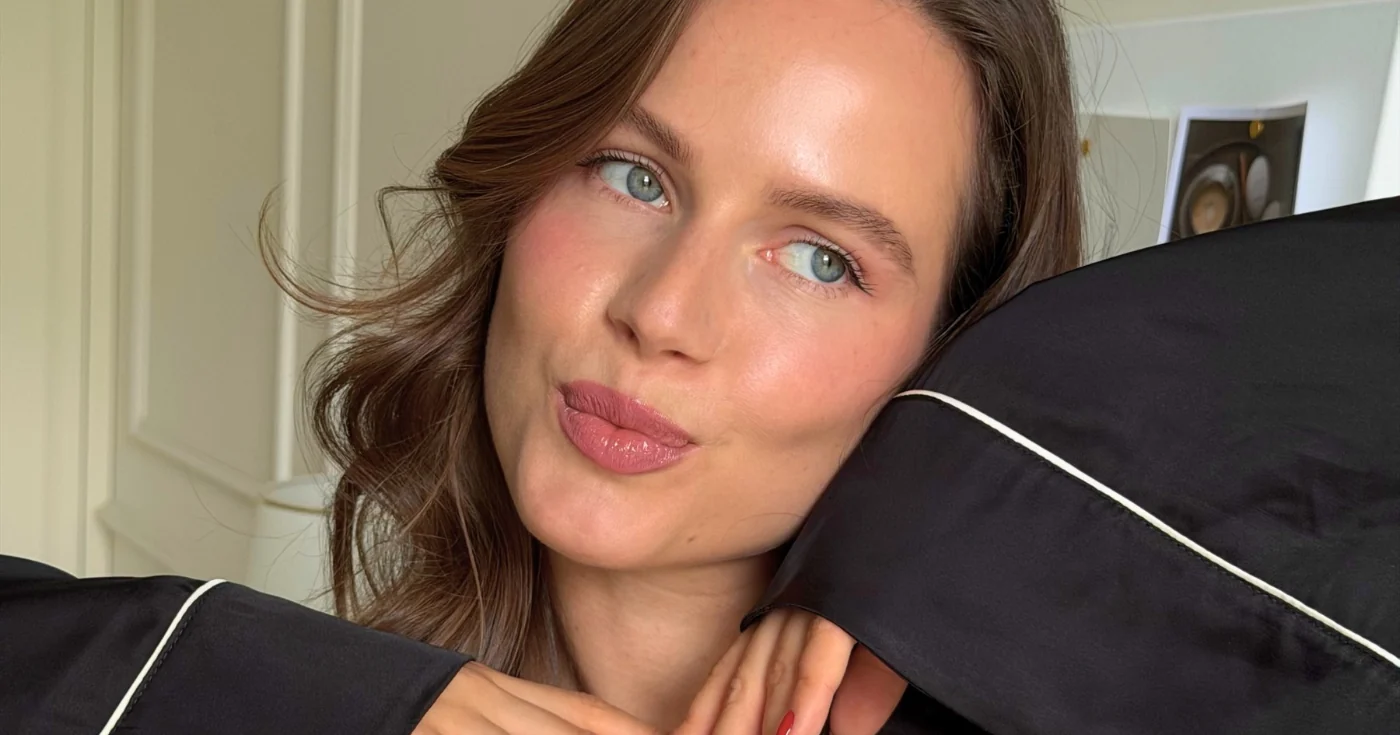
At 15, we had come to accept pimples as an almost obligatory procedure. Then, over time, the skin stabilized. The beauty routine was well established, imperfections were becoming rarer and we thought we had left acne behind for good. Until the day when, sometimes around the age of 30 or 35, new pimples appear. The chin becomes covered with small inflammatory lesions, the jaw becomes a problem area and the treatments that worked until then suddenly seem less effective.
This change can be destabilizing, especially since it sometimes seems to happen overnight. However, there is a well-known dermatological explanation: adult female acne. Some people even speak of “second puberty” to describe this return of imperfections. A meaningful expression, but which does not correspond to a medical diagnosis. Because behind these buttons several mechanisms can be hidden, notably hormonal.
Why can skin change around age 30 or 35?
Contrary to popular belief, acne does not only affect adolescents. It can persist into adulthood or appear for the first time in a person who has never suffered from it. Dermatologists then speak of adult acne or late-onset acne. Women are particularly concerned: hormonal fluctuations can influence the activity of the sebaceous glands and promote the appearance of inflammatory lesions.
The menstrual cycle, pregnancy, stopping or changing hormonal contraception, but also certain periods of hormonal transition can modify the skin’s balance. Blemishes sometimes tend to concentrate on the lower face, especially the chin and jawline, and recur cyclically. But be careful: acne that appears at 35 does not necessarily mean that you are entering perimenopause. Age is not enough to identify the cause, and the mechanisms of adult acne are multiple.
“Second puberty”: what really happens in the skin
The expression “second puberty” is often used to describe this feeling of finding, in adulthood, adolescent skin. However, it is not recognized as a distinct medical phenomenon. What happens is more subtle: the skin remains sensitive to hormonal variations throughout life, and androgens, in particular, play a role in the production of sebum. When this activity promotes clogged follicles and inflammation, pimples can appear.
Adult acne isn’t just about hormones, however. Genetic predisposition, certain medications, unsuitable cosmetics or even individual factors can intervene. Stress is also often mentioned, although its exact role and importance vary depending on the situation. This is why two women of the same age can experience very different skin developments. And above all, we should not conclude that there is a hormonal imbalance based on the presence of spots alone.
How to recognize acne in adult women?
It can take different forms: blackheads, microcysts, red papules or sometimes painful inflammatory spots. In some women, the lesions are concentrated on the lower face, around the mouth, on the chin and along the jaw. They can appear in outbreaks, especially before periods, and leave pigmentary marks or scars when they are deep or handled.
Another particularity: adult skin can be both prone to imperfections and sensitive, even dehydrated. Anti-acne treatments that are too harsh, repeated cleansing and the accumulation of exfoliating active ingredients risk weakening the skin barrier. If the pimples persist, become painful or leave scars, it is better to consult a dermatologist rather than multiplying products. In the case of acne associated with irregular periods, unusual hair growth or hair loss, a medical check-up may also be useful to look for a possible hormonal disorder, such as polycystic ovary syndrome.
What routine should you adopt when your skin changes as an adult?
First reflex: do not try to find at all costs the routine that you used at 18. Adult skin may have different needs, and very drying treatments are not necessarily the right answer. It is better to choose a gentle cleanser, a moisturizer adapted to your skin type and daily sun protection. A dermatologist can then recommend active ingredients or targeted treatments, depending on the type of lesions and skin sensitivity.
There are several treatment options for adult acne today, including topical treatments with retinoids or benzoyl peroxide, and, in some situations, hormonal or oral treatments. They are not suitable for everyone and must be chosen with a health professional, taking into account in particular a possible pregnancy or a planned pregnancy. The main thing is not to trivialize acne that appears late, nor to consider that it is an age-related inevitability: it can be managed effectively.
FAQ: questions we ask ourselves about acne after 30
Can you get acne for the first time at 35?
Yes. Acne can persist after adolescence or appear for the first time in adulthood. We then speak of adult acne or late-onset acne.
Why do we have pimples on our chin after 30?
The chin and jaw are areas frequently affected by acne in adult women. Hormonal fluctuations can contribute to these flare-ups, especially around periods, but they are not the only possible explanation.
Is adult acne necessarily hormonal?
No. Hormones may play a role, but genetics, certain medications and individual skin characteristics also play a role. A consultation helps identify the factors involved.
At 35, can an acne breakout be a sign of perimenopause?
Not necessarily. An isolated acne breakout does not indicate perimenopause. This period is accompanied by other possible signs, including changes in the menstrual cycle. If in doubt, it is best to talk to a doctor.
Should you use anti-acne treatments for teenagers when you are 35?
Not systematically. Certain active ingredients can be useful, but treatments that are too harsh risk irritating adult skin that is sometimes more sensitive or dehydrated. A gentle routine and treatment adapted to the type of acne are preferable.
Sources:
- American Academy of Dermatology, .
- French Society of Dermatology, Evidence Center in Dermatology, recommendations on hormonal factors in acne, updated February 15, 2025.
- Rocha et al., Anais Brasileiros de Dermatologia, 2019.
- American Academy of Dermatology, acne management recommendations, 2024.
