
A swollen stomach at the end of the day, gas after meals, a feeling of heaviness that sets in… Digestive disorders can quickly become uncomfortable, especially when they are repeated. For some people, especially those who suffer from irritable bowel syndrome, diet plays an important role in causing symptoms. Without systematically eliminating certain foods, adapting your meals and identifying the ingredients that trigger reactions can help you live better with these inconveniences.
On Instagram, naturopath Joris Vanlerberghe, specialized in digestive disorders, shares ideas for preparations based on vegetables, broth and simple ingredients. Among them, six soups and broths which allow you to vary meals during the cold season. Butternut squash, celeriac, mushrooms, chicken or fennel: each preparation has different nutritional benefits. But be careful, a so-called “anti-bloating” soup is not a guarantee of a flat stomach: certain ingredients can also cause symptoms in sensitive people. Here’s what you need to know before adopting them.
1. Lactose-free butternut, potato, carrot and cream soup
The first idea combines butternut squash, potato, carrot, water and lactose-free cream. A simple and comforting combination, which focuses on familiar vegetables. The carrot provides beta-carotene in particular, which the body can convert into vitamin A, while the potato provides carbohydrates and potassium. Butternut also contains carotenoids and provides a naturally sweet flavor, which allows you to prepare a pleasant soup without multiplying the ingredients.
The presence of lactose-free cream may also be of interest to people who have difficulty digesting lactose, a sugar naturally present in milk. Lactose intolerance can cause gas, abdominal pain and bloating. Replacing a classic cream with a lactose-free version can therefore be useful if this ingredient is one of the identified triggers. However, this does not mean that the soup is automatically suitable for all people suffering from irritable bowel: tolerance to butternut depends in particular on the portion consumed.
2. Celeriac, potato, sweet potato and spaghetti squash soup
This second combination brings together four plant ingredients: celery root, potato, sweet potato and spaghetti squash, to which water is added. Nutritionally, it allows you to vary the sources of carbohydrates and fiber. Celery root provides potassium and fiber, while sweet potato contains carotenoids and various micronutrients. Spaghetti squash, for its part, is distinguished by its flesh which comes off in filaments after cooking.
This diversity can be interesting for varying your diet, but it deserves some precautions when you suffer from frequent bloating. Fibers are important for intestinal transit, but their effect depends on their quantity, their nature and individual tolerance. Likewise, certain foods can be tolerated well in small portions and cause more symptoms in larger quantities. This combination should therefore not be considered universally suitable for irritable bowel: it is better to take your own reactions into account and, if necessary, seek advice from a healthcare professional.
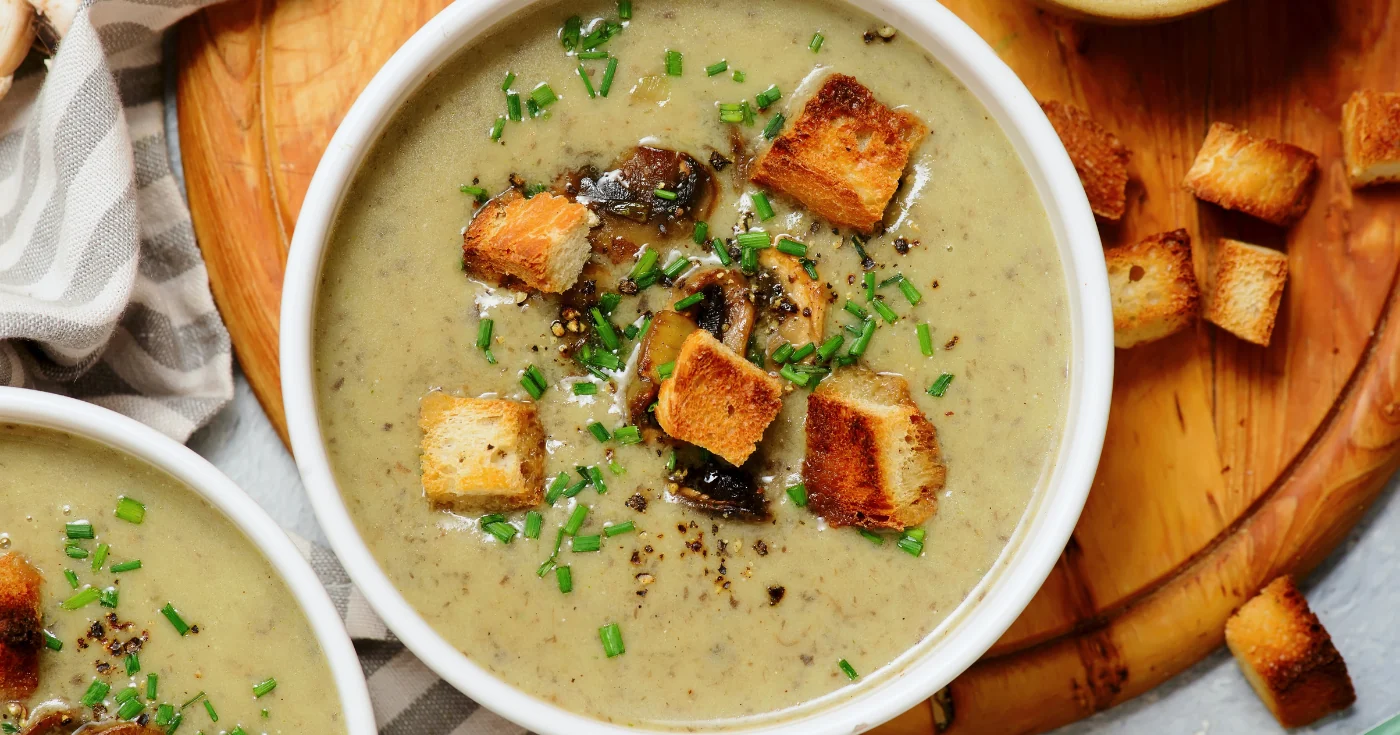
3. Button mushroom, potato, leek and pumpkin seed soup
For this third idea, the naturopath combines button mushrooms, potatoes, leeks, pumpkin seeds and water. Mushrooms provide B group vitamins and minerals, while pumpkin seeds contain vegetable proteins, unsaturated lipids and magnesium. They also add an interesting texture to a preparation which can be eaten mixed or garnished with seeds when serving.
However, a point of vigilance is necessary for people prone to intestinal gas. Button mushrooms and leeks are among the foods that may be problematic on a low FODMAP diet, depending on the varieties, servings and parts used. These fermentable carbohydrates may be poorly absorbed in some people and contribute to bloating. This does not mean that they should be systematically banned: tolerance is individual, and a soup containing these ingredients may suit some people, but not others. Pumpkin seeds should also be dosed according to digestive sensitivity.
4. Bone broth with carrots, celery root, leek and cider vinegar
This fourth proposal differs from classic vegetable soups. It’s based on bones, water, carrots, celery root, leek and cider vinegar. The principle of bone broth consists of simmering the bones for a long time in water in order to extract part of the soluble compounds, in particular gelatin and proteins from collagen. Its nutritional composition, however, depends on the bones used, cooking time and preparation.
The carrots add a sweet touch, while the celery root and leek help to flavor the broth. Apple cider vinegar is traditionally added to this type of preparation, but it should not be assumed that it detoxifies the body or directly relieves the irritable bowel. Despite its popularity in gut wellness discussions, there is still insufficient clinical evidence that bone broth reduces bloating. Furthermore, leek may be poorly tolerated by certain people sensitive to FODMAPs. This broth can therefore be a comforting option, without being a treatment for digestive disorders.
5. Ramen soup with chicken, rice noodles, Chinese cabbage and ginger
For a version inspired by Asian cuisine, this soup combines chicken, rice noodles, Chinese cabbage, olive oil, sesame oil, grated ginger, soy sauce, rice vinegar and water. Chicken provides protein, while rice noodles provide a source of carbohydrates. Chinese cabbage completes the preparation with fiber and different micronutrients. This combination allows you to compose a more complete meal than a simple vegetable broth.
Ginger is often used in cooking for its fresh, slightly spicy scent. Some research has looked at its effects on nausea and digestion, but this does not confirm that this soup systematically relieves gas or irritable bowel syndrome. Soy sauce also deserves a little attention due to its salt content, which varies between products. Finally, Chinese cabbage is often better tolerated than some other cabbages, but the reaction depends on the portion and the sensitivity of each individual. This recipe can be interesting for varying meals, provided you adapt the seasonings and quantities to your tolerance.
6. Pumpkin, carrot, fennel, olive oil and spices soup
Last idea: pumpkin soup combined with carrot, fennel, olive oil, spices and water. Pumpkin and carrot provide carotenoids, while olive oil provides monounsaturated fatty acids. Fennel, traditionally used in certain digestive preparations, gives a slightly aniseed flavor that goes well with the sweetness of squash. It also contains fiber and different plant compounds.
Fennel is sometimes presented as an ally against bloating, but the available evidence does not support that a soup containing it will necessarily relieve the symptoms. The choice of spices also matters: some people like ginger or turmeric, while others have trouble with very spicy preparations. It is therefore preferable to favor moderate seasonings and to monitor your reactions after the meal. As with other preparations, the interest of this soup lies above all in its composition and in the fact that it can be integrated into a varied diet, rather than in a promise of immediate results.
Anti-bloating soup: what reflexes should you adopt when you have a bloated stomach?
Beyond the choice of ingredients, a few habits can help better manage digestive symptoms. Eating slowly, taking the time to chew well, avoiding excessively large meals and limiting carbonated drinks are measures that can reduce certain discomforts. Keeping a food diary also allows you to identify possible associations between a food, the quantity consumed and the appearance of symptoms. This observation is often more useful than the preventive exclusion of many foods.
In cases of irritable bowel syndrome, a low FODMAP diet can be considered with the help of a professional trained in this approach. It consists of temporarily limiting certain fermentable carbohydrates, then gradually reintroducing foods in order to identify those which are really poorly tolerated. It must not become a permanent regime of exclusion carried out without support. If bloating is frequent, gets worse, or is accompanied by unusual symptoms, it is best to consult a doctor to find out the cause.
FAQ: anti-bloating soups
Which soup should you choose when you have a swollen stomach?
There is no universally effective soup for bloating. A simple preparation, with ingredients that are well tolerated individually, can be a good starting point. Carrot and potato soup can in particular be considered, adapting the portions to your digestive sensitivity.
Can soups help with irritable bowel syndrome?
They can be integrated into a suitable diet, but do not treat irritable bowel syndrome on their own. Symptoms and trigger foods vary from person to person. Medical and dietary support can help identify the most suitable strategies.
What vegetables can cause bloating?
Onions, garlic, certain mushrooms, leeks, and many vegetables high in fermentable carbohydrates may cause symptoms in some sensitive people. The quantity consumed and individual tolerance matter a lot: it is not necessary to systematically eliminate all these foods.
Is bone broth good for the gut?
Bone broth provides water and may contain gelatin and proteins, in varying proportions depending on its preparation. However, there is insufficient scientific evidence to support that it repairs the intestinal lining or directly relieves bloating and irritable bowel.
How to naturally reduce intestinal gas?
Eating slowly, limiting carbonated drinks, adjusting portions and identifying trigger foods can help. In the event of persistent symptoms, a healthcare professional will be able to find a cause and offer appropriate treatment. A restrictive diet should not be undertaken sustainably without support.
